What is ITIL? Definition, Framework, and Principles

What is ITIL?
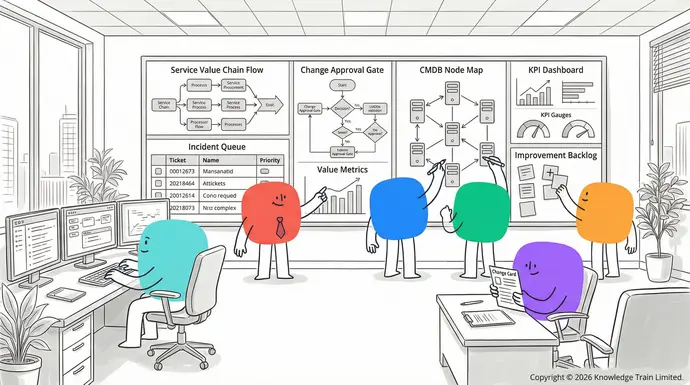
ITIL , or the Information Technology Infrastructure Library , is a globally adopted framework for IT Service Management (ITSM) . Developed in the 1980s and now managed by PeopleCert
| Practice/process | Purpose |
|---|---|
| Incident management | Restore normal service as quickly as possible |
| Problem management | Identify and address root causes of incidents |
| Change management | Ensure controlled and successful implementation of changes |
| Service desk | Provide a single point of contact for IT users and issues |
| Configuration management | Maintain information about IT assets and configurations |
| Continual improvement | Incrementally enhance services and practices |
Roles and responsibilities in ITIL
- Service owner
- Process owner
- Change manager
- Incident manager
- Configuration manager
ITIL certification pathways
ITIL certification validates IT professionals’ knowledge of ITIL framework, processes, and practices. Certification is managed globally, often starting with the ITIL Foundation and advancing through more specialised levels.
- ITIL Foundation
- ITIL 4 Specialist: Create, Deliver and Support
- ITIL 4 Specialist: Drive Stakeholder Value
- ITIL 4 Strategist: Direct, Plan and Improve
Certifications benefit careers in IT service management , IT strategy, and IT governance, and are aligned with globally recognised standards such as ISO/IEC 20000 .
Benefits of ITIL
- Standardises IT service management across the organisation
- Improves service delivery and quality
- Facilitates continual improvement and efficiency
- Reduces IT risks and service outages
- Enhances collaboration between IT and other business units
- Supports compliance with international standards
- Enables measurable value creation for stakeholders
ITIL vs other ITSM frameworks
| Framework | Scope | Main Focus | Strengths |
|---|---|---|---|
| ITIL | IT Service Management | Best practices, service lifecycle, continual improvement | Comprehensive, widely recognised, flexible |
| COBIT | IT Governance | Control, audit, risk management | Alignment of IT with business goals, strong compliance |
| ISO/IEC 20000 | IT Service Management standard | Certification , compliance, quality management | Internationally accredited, structured, measurable |
FAQs
What is ITIL and how does it work?
ITIL is a set of best practices and principles for IT service management, helping organisations manage IT services throughout their lifecycle – from strategy to continual improvement – by providing standardised processes and roles.
What is meant by ITIL certification?
ITIL certification demonstrates an individual’s understanding of ITIL concepts, processes, and practices. It verifies their ability to apply ITIL methods to enhance IT service management within organisations.
What are the 5 stages of ITIL?
Earlier versions of ITIL outlined five stages in the service lifecycle: service strategy, service design, service transition, service operation, and continual service improvement. ITIL 4 introduces a more flexible service value system but retains the focus on continual value delivery.
Is ITIL still relevant in 2026?
Yes, ITIL remains highly relevant, especially with updates in ITIL 4 addressing digital transformation, cloud computing, agile, and DevOps methodologies to help organisations modernise their ITSM practices.
How does ITIL compare to COBIT or ISO/IEC 20000?
ITIL offers best practices for ITSM, COBIT focuses on IT governance and control, while ISO/IEC 20000 is an international certification standard for IT service management. Many organisations use ITIL alongside COBIT or ISO/IEC 20000 for a holistic approach.