
- Analysing proposed solutions for practicality and viabilityData scientist: Extract insights from data using advanced analytical tools.Data analysis:
Industry Using quantitative and qualitative data to inform decision-makingcertificationsBusiness analysis tools and methodologies such as CompTIA A+, CCNA and cloud credentials are highly valued and often linked to improved salary prospects. Technical skills learned in Key toolsIT coursesRequirements management software (for example, Jira, Confluence, or Azure are increasingly required in fields like finance, healthcare, education and more. For further details see UK government digital skills guidance and university career services.DevOps
Certifications and further development)
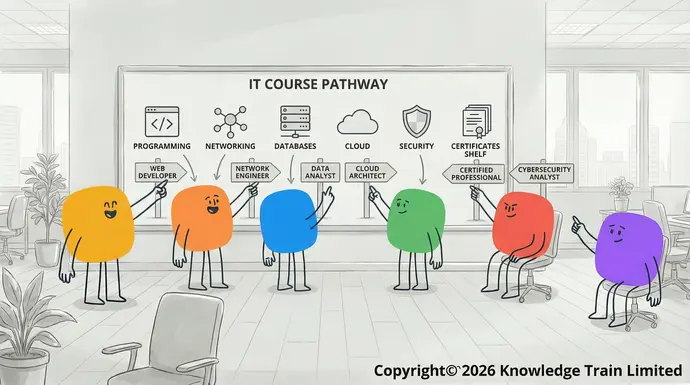
Certifications demonstrate expertise in key IT disciplines. Leading certificates include:Process mapping tools (such as Visio, Lucidchart)
- CompTIA A+, Network+, Security+;Mind mapping and collaboration software
- Cisco CCNA, CCNP;Data analysis tools (for example, Excel, Power BI)
- Microsoft Certified Fundamentals, Solutions Associate;Methodologies
- AWS Certified Cloud Practitioner;BABOK (Business Analysis Body of Knowledge):
- Certified Information Systems Security Professional (CISSP). The leading global standard published by
Many learners progress to degree IIBAprogrammes, outlining best practices and techniques for business analysis after initial certificates, undertaking a Bachelor of Information Technology or a Masters in Information Technology to further their careers.Agile
FAQs:
What qualifications do you need for an IT course? An iterative methodology focusing on flexibility, frequent delivery, and collaboration (often using user stories)
Entry requirements vary by course level. Introductory courses usually require basic computer skills, while degrees may require A-levels or equivalent. Certification courses generally have no prerequisites.Waterfall methodology
What subjects are studied in Information Technology?:
Common subjects include programming, networking, databases, A linear, phased project approach suitable for well-defined requirementscybersecurityChoosing the right methodology depends on project size, risk, stakeholder needs, and desired adaptability., cloud computing, software development, and data science.Essential skills and competencies for business analysts
Which IT course is best for beginners?Analytical and critical thinking
Courses in basic computer literacy, CompTIA IT Fundamentals, or introductory programming are suitable for beginners. Online platforms and colleges provide flexible entry-level options.Effective communication and stakeholder engagement
Are online IT courses recognised by employers?Attention to detail in requirements documentation
Many online Problem-solving and solution assessmentIT coursesKnowledge of business and technical requirements, especially those offering certificates from recognised providers (Coursera, edX, CompTIA, Cisco), are valued by employers. Accredited courses and Proficiency in process improvement and data analysiscertificationsCertification and career progression are particularly well-regarded.BCS
What careers can I pursue after completing an IT course?
Typical roles include IT support, network administration, cybersecurity analyst, software developer, and data scientist. Advanced positions may require additional experience or qualifications. offers globally recognised certifications, such as