What is an IT course?Understand the people aspect of PRINCE2 with our free ebook. Ideal for those preparing for the PRINCE2 Foundation course.

Key takeawaysMaximise your chances of passing your Foundation-level exam in PRINCE2 with our targeted revision tips. Read on for effective study strategies.
IT courses combine theory and practical work to build job-ready digital skills.
- Most programmes cover programming, networking, databases, cyber security, cloud computing, and project delivery.
- You can choose from certifications, diplomas or degrees, plus online or face-to-face study formats.
- Industry credentials such as CompTIA, Cisco, Microsoft, AWS, and CISSP can strengthen employability and salary prospects.
- Common outcomes include IT support, network administration, software development, cyber security, cloud roles, and data careers.
- Continuous learning and updated certifications help keep skills relevant as technology and threats evolve.
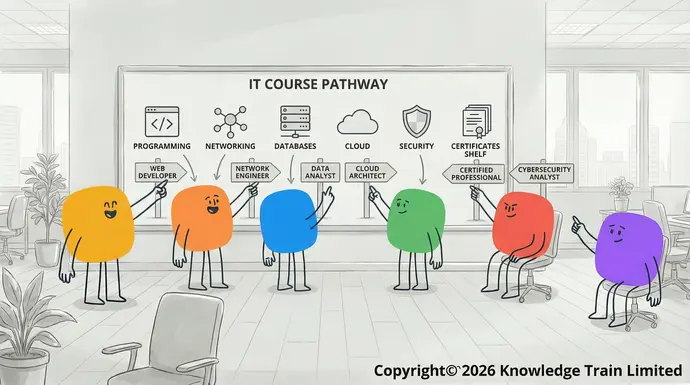
IT course overview
An Information Technology ( IT ) course provides structured learning in the principles, technologies and practices that power computers and digital networks. Delivered by universities, colleges and online platforms, IT courses prepare you for key roles such as IT support, network administration, software development and cybersecurity . Sources from universities and accredited online providers offer in-depth knowledge and skills for the dynamic technology sector.
Core subjects in an IT coursePRINCE2 glossary
Most IT coursesSimon Buehring incorporate a combination of theoretical foundations and hands-on practical skills. Core areas typically covered include:19 Feb 2026
- Programming: Learn to write software using programming languages such as Python, Java or C++.Access a comprehensive PRINCE2 glossary of terms to support your understanding and exam preparation. Essential for students and practitioners alike.
- Networking: Understand how devices connect, communicate and operate within a network environment.
- Databases: Study data storage, management and retrieval using systems like SQL.
- Cybersecurity : Develop skills to protect systems from threats, covering risk managementPRINCE2 case studies and ethical hacking.
- Software development:Simon Buehring Apply methods for designing, coding and maintaining applications.19 Feb 2026
- Cloud computing: Explore hosting and resources delivered over the internet.Read real-world case studies that show the effectiveness of PRINCE2 across different sectors. See how organisations have used PRINCE2 to deliver successful outcomes, overcome challenges, and improve project management.
- Data science & artificial intelligence: Learn techniques for analysing data and developing smart algorithms.
- IT project management: Gain experience in managing technical projects and teams using frameworks like Agile and Scrum .
Types of IT courses
IT courses are available in a wide range of formats to suit different goals and learning preferences. Common types include:
- Certification courses: Short-term courses leading to industry certifications such as CompTIA (A+, Network+), Cisco (CCNA), and Microsoft qualifications.
- Diplomas and degrees: Longer programmes like Diploma, Bachelor of Information Technology, or Masters in Information Technology, typically from universities or polytechnics.
- Online courses : Flexible self-paced study on platforms like Coursera, Udemy or edX, often including micro-credential options.
- Offline/face-to-face courses: Classroom-based instruction at colleges and universities with personalised support and labs.
Key IT course providers and platforms
| ProviderGive us a call | Type | Strengths |
|---|---|---|
| Coursera+44 (0)207 148 5985 | Online (degree, short courses) | |