What is an IT course?Italy

Key takeaways
IT courses combine theory and practical work to build job-ready digital skills.
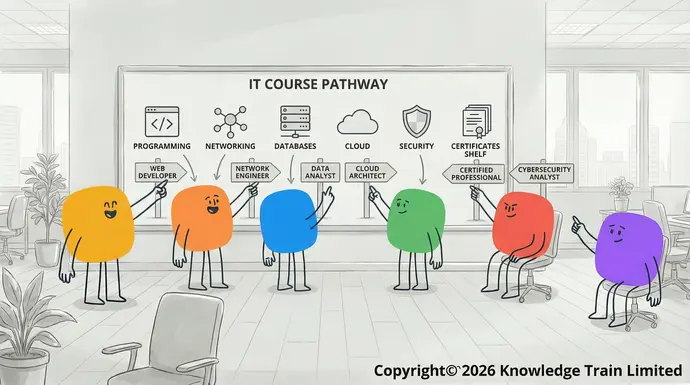
- Most programmes cover programming, networking, databases, cyber security, cloud computing, and project delivery.
- You can choose from certifications, diplomas or degrees, plus online or face-to-face study formats.
- Industry credentials such as CompTIA, Cisco, Microsoft, AWS, and CISSP can strengthen employability and salary prospects.
- Common outcomes include IT support, network administration, software development, cyber security, cloud roles, and data careers.
- Continuous learning and updated certifications help keep skills relevant as technology and threats evolve.
IT course overviewRegulated and high-compliance environments often prefer waterfall for traceability and control of change.
An Information Technology (Success depends on rigorous requirements capture, formal change control, and thorough testing and QA.IT ) course provides structured learning in the principles, technologies and practices that power computers and digital networks. Delivered by universities, colleges and online platforms, IT courses prepare you for key roles such as IT support, network administration, software development and cybersecurity . Sources from universities and accredited online providers offer in-depth knowledge and skills for the dynamic technology sector.Contents
Core subjects in an IT course
Most IT coursesContents incorporate a combination of theoretical foundations and hands-on practical skills. Core areas typically covered include:
- Programming:Introduction to the waterfall method Learn to write software using programming languages such as Python, Java or C++.
- Networking:Waterfall phases Understand how devices connect, communicate and operate within a network environment.
- Databases:Benefits of the waterfall method Study data storage, management and retrieval using systems like SQL.
- CybersecurityLimitations of the waterfall method: Develop skills to protect systems from threats, covering Waterfall vs Agile methodsrisk management and ethical hacking.When to use the waterfall method
- Software development: Apply methods for designing, coding and maintaining applications.Waterfall best practices
- Cloud computing: Explore hosting and resources delivered over the internet.Waterfall tools and techniques
- Data science & artificial intelligence: Learn techniques for analysing data and developing smart algorithms.Conclusion
- IT project management: Gain experience in managing technical FAQsprojects and teams using frameworks like InfographicAgileIntroduction to the waterfall method and The Scrumwaterfall method. of project management is a
Types of IT coursessequential approach
IT courses to a are available in a wide range of formats to suit different goals and learning preferences. Common types include:project
- Certification courses:. The phases of this methodology are completed one after another in the following order: Short-term courses leading to industry Requirements elicitationcertificationsDesign such as CompTIA (A+, Network+), Cisco (CCNA), and Microsoft qualifications.Implementation
- Diplomas and degrees:Verification Longer Maintenance.programmesEach of these steps should be completed and fully documented before the next step is taken. This linear approach is most known for the following characteristics: like Diploma, Bachelor of Information Technology, or Masters in Information Technology, typically from universities or polytechnics.Rigid structure
- Online coursesComprehensive documentation:Clear milestones Flexible self-paced study on platforms like Coursera, Udemy or edX, often including micro-credential options.Predictable timelines.
- Offline/face-to-face courses:Agile approach Classroom-based instruction at colleges and universities with personalised support and labs.. It is less flexible and works on a fixed scope. Traditional waterfall method was not designed to be iterative like the Agile methodology. Waterfall project is best for software products and projects that have well-defined requirements that will not change much. It is good for software with certain endpoints and certain regulatory compliance checks needed for the software to function.
Key IT course providers and platformsWaterfall phases
| ProviderWaterfall | Type is a | Strengthsstructured |
|---|---|---|
| Coursera, sequential approach that includes distinct phases with each phase building on the output of the previous phase. In this subsection, we will cover the phases in a waterfall lifecycle. | Online (degree, short courses)Requirements elicitation | University partnerships, certificates, flexible studyIn this phase, the team gathers and documents all project requirements. This includes defining the project scope and objectives, identifying stakeholders and their expectations, and creating a |
| edXdetailed specification | Online (degree, micro-courses) document. | University-backed, academic credit optionsSystem design |
| UniversitiesBased on the requirements, the team designs the system architecture, user interface, database schemas, and detailed technical specifications. | Offline/online (degree, diploma)Implementation | Accredited qualifications, student support, campus facilitiesDuring this phase, developers write code according to the design specifications, adhere to coding standards and best practices, and create unit tests for individual components. |
| CompTIA/CiscoVerification | Certification (online/offline)Testers rigorously evaluate the system by executing test cases based on requirements, performing integration and system testing, identifying and reporting bugs, and verifying bug fixes and retesting. | Industry-recognised certificates for networking, support, securityAfter testing is complete, the team: |
Career outcomes and IT jobsPrepares the production environment
Completing an IT course opens up diverse career paths in the technology sector. Typical job roles include:Migrates data if needed
- IT support specialist:Deploys the system to users Diagnose and resolve users’ technical issues.Provides user training and documentation.
- Network administrator:Maintenance and support Plan, deploy and maintain computer networks.After the system is deployed, ongoing activities include:
- Software developer:Monitoring system performance Create and maintain applications and systems.Addressing user-reported issues
- Cybersecurity analyst:Implementing minor enhancements Protect data and systems from cyber threats.Providing technical support to users.
- Cloud solutions architect:Each phase in the waterfall process must be completed before the next phase can begin. This approach ensures that all necessary documentation is created and minimises the risk of overlooking important requirements. It can be inflexible if requirements change mid-project. The Design modern cloud-based IT infrastructures.sequential nature
- Data scientist: of waterfall requires meticulous planning and clear communication throughout the development lifecycle. Extract insights from data using advanced analytical tools.Benefits of the waterfall method
Industry Waterfall project management is a sequential and linear approach to executing tasks, and it has several advantages. Let’s discuss each one of them:certificationsClear project structure and timeline such as CompTIA A+, CCNA and cloud credentials are highly valued and often linked to improved salary prospects. Technical skills learned in
- Predictable costs and resource allocationCertified Information Systems Security Professional (CISSP).
Many learners progress to degree programmes after initial certificates, undertaking a Bachelor of Information Technology or a Masters in Information Technology to further their careers.The upfront planning involved in the waterfall model allows for accurate budget estimation, efficient resource allocation throughout the project lifecycle and minimised unexpected expenses.
FAQsEasier tracking and progress assessment
What qualifications do you need for an IT course?Waterfall’s structured approach facilitates easy tracking of progress with clear indicators at each phase, simplified reporting to stakeholders and easy identification of bottlenecks or delays.
Entry requirements vary by course level. Introductory courses usually require basic computer skills, while degrees may require A-levels or equivalent. Certification courses generally have no prerequisites.Reduced risk through upfront planning
What subjects are studied in Information Technology?Upfront planning in waterfall can help:
Common subjects include programming, networking, databases, Identify potential risks early in the projectcybersecurityDevelop mitigation strategies before the work commences, cloud computing, software development, and data science.Minimise costly changes during the later stages of the project.
Which IT course is best for beginners?These strengths make waterfall ideal for projects with clearly defined requirements and relatively few changes expected. The methodology’s robustness is also very appropriate to the complexity of the work and the need for strict and complete control of change for medical device software development.
Courses in basic computer literacy, CompTIA IT Fundamentals, or introductory programming are suitable for beginners. Online platforms and colleges provide flexible entry-level options.Enhance your skills with our expert-led courses
Are online IT courses recognised by employers?
Many online IT courses , especially those offering certificates from recognised providers (Coursera, edX, CompTIA, Cisco), are valued by employers. Accredited courses and Instructor-ledcertificationsIntroduction to Project Management course are particularly well-regarded.
What careers can I pursue after completing an IT course?£499 +vat
Typical roles include IT support, network administration, cybersecurity analyst, software developer, and data scientist. Advanced positions may require additional experience or qualifications.