What is a business change manager?

- ContentsA business change manager prepares affected areas to adopt new ways of working and leads the transition.
- Timing matters, so deliverables are released into operations when the organisation can absorb them.
- Clear communication with stakeholders and senior leaders keeps the vision understood and supported.
- Strong capability includes business knowledge, change techniques, and familiarity with recognised change models.Contents
IntroductionDefinition:

What is a business change manager? A
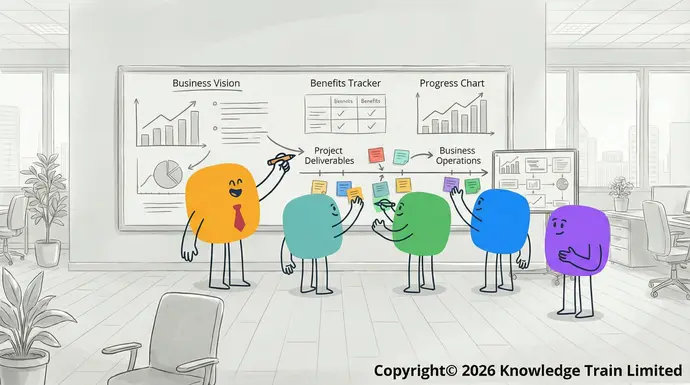
In an organisation, a business change manager’s (BCM) job is to:Project Management Office
- Determine the benefits of a business vision; (PMO) is a department or group that sets, maintains and ensures
- Assess progress towards a business goal;project management
- Achieve measured improvements in the business operations. standards within an organisation.
In general, a BCM is a mediator between a change programme and the organisation’s operations. Business change managers also are part of the leadership team. They play a key role in supporting projects for business change.Core Functions:
What is business change? Governance, methodology, support, standardisation, process improvement.
Business change comes in different shapes and sizes. It exists whenever an organisation undertakes a project or programme.Types:
Business change happens when an organisation improves, restructures or transforms a part of its operations. Its goal is to achieve a more productive and efficient organisation. Supportive PMO, Controlling PMO, Directive PMO.
Managing change is one of the responsibilities of a business change manager.Roles:
Why are business change managers important?Governance:
In today’s world, culture, business acquisitions and technology are constantly changing. These things therefore affects an organisation and its business. Establishing frameworks, processes and controls for effective decision-making and
BCMs lead the change initiative and align it to the business’s strategy. Their role is to ensure that benefits are accomplished.risk management
What does a business change manager do? across the project lifecycle.
Some tasks a business change manager is responsible of include:Standardisation:
- Making sure the benefits are achievable; Implementing and maintaining
- Preparing affected business areas for transition to new ways of working;project management methodologies
- Establishing and implementing mechanisms to measure and deliver benefits;, best practices, and standards.
- Optimising the timing of the release of project deliverables into business operations;Support:
- Liaising with the programme manager to ensure operational benefits; Providing guidance, templates, tools, training and mentoring for Project Managers and teams.
- Communicating with people and senior leaders about the business vision;Methodology Enforcement:
- Defining and tracking the benefits and outcomes required from the programme; Ensuring consistent application of
- Managing the activities effectively that’s associated with the wanted benefits;project management approaches
- Leading the transition, ensuring that changes are integrated into the business; for delivery excellence.
- Measuring the benefits after the work is complete;Resource Management:
Knowledge and skills of a business change manager Directly manages projects and assigns Project Managers. Exercises high control and is responsible for
If you are interested in a BCM position, you need to have certain competencies. Some of them are:project delivery
- Detailed knowledge of a business environment; and outcomes.
- An understanding of the management structures, politics and culture of the company owning the programme;Organisations may adapt their PMO model based on size, maturity, and strategic needs. A PMO may evolve from supportive to controlling or directive as project management capability matures.
- Effective marketing and communication skills to sell the programme vision to all stakeholders;PMO best practices
- Knowledge of business change techniques such as business process modelling and gap analysis;Implementing a PMO involves defining objectives, selecting the right PMO type, securing stakeholder support, setting up governance structures, and continuously reviewing processes. Best practices for successful PMO implementation include:
- Training in Aligning PMO objectives with organisational strategy.change managementEngaging stakeholders and securing executive sponsorship., programme management or strategic management.Adopting recognised standards and methodologies (such as those from
- Knowledge in applying best practices in project management;PMI
- Knowledge of organisational change models such as Kotter’s change model.).