Key takeaways
ADKAR makes change stick by guiding individuals through a clear sequence of milestones.[email protected]
- Build Join Our TeamAwareness with clear, consistent communication and visible leadership support.[email protected]
- Grow Copyright © 2005-2026 Knowledge Train Limited. Desire Registered in UK: 5566983. by addressing WIIFM, involving staff early, and recognising change champions. Registered VAT: GB872413526.
- Provide Knowledge TrainKnowledge® through tailored training, mentoring, and easy access to reference materials. is a registered trademark of Knowledge Train Limited.
- Convert 20 Old Bailey, London, EC4M 7AN, England, United Kingdom.Knowledge Knowledge Train are experts in project management, PRINCE2, agile and change management training and certification. Choose from a full range of instructor-led and self-paced into project management coursesAbility, a with practice, coaching, and performance-based feedback.PRINCE2 course
- Use , or an Reinforcementagile project management course to sustain new behaviours via celebration, metrics, regular reviews, and adaptive improvements. to boost your career.
Introduction to the ADKAR modelKnowledge Train Ltd is an Introducer Appointed Representative of NewDay Cards Ltd for the Newpay finance product provided by NewDay Ltd. NewDay Cards Ltd acts as a credit broker, not a lender. We will introduce you exclusively to Newpay finance products provided by NewDay Limited under this Introducer Appointed Representative arrangement. Finance available from other lenders is not covered by this arrangement. NewDay Ltd and Newday Cards Ltd are authorised and regulated by the Financial Conduct Authority (ref nos 690292 and 682417 respectively).
Understanding change management
In today’s constantly changing organisational landscape, change management is crucial. Organisations must adapt to remain competitive and relevant. Change management provides a structured approach to transitioning individuals, teams, and whole organisations from a current state to a desired future state. The goal is to minimise resistance and maximise engagement. Here, the SearchADKAR model shines as a strategic framework. It offers a clear, step-by-step process that leaders can use to guide their teams through change effectively.
Origins and purpose of ADKAR
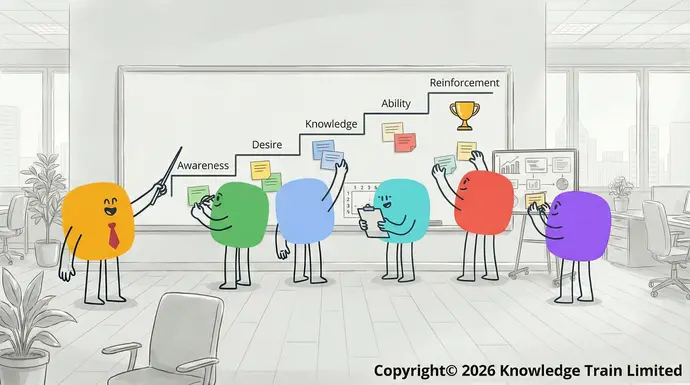
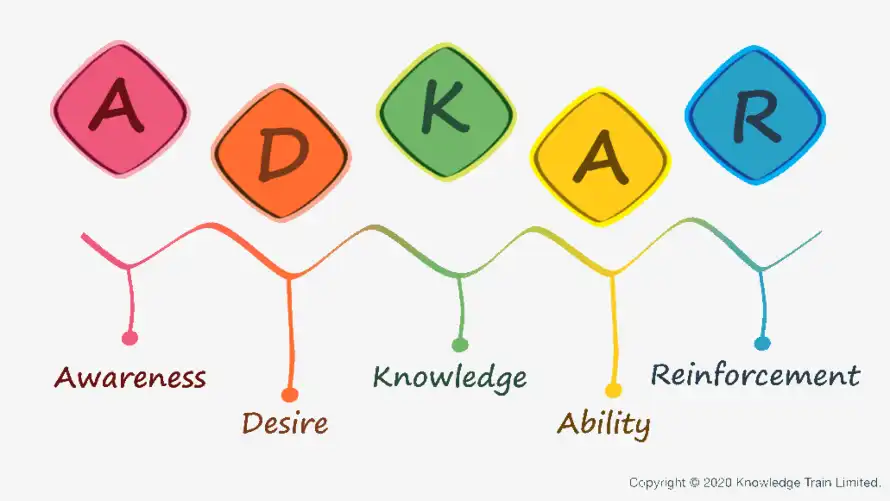
The ADKAR model was developed by Jeff Hiatt, founder of Prosci, through research conducted from 1994 to 2002. This research analysed the change patterns of over 700 organisations, leading to a practical, results-oriented approach to managing change at the individual level. Prosci’s research revealed that successful change occurs when organisational change management and individual change management intersect. It comprises five key elements: Awareness , Desire , Knowledge , AbilityManage Consent, and ReinforcementTo provide the best experiences, we use technologies like cookies to store and/or access device information. Consenting to these technologies will allow us to process data such as browsing behavior or unique IDs on this site. Not consenting or withdrawing consent, may adversely affect certain features and functions.. Each element represents a milestone that individuals must achieve to embrace and sustain change thoroughly.
- Awareness : Recognising the need for change.
- Desire : Building the motivation to participate.Functional
To inspire desire, organisations can:Statistics
- Highlight benefits : Clearly articulate the personal and organisational benefits of the change.
- Engage employees : Involve them in planning and decision-making processes to create a sense of ownership.Statistics
- Recognise contributions : Acknowledge and reward early adopters and change champions to motivate others.
Measuring desire levels
Understanding the level of desire is essential for gauging readiness. This can be achieved through:
- Surveys and feedback : Gather input on employee sentiments towards the change.
- Observation : Monitor engagement levels during change-related activities.The technical storage or access that is used exclusively for statistical purposes.
- Interviews : Conduct one-on-one discussions to explore individual concerns and motivations.The technical storage or access that is used exclusively for anonymous statistical purposes. Without a subpoena, voluntary compliance on the part of your Internet Service Provider, or additional records from a third party, information stored or retrieved for this purpose alone cannot usually be used to identify you.
Assessing desire helps tailor support and interventions, ensuring greater engagement. It’s crucial to understand that while organisations can create an environment that fosters desire, the ultimate decision to participate in the change is a personal choice that cannot be forced. Leaders can influence desire by addressing the question ‘What’s in it for me?’ (WIIFM) but must recognize that genuine commitment cannot be mandated.
Element 3: Knowledge
The third element of ADKAR addresses the practical aspects of change implementation. The Knowledge element focuses specifically on how to implement the change. This includes two critical types of knowledge: understanding how to change (the required skills, processes, and behaviours) and what to do during the transition state. This goes beyond just sharing information – it requires detailed training on new processes, systems, and roles that will be part of the change.
Knowledge acquisitionMarketing
To facilitate knowledge acquisition:
- Structured training : Provide comprehensive training programmes tailored to different learning styles.
- MentorshipMarketing: Pair employees with mentors to offer guidance and support.
- Self-paced learning: Use e-learning platforms for flexible, on-demand knowledge access.
Tools for knowledge transfer
Effective tools include:
- Workshops and seminars : Offer hands-on experience and practical insights.
- Knowledge repositories : Maintain accessible databases for quick reference.
- Peer learning : Encourage knowledge sharing through peer networks.The technical storage or access is required to create user profiles to send advertising, or to track the user on a website or across several websites for similar marketing purposes.
These tools ensure that employees have the required knowledge to succeed.
Element 4: AbilityManage options
The Manage servicesAbilityManage {vendor_count} vendors element represents the actual execution of the change – turning knowledge into action. Whilst Knowledge is about understanding how to change, Ability is about demonstrating performance in real-world conditions. This element often requires time for practice, coaching, and feedback as people develop proficiency in new skills or behaviours. Success in this element is measured by actual performance rather than just completing training.Read more about these purposes
Developing ability
Developing ability involves:Accept
- Practical training : Conduct real-world exercises to build confidence.Deny
- Feedback loops : Provide constructive feedback to refine skills.View preferences
- Supportive environment : Create a culture that encourages experimentation and learning.Save preferences
Training and support systems
Training and support systems are vital for ability development:
Aligning organisational goals with the elements of the AcceptADKAR model is essential for a cohesive change process. Begin by clearly defining your organisational objectives. Ensure that each of the ADKAR elements – Awareness, Desire, Knowledge, Ability, and Reinforcement – supports these objectives.Deny
- Awareness : Align awareness efforts with the strategic vision. Ensure that the need for change is communicated in a way that reflects organisational goals.View preferences
- Desire : Motivate employees by linking personal benefits to broader organisational aims.Save preferences
- Knowledge : Tailor training programs to impart skills that directly contribute to achieving strategic goals.View preferences
- Ability{title}: Develop capabilities that are necessary for meeting long-term objectives.{title}
- Reinforcement{title}: Design reinforcement strategies that celebrate achievements aligned with organisational success.Manage consent
This alignment ensures that change initiatives are not only implemented but also contribute meaningfully to the organisation’s mission.Manage consent
Continuous improvement
Continuous improvement is vital in refining the ADKAR process. It involves regularly assessing and enhancing each element to ensure effectiveness.
- Feedback loops: Establish mechanisms for collecting feedback at each element. Use surveys, interviews, and performance metrics to gather insights.
- Regular reviews: Conduct periodic evaluations to identify strengths and areas for improvement within the ADKAR elements.
- Adaptive strategies: Be willing to modify strategies based on feedback and evolving organisational needs.
The psychological benefits of this approach are significant. Continuous improvement reduces stress and enhances confidence by ensuring that the change process is dynamic and responsive. Employees feel valued and understood, fostering a positive environment for sustained change. This iterative process not only refines the ADKAR model but also reinforces a culture of adaptability and growth within the organisation.
Conclusion
Recap of the ADKAR model
The ADKAR model offers a structured and effective framework for managing change within organisations. It comprises five pivotal elements: Awareness, Desire, Knowledge, Ability, and Reinforcement. Each element is crucial for guiding both leaders and employees through the change process. By systematically addressing these elements, organisations can ensure that all critical elements of change management are covered, minimising confusion and resistance. The model’s structured approach not only facilitates successful transitions but also fosters alignment with organisational goals.
Encouragement to adopt ADKAR
Adopting the ADKAR model can significantly enhance an organisation’s change management efforts. It provides a clear roadmap that supports both individual and organisational transformation. By following its principles, organisations can reduce stress and uncertainty while boosting employee engagement and commitment. The psychological benefits are substantial, as employees feel more informed, involved, and confident throughout the change process. Implementing ADKAR can lead to more sustainable and successful change initiatives, making it a valuable tool for any organisation striving for effective transformation.
FAQs
What is the ADKAR model?
The ADKAR model is a goal-oriented change management framework focusing on individual-level change. It comprises five elements: Awareness, Desire, Knowledge, Ability, and Reinforcement. These elements guide individuals in adopting and sustaining change within an organisation.
Why is awareness important in the ADKAR model?
Awareness is crucial because it helps individuals understand the necessity for change. It prepares them for the transition by clarifying the reasons behind it, thereby reducing resistance and confusion.
How can organisations measure the desire for change?
Organisations can assess desire through several methods, including surveys and interviews. Monitoring employee engagement levels also provides insights into their motivation to support the change.
What tools are effective for knowledge transfer in the ADKAR model?
Effective tools for knowledge transfer include workshops, training sessions, and e-learning platforms. These resources help ensure that employees acquire the necessary information and skills to adapt to change.
How can an organisation reinforce changes effectively?
Reinforcement is achieved through regular feedback and incentives. Continuous support mechanisms ensure that new behaviours are sustained over time, reducing stress and enhancing confidence among employees.
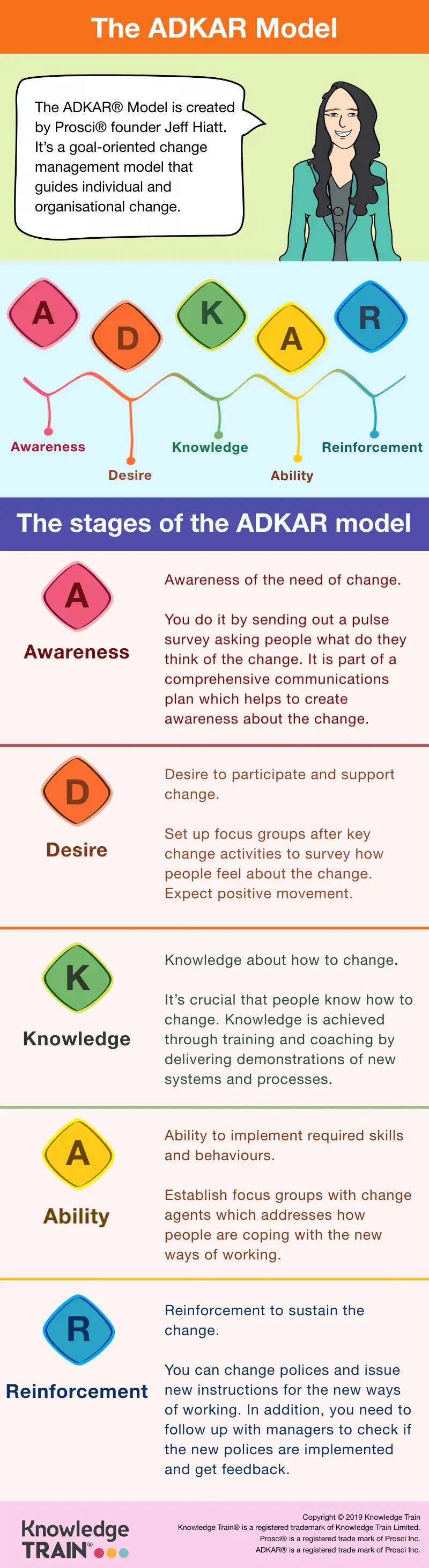
Infographic
The ADKAR change management model is summarised in this colourful infographic.