
What qualifications do you need to become a business analyst?Situations where PRINCE2 is a strong fit
Business analysts need a good mix of ‘soft-skills’ and ‘hard-skills.’ You will need to be good at solving problems and analysing data. You will also need to have excellent communication skills.Public sector projects and regulated environments requiring strong governance and traceability.
The path you might take will depend on your qualifications, education and experience. Many analysts begin in a technical background such as software development. This is helpful, as IT systems and databases can often form a major part of a businesses’ development plans.Large or high risk initiatives needing formal risk management and stage boundaries.
If you don’t have any IT experience, don’t fret! Often some basic knowledge of SQL is all you’ll be required to have, as systems analysis is a closely related, but otherwise entirely distinct discipline that you won’t have to worry about as a Business analyst.Multi supplier delivery where roles, tolerances and reporting must be explicit.
‘Soft skills’ vs. ‘hard skills’Business change projects where continued business justification must be proven via the
Recruiters will generally look for work experience or an education that may have imparted desirable skills. Any experience you may have had as a manager or team-leader will be especially desirable. Soft skills you may want to highlight in your CV include:business case
- Attention to detail..
- Communication.How PRINCE2 works
- Interpersonal skills.PRINCE2 structures a project into
- Leadership.stages
- Organisation., with defined decision points (stage boundaries). The project board authorises the project and each stage, while the project manager controls progress within agreed tolerances and escalates by exception.
- Problem-solving.The
- Teamwork.starting up a project
- Time-management. process leads to
Additionally, a post-graduate qualification in any of the following studies will make you more marketable as a BA:initiating a project
- Business information systems., then delivery cycles through
- Business management.controlling a stage
- Computing and systems development. and
- Computer science.managing product delivery
Beyond this, many employers view recognized . At the end of each stage, the business analyst qualificationsmanaging a stage boundary as an industry-standard. That’s not to say you can’t find work as a business analyst without one, but they will make you more desirable to potential employers and are a great way to make up for a lack of experience if you’re looking for your first business analyst role. prepares the next stage plan for project board approval via the
Business analysis qualifications are offered by several professional bodies, namely the International Institute of Business Analysis UK (IIBA), The Chartered Institute for IT (BCS) and the directing a project Project Management Institute process. The project ends with (PMI). In the UK, closing a project BCS business analysis qualifications. are the most popular amongst employers.For a review of the latest edition of the PRINCE2 official guidance manual, read
What is the best business analyst certification?PRINCE2 7th Edition – What’s different?
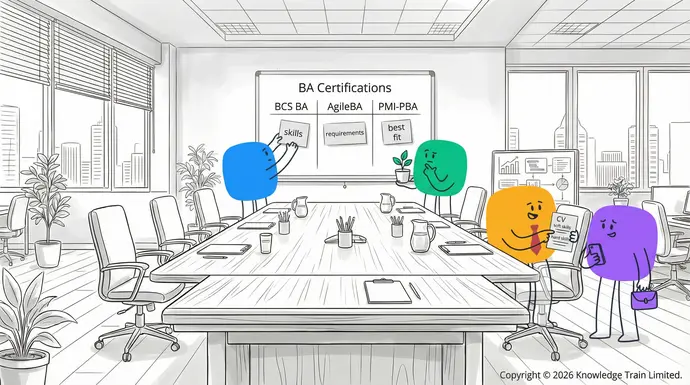
We offer 3 internationally recognized business analysis qualification schemes to aid your career progression in the business analysis profession. Each is tailored to suit a different type of candidate and as such, there’s no ‘best’ qualification. For more information on each individual course read on!.
BCS Business AnalysisKey control ideas used throughout
BCS business analysis certificationsBusiness case and business justification: are unique in that BCS offers a structured training and career progression path. the project remains viable, desirable and achievable.
BCS business analysis qualificationsManagement by stages: range from entry-level work is authorised and reviewed stage by stage, using a stage plan. BCS Business Analysis FoundationManagement by exception: certification which requires no previous experience in business analysis, to the more advanced tolerances are set; exceptions are escalated to the project board. BCS Business Analysis DiplomaDefined management products: certification. standard reports and registers enable consistent control.
Owing to the flexibility of their training scheme, and the fact that you never have to venture outside the BCS scheme throughout your entire business analysis career, it’s no wonder BCS remains a firm favourite among business owners and practicing business analysts alike.PRINCE2 principles
We offer a range of online Foundation and Practitioner BCS BA modules including:The
- BCS Foundation Certificate in Business Analysis7 principles
- BCS Practitioner Certificate in Business Analysis Practice are mandatory ideas that must be present for a project to be considered PRINCE2 based. They guide decisions across governance, planning, controls and learning.
- BCS Requirements EngineeringContinued business justification:
- BCS Modelling Business Processes keep the business case valid and up to date.
Each of these modules helps candidates work towards the highly regarded Learn from experience: BCS International Diploma in Business Analysis capture lessons and apply them throughout the project. .Defined roles and responsibilities:
This qualification validates the experience you gain through our individual training modules and is designed for business and IT professionals who want to demonstrate they have a detailed understanding of business analysis tools, techniques, strategies and best-practices. ensure clear accountability across the project board and delivery roles.
If you’re looking to begin a career in Manage by stages: business analysis plan and authorise work in manageable chunks using a stage plan. and Manage by exception: don’t set tolerances and escalate only when they are forecast to be exceeded. want to work in an agile environment, there’s no better choice than a BCS BA Diploma.Focus on products:
Agile BA define, agree and verify outputs and acceptance criteria.
Offered by APMG International, this Tailor to suit the project: Business Analysis certification scale controls to project size, risk and environment. is designed to help BAs work within agile environments.Optional detail: organisations commonly tailor the amount of documentation while keeping decision points, roles, and change control discipline intact.
APMG courses are generally favoured by agile practitioners because, in addition to giving an overall understanding of For a more in-depth description, read AgilePRINCE2 principles , they train candidates in the use of practical business analysis tools and techniques that you will go on to use in your career..
We offer this qualification at two levels:PRINCE2 practices
AgileBA FoundationThe
This entry-level course is best suited for any of the following:7 practices
- Product owners and managers who require an understanding of (used to be called themes) describe the project management disciplines that must be addressed continuously. They ensure the project is planned, controlled and aligned to the business case. agile business analysisBusiness case: . define and maintain the justification and benefits profile.
- Working business analysts who wish to move into an agile environment.Organisation:
- Experienced agile team-members who want to work as agile business analysts. establish the project management team structure and decision rights.
An Quality: AgileBA Foundation course define quality expectations, acceptance criteria and quality control activities. provides a general overview of Agile and the roles of an agile business analyst. The course includes the exam which leads to the Foundation certification. Topics include:Plans:
- The philosophy and create and maintain plans (including each stage plan) to control delivery. principles of AgileRisk: . identify, assess and control uncertainty through risk management.
- The business analysis processes within an Agile project.Change:
- The practices used in an Agile project. assess and control changes via change control (issues, requests, and off spec).
- The benefits and limitations of Agile.Progress:
- The roles and responsibilities within an track performance, manage tolerances and report by exception. Agile projectFor more, read .PRINCE2 practices
AgileBA Foundation & Practitioner.
An PRINCE2 processes AgileBA Foundation and PractitionerThe course includes 2 exams leading to the AgileBA Practitioner certification. This course is best suited to practicing business analysts and those who wish to begin a career in agile business analysis.7 processes
This course teaches candidates how to apply the AgileBA approach to any given context. Topics include: describe the lifecycle of a PRINCE2 project. Each process includes activities and recommended management products to support control and decision making.
- The philosophy and principles of Agile. Starting up a project:
- The business analysis processes within an Agile project. confirm the project is viable and appoint key roles.
- The roles and responsibilities within an Agile project.Directing a project:
PMI Professional in Business Analysis (PMI-PBA)® the project board authorises initiation, stages, exceptions and closure.
PMI qualifications are, by a wide margin, some of the most widely recognized and respected qualifications in the project management world and are highly sought after.Initiating a project:
The high opinions many people hold of this certification is due to the demanding and strict entry requirements which candidates must meet to be eligible for the PMI-PBA® exam. Eligibility requirements are as follows: establish baselines such as the business case, plans and controls.
| Education:Controlling a stage: | Required experience: the project manager assigns work, monitors progress and manages issues. | Required training:Managing product delivery: |
|---|---|---|
| High school diploma, associate degree or global equivalent teams accept work packages and deliver agreed products. | 5 years working as a business analystManaging a stage boundary: | 35 hours in the topic of business analysis practices. report stage results and plan the next stage plan for approval. |
| Bachelor’s degree, higher degree or global equivalent.Closing a project: | 3 years working as a business analyst confirm acceptance, review performance and hand over products. | 35 hours in the topic of business analysis practices.For a more in-depth description, read |
| Bachelor’s or postgraduate degree from a GAC accredited program or global equivalentPRINCE2 processes | 2 years working as a business analyst. | 35 hours in the topic of business analysis practices.PRINCE2 people |
If you meet these requirements, our PRINCE2 treats success as a people-centred change effort, not just processes. PMI-PBAOutcomes must be embedded in business as usual; leadership and culture drive success. omline course helps you prepare for the certification exam.Change management moves the organisation from current to target state, protecting the investment.
If you’re lucky enough to hold a PMI qualification, you’ll be a stand-out candidate in your field. There’s no better way to advertise your skills in Stakeholder engagement thrives when ecosystem relationships are actively built and maintained. business analysisCo-creation with users improves fit, reduces handover risk, and boosts adoption. , this qualification should be a goal for every dedicated business analyst!Temporary teams perform best with clear roles, psychological safety, and agreed ways of working for virtual or hybrid delivery.