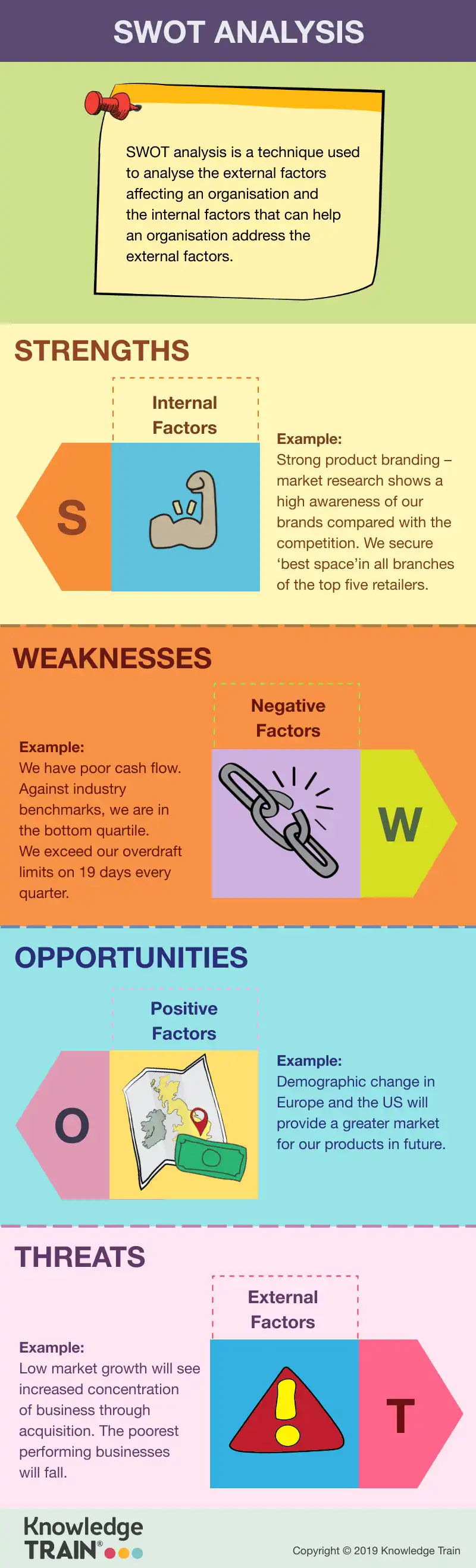
Harnessing the power of SWOT analysis for effective strategies 19 Feb 2026

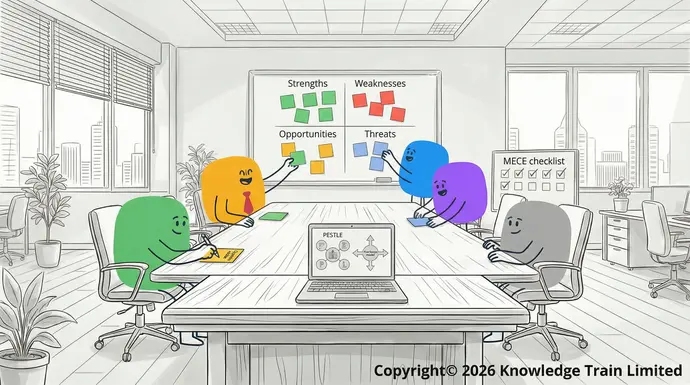
organisation. These benefits extend beyond the analysis itself, offering psychological advantages such as stress reduction and enhanced confidence.
The MECE framework brings clarity by ensuring distinct categorisation of factors, helping understand current situations and plan future strategies. Its structured nature facilitates organised thinking, aiding in prioritising actions and developing targeted strategies. Additionally, this organised approach reduces stress by providing clear direction, enhancing confidence for informed decision-making.
In summary, the MECE framework is an invaluable tool in conducting a SWOT analysis. It ensures that the analysis is both comprehensive and organised, providing the clarity needed for strategic planning. By eliminating overlap and ensuring completeness, MECE enhances the quality of insights gained, fostering a proactive and confident approach to decision-making. This structured methodology guarantees that organisations are well-prepared to address challenges and capitalise on opportunities.
Common pitfalls and how to avoid them
Overgeneralisation
is is Agile, RESILIAovergeneralisation®. This occurs when the analysis lacks detail and specificity. Vague or broad statements can obscure the real issues and lead to ineffective strategies. For instance, listing “good customer service” as a strength without specifics does not provide actionable insights., and the Swirl logo are registered trademarks of the PeopleCert group. Used under licence from PeopleCert. All rights reserved. AgilePM
To avoid this, focus on precise details. Instead of general statements, identify specific aspects like “high customer retention rate” or “24/7 customer support”. This level of detail helps in understanding the true strengths and weaknesses, allowing for more targeted strategies. Detailed analysis not only clarifies the current situation but also enhances confidence in decision-making, reducing stress associated with ambiguity.®
Ignoring external factors and AgileBA
Another common mistake is ®ignoring external factors are registered trademarks of Agile Business Consortium Limited. All rights reserved. The APMG International AgilePM and Swirl Device logo, APMG International AgileBA and Swirl Device Logo, APMG International Change Management and APMG International Better Business Cases and Swirl Device logo are trademarks of The APM Group Limited, used under permission of The APM Group Limited. All rights reserved. Better Business Cases™ is a trademark of Her Majesty’s Treasury. All rights reserved. DevOps Foundation while focusing solely on internal elements. A balanced SWOT analysis considers both internal strengths and weaknesses, as well as external opportunities and threats. Overlooking external factors can result in missed opportunities and unanticipated threats.®
Leveraging technology in SWOT Always active
Incorporating technology into the SWOT analysis process can significantly enhance its efficiency and effectiveness. Software tools and digital platforms streamline data collection, organisation, and analysis.
Software tools such as Microsoft Power BI, Tableau and specialist strategy software can automate SWOT data entry and categorisation, reducing manual errors. Digital platforms that offer visualisation capabilities help present SWOT findings clearly through charts and graphs, making complex data more accessible. These platforms support scenario planning by enabling users to simulate different strategic outcomes based on SWOT findings. Leveraging technology not only enhances the clarity and organisation of SWOT analysis but also reduces the cognitive load on teams. The structured nature of technology-assisted SWOT analysis can lead to stress reduction and heightened focus, allowing decision-makers to concentrate on crafting effective strategies.
In summary, enhancing SWOT analysis with advanced techniques involves integrating complementary strategic frameworks and leveraging technology. This approach provides a more comprehensive and efficient method for understanding and responding to organisational challenges and opportunities. By doing so, organisations can ensure their strategies are robust, informed, and capable of driving sustained success.The technical storage or access is strictly necessary for the legitimate purpose of enabling the use of a specific service explicitly requested by the subscriber or user, or for the sole purpose of carrying out the transmission of a communication over an electronic communications network.
Conclusion
Recap of key points
Throughout this discussion, we have delved into the SWOT analysis process and its substantial benefits. This strategic tool helps identify internal strengths and weaknesses alongside external opportunities and threats. By conducting a detailed analysis, organisations can gain valuable insights into their current position and future prospects. The use of frameworks like MECE ensures clarity and organisation, while real-world examples illustrate both successful applications and important lessons from failures. The collaborative nature of SWOT discussions, as highlighted in strategic meetings, allows for an inclusive approach that captures diverse perspectives. This structured approach reduces stress by providing a clear path forward and enhances decision-making by fostering a comprehensive understanding of strategic factors.Preferences
Final thoughts
Implementing SWOT analysis can provide a considerable strategic advantage. It encourages organisations to look both inward and outward, ensuring a balanced view of their position. By translating findings into actionable strategies, companies can leverage strengths, address weaknesses, seize opportunities, and mitigate threats. This proactive mindset enhances organisational resilience and boosts stakeholder confidence. SWOT’s adaptability across various industries makes it relevant and actionable in different contexts. As a dynamic and inclusive tool, it captures insights that might otherwise be overlooked, facilitating smarter decisions and strategic planning. Embrace the power of SWOT to navigate challenges and seize opportunities, ultimately driving sustained growth and success. By maintaining a realistic, fact-based, and data-driven approach, organisations can ensure that their strategic plans are robust and forward-thinking.
FAQs
What is the main purpose of SWOT analysis?Preferences
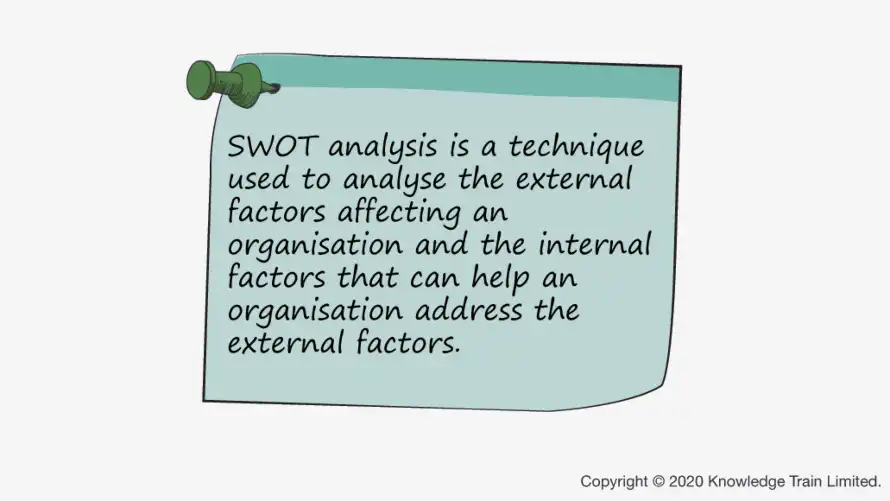
The primary purpose of a SWOT analysis is to provide a structured framework for identifying and evaluating an organisation’s internal strengths and weaknesses, as well as external opportunities and threats. This analysis aids in strategic planning by offering a clear understanding of the organisation’s current position and potential future directions.
How often should a SWOT analysis be conducted?
The frequency of conducting a SWOT analysis depends on the organisation’s dynamic environment. Generally, it is advisable to perform the analysis annually or whenever there is a significant change in the market or the organisation. Regular updates ensure that strategies remain relevant and proactive.
Can SWOT analysis be used for personal development?
Yes, SWOT analysis can be effectively applied to personal development. It helps individuals identify their strengths and weaknesses, recognise opportunities for growth, and understand potential threats to personal goals. This self-awareness can lead to more focused personal development plans and career strategies.
What are some common mistakes in SWOT analysis?The technical storage or access is necessary for the legitimate purpose of storing preferences that are not requested by the subscriber or user.
Common mistakes include overgeneralisation, ignoring external factors, and failing to translate findings into actionable strategies. Overgeneralisation can obscure key insights, while a lack of external analysis can lead to missed opportunities. Ensuring that the analysis leads to practical actions is crucial for its effectiveness.
How can technology enhance SWOT analysis?
Technology can significantly enhance SWOT analysis by providing tools for data collection, analysis, and visualisation. Software applications can help organise information, ensure comprehensive coverage, and facilitate collaboration among team members. This enhances the clarity and efficiency of the SWOT process, ultimately reducing stress and fostering more informed decision-making.