Analytical estimating
A technique that computes total project time and cost estimates by preparing estimates for each project activity.
Application area
The specific project category of which the project is a part.Apportioned effortProject work associated with components of a work breakdown structure and performed in proportion with discrete effort.Approach analysisAn analysis used to examine various methods by which project goals may be achieved.
Arrow diagramming method (ADM)
A method of constructing a network diagram using arrows to represent activities and nodes to represent events or milestones.
Artifact
Items that support software development, including
project plans
and items used in actual development.
As late as possible (ALAP)An activity for which the early start date is set as late as possible without delaying successor activities.As soon as possible (ASAP)
An activity for which the early start date is set to be as soon as possible.
Assignment contouringThe process of assigning people to project work for changing numbers of hours per day as the project progresses.Assumption
Factors deemed to be true during
project planning
, though proof of their validity is not available.
AcceptAuthorization The power to make decisions granted by management.DenyAuthorized work
Work approved by management or others in authority.
The original planned start and finish dates for a project or activity when the schedule was baselined.
Baseline plan
The fixed project plan used as the standard for measuring performance.Baseline scheduleThe fixed project schedule used as the standard for measuring performance.
Benchmarking
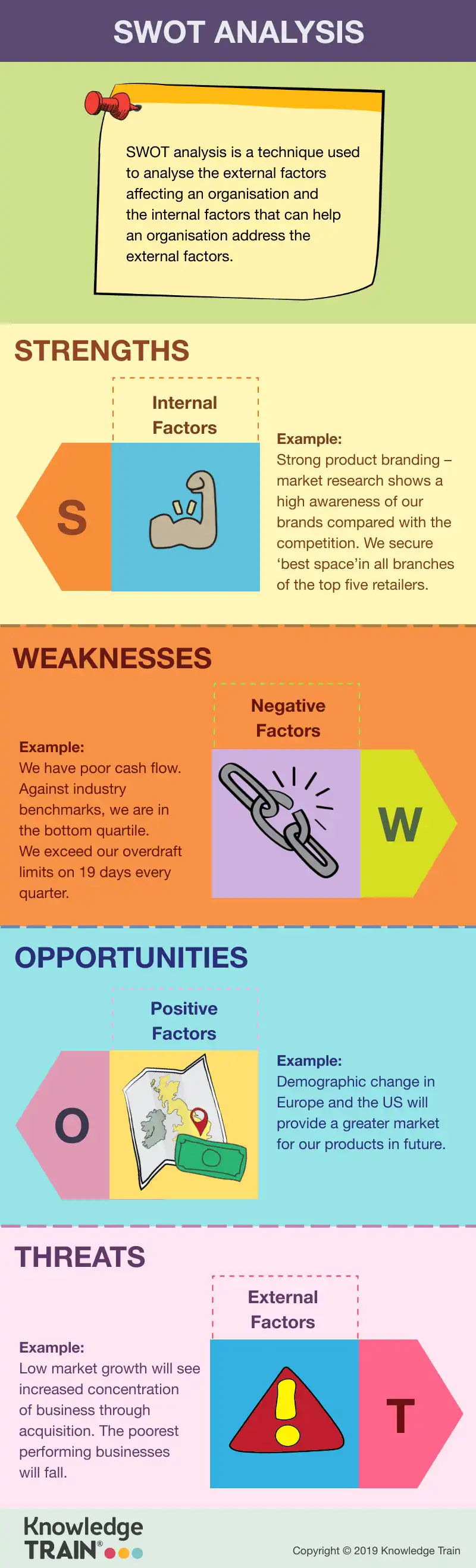
A review of what other organisations are doing in the same area.BenefitA positive and measurable impact of change.Benefits frameworkAn outline of expected project benefits, affected business operations, and performance measures.Benefits managementSWOT analysisThe identification, definition, planning, tracking, and realisation of benefits.:Benefits management plan Identifying strengths, weaknesses, opportunities, and threats related to a business area or solutionA plan specifying responsibility for achieving benefits and how they will be measured and managed.Gap analysis:
Benefits profile Comparing current and target states to identify improvement areasProjects
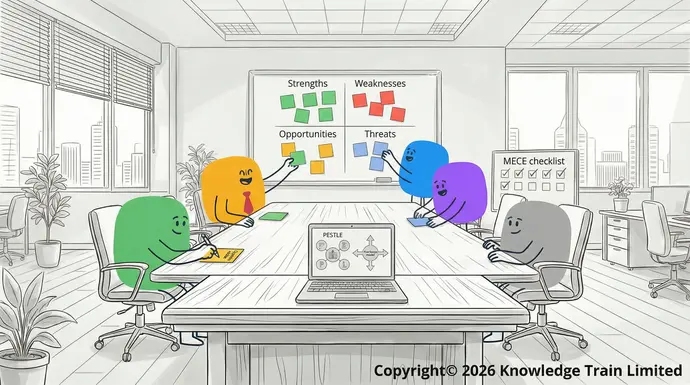
By using the MECE framework, each element of the SWOT analysis is distinct and contributes to a comprehensive understanding of the organisational landscape. This structured approach ensures that no aspect is overlooked, and no two factors are confused with one another.A representation of when benefits are planned to be realised.Use case modelling:
Benefits of using MECEBenefits realisation Mapping user interactions with systems to define requirementsSimon Buehring
The primary benefits of incorporating the MECE framework into a SWOT analysis are The practice of ensuring benefits are derived from outputs and outcomes.Business process modelling:19 Feb 2026Benefits realisation review Creating diagrams (such as BPMN) to visualise business processesA review undertaken after project deliverables have been in operation to establish if benefits have been realised.Stakeholder analysis:Bid Identifying stakeholder interests, influence, and engagement needsA tender, quotation, or offer to enter into a contract.User stories
Bid analysis:
An analysis of bids or tenders. Documenting concise functional requirements, typically in Agile projects
Bid listFeasibility study:
A list of contractors or suppliers invited to submit bids for goods or services. Analysing proposed solutions for practicality and viability
is is The process of preparing and submitting a bid or tender. Using quantitative and qualitative data to inform decision-makingWhat is PMP Certification? | How to Get Project Management Professional CertifiedovergeneralisationBlueprintBusiness analysis tools and methodologies . This occurs when the analysis lacks detail and specificity. Vague or broad statements can obscure the real issues and lead to ineffective strategies. For instance, listing “good customer service” as a strength without specifics does not provide actionable insights.A document defining what a programme is designed to achieve in terms of business and operational vision.Key toolsKnowledge Train
To avoid this, focus on precise details. Instead of general statements, identify specific aspects like “high customer retention rate” or “24/7 customer support”. This level of detail helps in understanding the true strengths and weaknesses, allowing for more targeted strategies. Detailed analysis not only clarifies the current situation but also enhances confidence in decision-making, reducing stress associated with ambiguity.BoardRequirements management software (for example, Jira, Confluence, or Azure 29 Apr 2026
Ignoring external factorsA body providing sponsorship to a project, programme, or DevOps
Another common mistake is portfolio)PMP certification is a globally recognised qualification for project managers, awarded by the Project Management Institute (PMI). It demonstrates advanced knowledge and experience in project management and is highly valued across multiple industries worldwide.ignoring external factors, representing financial, provider, and user interests.Process mapping tools (such as Visio, Lucidchart) while focusing solely on internal elements. A balanced SWOT analysis considers both internal strengths and weaknesses, as well as external opportunities and threats. Overlooking external factors can result in missed opportunities and unanticipated threats.Bottom-up estimatingMind mapping and collaboration software
To maintain balance, ensure that your analysis gives equal weight to external conditions. This includes market trends, regulatory changes, and competitive dynamics. Incorporating external analysis provides a comprehensive view of the environment, enabling more informed strategic decisions. Addressing both internal and external factors reduces uncertainty, fostering a sense of preparedness and confidence.A technique that computes total project time and cost estimates by preparing estimates for each activity and adding them together.Data analysis tools (for example, Excel, Power BI)
Lack of actionable insightsBudgetMethodologies
A SWOT analysis should culminate in The sum of money allocated for a project or a comprehensive list of revenues and expenses.BABOK (Business Analysis Body of Knowledge): actionable insightsBudget at completion (BAC) The leading global standard published by that inform strategy. However, a common pitfall is failing to translate findings into practical strategies. A list of strengths, weaknesses, opportunities, and threats is of little use without a plan of action.The sum total of the time-phased budgets.IIBA
To avoid this, ensure that each element of the analysis leads to specific strategic actions. For example, if an opportunity is identified in an emerging market, develop a plan to enter that market. Actionable insights transform the analysis from a theoretical exercise into a strategic tool. This approach not only enhances clarity and direction but also reduces stress by providing a clear path forward.Budget cost, outlining best practices and techniques for business analysisProject management apprenticeships
In summary, avoiding these common pitfalls ensures that a SWOT analysis remains a powerful tool for strategic planning. By focusing on detail, balancing internal and external factors, and ensuring actionable outcomes, organisations can leverage SWOT to its fullest potential. This comprehensive approach not only enhances strategic decision-making but also reduces stress and fosters confidence in navigating future challenges.The cost anticipated at the start of a project.Agile
Real-world applications of SWOT analysisBudget element:Knowledge Train
Case studiesResources needed to do the work, typically assigned to a work package. An iterative methodology focusing on flexibility, frequent delivery, and collaboration (often using user stories)19 Feb 2026
Successful implementationBudget estimateWaterfall methodology
A well-documented success story of SWOT analysis comes from An approximate estimate prepared in early project stages to establish financial viability or secure resources.:Seeking a project management apprenticeship? This guide details the leading five apprenticeship programmes and providers across the UK. Acquire essential skills and start your professional journey while earning money.StarbucksBudgeted cost of work performed (BCWP) A linear, phased project approach suitable for well-defined requirements . The company effectively utilised SWOT to refine its strategy and enhance its market position. By identifying internal strengths such as brand recognition and a loyal customer base, Starbucks capitalised on these assets to expand its global footprint. The company also recognised weaknesses, including high operational costs, and addressed them through efficiency improvements.The planned cost of work completed to date, also known as ‘earned value’.Choosing the right methodology depends on project size, risk, stakeholder needs, and desired adaptability.
Externally, Starbucks identified opportunities in emerging markets and digital innovation. It leveraged these by expanding into new regions and enhancing its digital platforms. The company also acknowledged threats such as economic downturns and increased competition. By using SWOT, Starbucks developed strategies to mitigate these risks, ensuring continued growth and resilience. This structured approach not only facilitated strategic clarity but also reduced the uncertainty associated with expanding into new markets.Budgeted cost of work scheduled (BCWS)Essential skills and competencies for business analysts
Lessons from failuresThe planned cost of work scheduled to be performed in a period of time.Analytical and critical thinking
The case of BudgetingEffective communication and stakeholder engagement KodakTime-phased financial requirements.Attention to detail in requirements documentation provides a cautionary tale. Despite conducting SWOT analyses, Kodak struggled to adapt to technological shifts, particularly the transition from film to digital photography. The company identified its brand strength and technical expertise as assets. However, it failed to act on the identified threats posed by the digital revolution.Budgeting and cost controlProblem-solving and solution assessment
Kodak’s SWOT analysis highlighted the opportunity in digital photography, yet the company hesitated to embrace it fully. This reluctance led to missed opportunities and eventual obsolescence. The lesson here is that a SWOT analysis is only as valuable as the actions it inspires. Without a proactive approach, even well-identified strengths and opportunities can go unexploited. This case underscores the importance of translating SWOT insights into timely and decisive strategies.The estimation of costs, setting of an agreed budget, and management of actual and forecast costs against that budget.Knowledge of business and technical requirementsAPM Body of Knowledge (BoK)
Industry-specific applicationsBufferProficiency in process improvement and data analysis
SWOT analysis is highly adaptable and can be tailored to various A term used in critical chain for the centralised management of schedule contingencies.Certification and career progressionKnowledge TrainindustriesBuild (stage)BCS19 Feb 2026. Each sector has unique characteristics, and a well-executed SWOT analysis can help address these specific needs.A stage within the implementation phase where project deliverables are built or constructed.
In the healthcare sector, SWOT identifies strengths like advanced medical technology and addresses weaknesses such as regulatory compliance challenges, with opportunities in telemedicine and threats from changing healthcare policies. Retail businesses often find strengths in brand presence while managing supply chain inefficiencies, with opportunities in e-commerce growth and threats from shifting consumer preferences. The tech industry leverages strengths in innovation capabilities while addressing cybersecurity risks, pursuing opportunities in emerging trends while managing threats from rapid technological changes.Build, own, operate, transfer (BOOT) offers globally recognised certifications, such as Learn about the
SWOT can also assist smaller enterprises, such as a bakery looking to expand. By identifying strengths like a loyal customer base and opportunities in artisanal trends, small businesses can make strategic decisions without specialised expertise. However, SWOT captures a snapshot at a specific moment, so it’s crucial to revisit the analysis regularly to adapt to evolving market conditions. This ensures strategies remain relevant and forward-thinking.A situation where a private operator builds, owns, operates, and then transfers a facility to another party after a specific period.Business Analysis FoundationAPM Body of Knowledge
Tailoring SWOT to specific industries ensures that the analysis is relevant and actionable. By focusing on industry-specific factors, organisations can develop targeted strategies that enhance their market position. This approach not only clarifies decision-making but also reduces stress by providing a structured framework to address sector-specific challenges.Burn down chart, which an important guide for project managers. This guide provides insights and useful tools for advancing your career and producing great project results.
In summary, real-world applications of SWOT analysis demonstrate its utility across various contexts. Whether leading to successful outcomes or offering lessons from failures, SWOT remains a powerful tool for strategic planning. By tailoring the analysis to specific industries, organisations can further enhance its effectiveness, ensuring they are well-equipped to navigate their unique environments.A graph showing the relationship between tasks to be completed and the remaining time.International Diploma in Business Analysis
Enhancing SWOT with advanced techniquesBusiness analysis, Practitioner certificates in
Integrating with other frameworksThe practice of identifying and solving business problems.Requirements Engineering
Enhancing your SWOT analysis by integrating it with other strategic frameworks can provide a more comprehensive understanding of your organisational environment. Two popular frameworks that complement SWOT are Business case, PESTLEDocumentation of potential outcomes of a new project, including benefits, costs, and effects.Modelling Business Processes and Business change manager, and Porter’s five forcesThe role responsible for benefits management from identification through to realisation.Business Analysis PracticesBusiness imperative.
An issue, situation, or circumstance with potential to affect a business.The Business modelInternational Institute of Business Analysis (IIBA)The system by which an organization’s profitable activities are planned, structured, and executed. offers globally recognised certifications, such as ECBA, CCBA, and CBAP, based on the Business operationsBABOK Guide
The ensemble of activities or processes through which a company uses its assets to create value for customers..
Business processCertifications
A system of activities by which a business creates a specific result for its customers. demonstrate expertise in requirements elicitation, stakeholder management, and business analysis best practices. Aspiring business analysts may also pursue Business Process Modelling (BPM)project managementThe representation, analysis, and evaluation of business processes to improve them. or change management qualifications to support broader career progression.
Related concepts
Project management
Requirements engineering
Change management
Quality assuranceSystems analysisFAQs
What is business analysis?
Business analysis is the systematic investigation and evaluation of business needs to recommend solutions that achieve organisational objectives. It includes requirements gathering, stakeholder engagement, and process optimisation.
FAQs Calendar unitWhat does a business analyst do?
What is the main purpose of SWOT analysis? The smallest unit of time by which project activity durations are measured.A business analyst identifies business problems, elicits requirements, engages stakeholders, and ensures that proposed solutions align with business goals. They act as a bridge between business and IT functions.
The primary purpose of a CapabilityWhat are the key techniques in business analysis?SWOT analysis A project outcome that enables a benefit to be achieved, or having necessary attributes to perform or accomplish.Common is to provide a structured framework for identifying and evaluating an organisation’s internal strengths and weaknesses, as well as external opportunities and threats. This analysis aids in strategic planning by offering a clear understanding of the organisation’s current position and potential future directions. Capability Maturity Model (CMM)business analysis techniques
How often should a SWOT analysis be conducted? A model used to assess the maturity of business process capabilities. include
The frequency of conducting a SWOT analysis depends on the organisation’s dynamic environment. Generally, it is advisable to perform the analysis annually or whenever there is a significant change in the market or the organisation. Regular updates ensure that strategies remain relevant and proactive. CAPEXSWOT analysis
Can SWOT analysis be used for personal development? , gap analysis, requirements elicitation, process mapping, use case modelling, and stakeholder analysis.Capital expenditure, the money a company spends to acquire or upgrade fixed physical assets.
Yes, SWOT analysis can be effectively applied to personal development. It helps individuals identify their strengths and weaknesses, recognise opportunities for growth, and understand potential threats to personal goals. This self-awareness can lead to more focused personal development plans and career strategies. What are the main types of requirements in business analysis?Case study
What are some common mistakes in SWOT analysis? Business analysts work with Extensive and in-depth formal research into an area of a company, situation, or event.
Common mistakes include business requirementsCertified Associate in Project Management (CAPM)overgeneralisation (organisational goals), An entry-level certification for project managers offered by the , ignoring external factors, and failing to translate findings into actionable strategies. Overgeneralisation can obscure key insights, while a lack of external analysis can lead to missed opportunities. Ensuring that the analysis leads to practical actions is crucial for its effectiveness. Project Management Institutestakeholder requirements
How can technology enhance SWOT analysis? ., and
Technology can significantly enhance SWOT analysis by providing tools for data collection, analysis, and visualisation. Software applications can help organise information, ensure comprehensive coverage, and facilitate collaboration among team members. This enhances the clarity and efficiency of the SWOT process, ultimately reducing stress and fostering more informed decision-making. Championtechnical requirements
Infographic An informal role where a person makes project success a personal responsibility. (system or IT needs).