Harnessing the power of SWOT analysis for effective strategiesPRINCE2

Key takeawaysPMI-ACP
SWOT works best when it is specific, balanced, and turned into decisions.Self-paced course to prepare you for the exam (exam not included).
- Use SWOT to separate internal strengths and weaknesses from external opportunities and threats, so strategy is grounded in reality.Kanban
- Collect detailed evidence from staff input, market research, and financials to avoid vague, unhelpful statements.Estimating for Agile Foundation
- Apply the MECE approach to keep categories distinct and complete, reducing overlap and blind spots.Agile Learning Library (ALL)™
- Convert every SWOT point into an action, priority, or mitigation plan, or the exercise adds little value.BUSINESS ANALYSIS
- Revisit SWOT regularly and strengthen it with PESTLE, five forces, and digital tools for clearer analysis.BCS Business Analysis
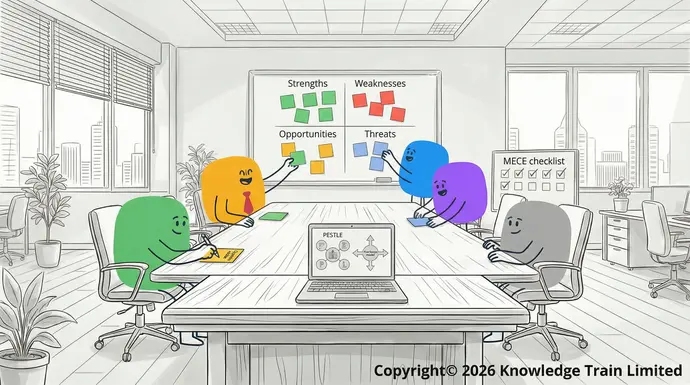
Conducting a SWOT analysis
Preparing for the SWOT analysis
Conducting a Specialist: CDS SWOT analysis3-day ITIL Specialist: Create, Deliver and Support (CDS) course. begins with meticulous IT Learning Library (ITLL)™preparationBUSINESS LEARNING LIBRARY (BLL)™. This stage is crucial to ensure that the analysis is both meaningful and actionable. The Agile Learning Library (ALL)™specificityBusiness Analysis Learning Library (BALL)™ of data collection plays a vital role. General or vague information can lead to ambiguous conclusions that hinder strategic planning. To avoid this, gather detailed and relevant data reflecting the current state of your organisation.Compliance Learning Library (CLL)™
Tools and techniques for gathering informationIT Learning Library (ITLL)™
Information gathering involves several key approaches. Internal surveys and questionnaires help gather employee insights and pinpoint strengths and weaknesses through structured questions. Market research focuses on analysing industry trends and evaluating competitor strategies. Financial analysis includes reviewing statements for economic insights and identifying areas for improvement. SWOT templates help organise thoughts and ensure comprehensive coverage of all aspects.Business solutions
This preparation reduces stress by providing a clear process to follow. By having a structured approach, individuals can focus on crafting actionable strategies rather than feeling overwhelmed._blank
Step-by-step guideAbout
Once you have gathered the necessary information, categorise it into the four components of SWOT._blank
Identifying strengthsBlog
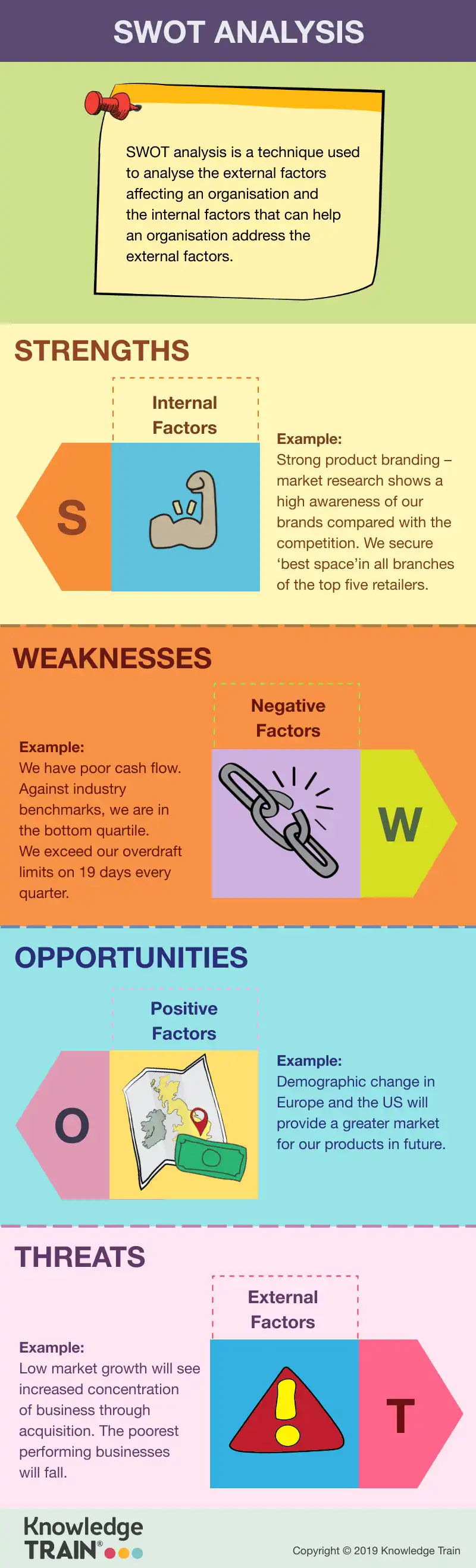
Strengths are internal factors that provide your organisation with an advantageEXPLORE SUBJECTS. These could include a strong brand reputation, a skilled workforce, or proprietary technology. Identifying these elements helps leverage them for strategic gain. Consider unique resources that set your organisation apart from competitors. For instance, a robust R&D department can drive innovation, offering an edge in product development. Acknowledging these strengths is the first step in capitalising on them to enhance your market position.Select your preferred subject.
Recognising weaknesses
Select your preferred qualification or workshop.limitations that could hinder organisational performance. Common examples include inefficient processes, outdated technology, or a small human resources department. Identifying these challenges is crucial for improvement. Addressing weaknesses can involve streamlining operations or investing in new technology. By recognising and addressing these areas, organisations can minimise their impact and transform them into strengths. This proactive approach fosters resilience and adaptability in a competitive environment.PRINCE2 COURSES
Spotting opportunitiesSelect your preferred training course below:
Opportunities are external factors that your organisation can exploit for growth. These could include technological advancements, emerging markets, or favourable regulatory changes. Identifying opportunities requires a keen eye on industry trends and market dynamics. For example, a company might spot an opportunity in a growing demand for sustainable products. By aligning its offerings with this trend, the company can capture new market segments. Seizing such opportunities can drive innovation and expansion, setting your organisation on a path to sustained growth.
Understanding threatsAPM COURSES
Threats are external Select your preferred training course below:risks that could negatively impact your organisation. These might include market fluctuations, new competitors, or changing consumer preferences. Identifying threats is crucial for developing mitigation strategies. For instance, a threat could be a competitor launching a similar product. To counter this, an organisation might innovate or enhance its value proposition. By understanding and preparing for these threats, organisations can shield themselves from potential setbacks. This forward-thinking approach ensures long-term stability and success.AGILE PROJECT MANAGEMENT COURSES
In conclusion, conducting a SWOT analysis is a systematic process that requires preparation and thoughtful evaluation. By focusing on specific data and utilising appropriate tools, you can gain valuable insights that inform strategic planning. This not only enhances decision-making but also fosters a proactive approach to navigating challenges and seizing opportunities. The psychological benefits are noteworthy, as a structured analysis reduces stress and enhances focus and confidence. This comprehensive understanding ensures that your organisation is well-equipped to tackle future challenges.Select your preferred training course below:
SCRUM COURSES
Introduction to MECE frameworkSelect your preferred training course below:
The