Harnessing the power of SWOT analysis for effective strategies

Key takeaways
SWOT works best when it is specific, balanced, and turned into decisions.
- Use SWOT to separate internal strengths and weaknesses from external opportunities and threats, so strategy is grounded in reality.
- Collect detailed evidence from staff input, market research, and financials to avoid vague, unhelpful statements.
- Apply the MECE approach to keep categories distinct and complete, reducing overlap and blind spots.
- Convert every SWOT point into an action, priority, or mitigation plan, or the exercise adds little value.
- Revisit SWOT regularly and strengthen it with PESTLE, five forces, and digital tools for clearer analysis.
Introduction to SWOT analysis
Understanding the basics
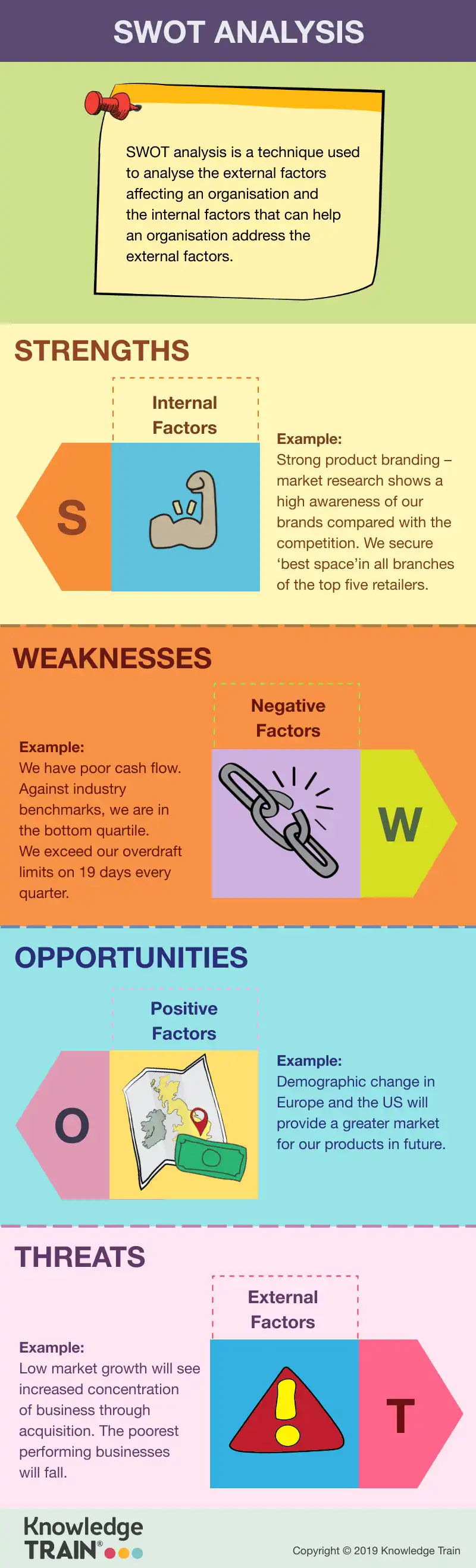
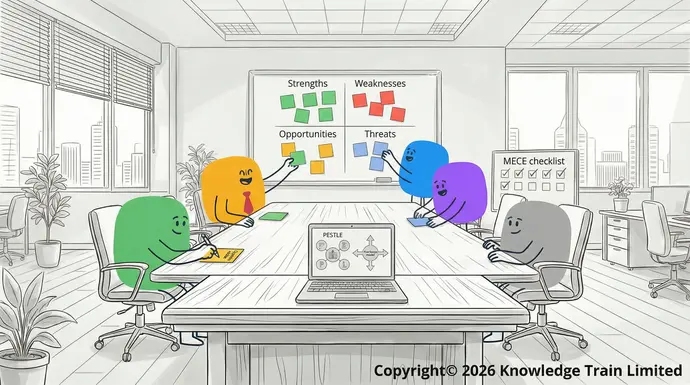
SWOT analysis is a strategic tool used to identify and evaluate the Strengths , Weaknesses , Opportunities , and Threats facing an organisation. This method provides a structured approach to decision-making by systematically assessing internal and external factors. SWOT analysis was developed in the 1960s and 1970s at Stanford Research Institute by Albert Humphrey, who led a research project funded by Fortune 500 companies. It has since evolved into a staple of strategic planning across various industries. By categorising different aspects of a business, SWOT helps leaders to craft strategies that leverage strengths and opportunities while addressing weaknesses and mitigating threats.
Importance in strategic planning
The role of SWOT analysis in strategic planning cannot be overstated. It serves as a foundation for informed decision-making and strategic development.
SWOT analysis enhances clarity by breaking down complex scenarios into manageable components, providing a clearer picture of the current situation. It guides resource allocation through understanding strengths and weaknesses, helping prioritise resources effectively. The approach stimulates proactive thinking by identifying opportunities and threats, encouraging forward-looking strategies rather than reactive measures. Request a quote
Psychological benefits are also noteworthy. Engaging in a SWOT analysis can reduce stress by providing a structured approach to problem-solving. By mapping out a plan, individuals and teams experience enhanced focus and confidence. The process encourages open discussion and collaboration, which can lead to innovative solutions. This comprehensive approach makes SWOT analysis an invaluable tool in both personal and professional contexts.
In essence, SWOT analysis is not just a list-making exercise; it is a dynamic tool that guides strategic planning and fosters a proactive mindset in navigating challenges and seizing opportunities.[email protected]
Conducting a SWOT analysis
Preparing for the SWOT analysis +44 (0)207 148 5985
Conducting a CoursesSWOT analysisPROJECT MANAGEMENT begins with meticulous PRINCE2preparation®. This stage is crucial to ensure that the analysis is both meaningful and actionable. The Foundation specificityLearn the fundamentals of the PRINCE2 method. of data collection plays a vital role. General or vague information can lead to ambiguous conclusions that hinder strategic planning. To avoid this, gather detailed and relevant data reflecting the current state of your organisation.Practitioner
Tools and techniques for gathering informationIncludes Foundation & Practitioner combined option.
Information gathering involves several key approaches. Internal surveys and questionnaires help gather employee insights and pinpoint strengths and weaknesses through structured questions. Market research focuses on analysing industry trends and evaluating competitor strategies. Financial analysis includes reviewing statements for economic insights and identifying areas for improvement. SWOT templates help organise thoughts and ensure comprehensive coverage of all aspects.Association for Project Management (APM)
Practitioner – in a non-overlapping and exhaustive manner.
In summary, the MECE framework is an invaluable tool in conducting a SWOT analysis. It ensures that the analysis is both comprehensive and organised, providing the clarity needed for strategic planning. By eliminating overlap and ensuring completeness, MECE enhances the quality of insights gained, fostering a proactive and confident approach to decision-making. This structured methodology guarantees that organisations are well-prepared to address challenges and capitalise on opportunities.Learn the key principles of Agile Project Management.
Common pitfalls and how to avoid themPractitioner
OvergeneralisationIncludes Foundation & Practitioner combined option.
Choose Scrum Alliance or Scrum.org Product Owner training courses.To avoid this, ensure that each element of the analysis leads to specific strategic actions. For example, if an opportunity is identified in an emerging market, develop a plan to enter that market. Actionable insights transform the analysis from a theoretical exercise into a strategic tool. This approach not only enhances clarity and direction but also reduces stress by providing a clear path forward.
In summary, avoiding these common pitfalls ensures that a SWOT analysis remains a powerful tool for strategic planning. By focusing on detail, balancing internal and external factors, and ensuring actionable outcomes, organisations can leverage SWOT to its fullest potential. This comprehensive approach not only enhances strategic decision-making but also reduces stress and fosters confidence in navigating future challenges.AgileBA
Real-world applications of SWOT analysis®
Case studies – Agile Business Analysis
Successful implementationFoundation
A well-documented success story of SWOT analysis comes from Learn the fundamentals of Agile Business Analysis.StarbucksPractitioner . The company effectively utilised SWOT to refine its strategy and enhance its market position. By identifying internal strengths such as brand recognition and a loyal customer base, Starbucks capitalised on these assets to expand its global footprint. The company also recognised weaknesses, including high operational costs, and addressed them through efficiency improvements.4-day course including Foundation.
Externally, Starbucks identified opportunities in emerging markets and digital innovation. It leveraged these by expanding into new regions and enhancing its digital platforms. The company also acknowledged threats such as economic downturns and increased competition. By using SWOT, Starbucks developed strategies to mitigate these risks, ensuring continued growth and resilience. This structured approach not only facilitated strategic clarity but also reduced the uncertainty associated with expanding into new markets.Lean Six Sigma
Lessons from failuresYellow Belt
The case of Self-paced training course to gain LSS Yellow Belt.KodakPMI provides a cautionary tale. Despite conducting SWOT analyses, Kodak struggled to adapt to technological shifts, particularly the transition from film to digital photography. The company identified its brand strength and technical expertise as assets. However, it failed to act on the identified threats posed by the digital revolution.®
Kodak’s SWOT analysis highlighted the opportunity in digital photography, yet the company hesitated to embrace it fully. This reluctance led to missed opportunities and eventual obsolescence. The lesson here is that a SWOT analysis is only as valuable as the actions it inspires. Without a proactive approach, even well-identified strengths and opportunities can go unexploited. This case underscores the importance of translating SWOT insights into timely and decisive strategies.PMI-ACP
Industry-specific applicationsSelf-paced course to prepare you for the exam (exam not included).
SWOT analysis is highly adaptable and can be tailored to various Kanbanindustries. Each sector has unique characteristics, and a well-executed SWOT analysis can help address these specific needs.
In the healthcare sector, SWOT identifies strengths like advanced medical technology and addresses weaknesses such as regulatory compliance challenges, with opportunities in telemedicine and threats from changing healthcare policies. Retail businesses often find strengths in brand presence while managing supply chain inefficiencies, with opportunities in e-commerce growth and threats from shifting consumer preferences. The tech industry leverages strengths in innovation capabilities while addressing cybersecurity risks, pursuing opportunities in emerging trends while managing threats from rapid technological changes.
SWOT can also assist smaller enterprises, such as a bakery looking to expand. By identifying strengths like a loyal customer base and opportunities in artisanal trends, small businesses can make strategic decisions without specialised expertise. However, SWOT captures a snapshot at a specific moment, so it’s crucial to revisit the analysis regularly to adapt to evolving market conditions. This ensures strategies remain relevant and forward-thinking.
Tailoring SWOT to specific industries ensures that the analysis is relevant and actionable. By focusing on industry-specific factors, organisations can develop targeted strategies that enhance their market position. This approach not only clarifies decision-making but also reduces stress by providing a structured framework to address sector-specific challenges.
In summary, real-world applications of SWOT analysis demonstrate its utility across various contexts. Whether leading to successful outcomes or offering lessons from failures, SWOT remains a powerful tool for strategic planning. By tailoring the analysis to specific industries, organisations can further enhance its effectiveness, ensuring they are well-equipped to navigate their unique environments.