Understanding the basics
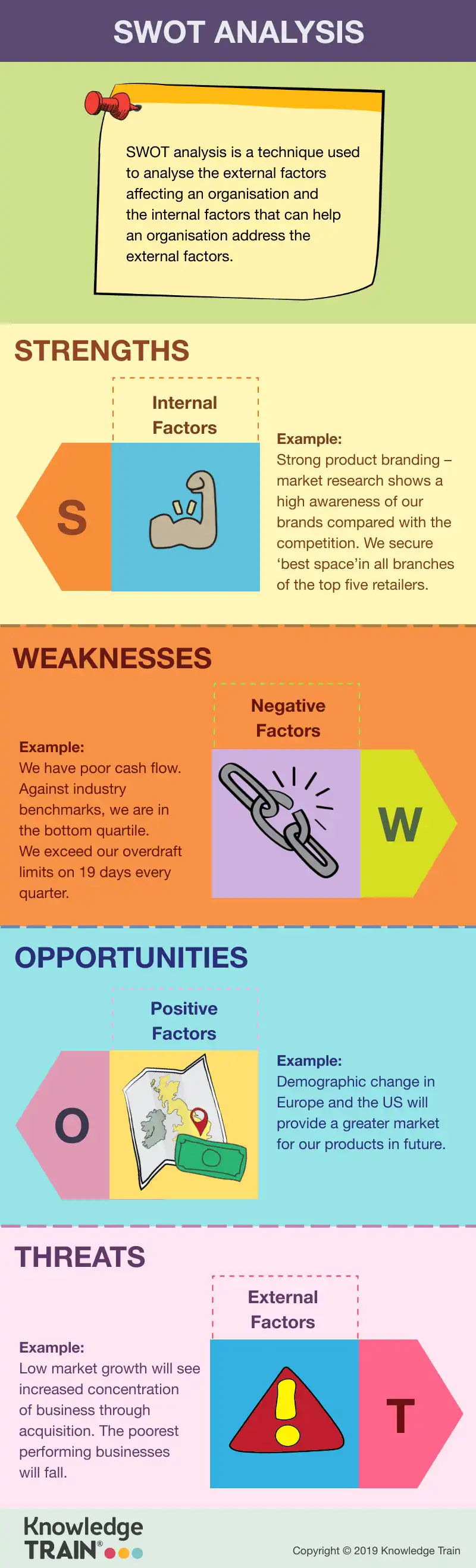
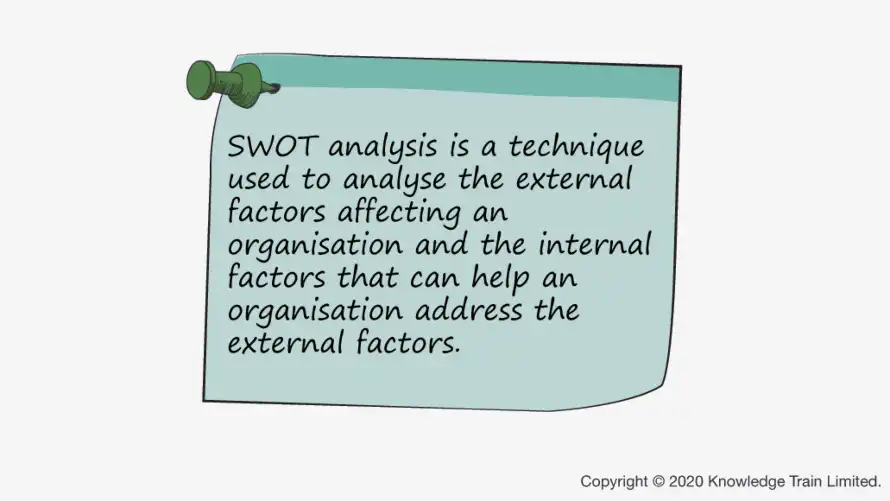
SWOT analysis
Enhance your skills with our expert-led courses stands for “Mutually exclusive, collectively exhaustive”. It is a problem-solving approach used to organise information in a way that ensures clarity and completeness. The framework divides information into distinct, non-overlapping categories that cover all possible scenarios. This approach prevents duplication and omissions, making it a valuable tool in strategic analysis. Its significance lies in its ability to simplify complex data, providing a clear and structured view of the situation at hand. By ensuring that all aspects are covered without redundancy, the MECE framework supports effective decision-making.
Applying MECE in SWOT
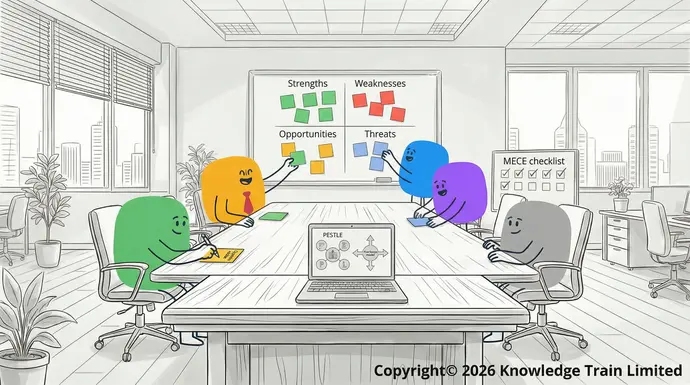
Applying the MECE framework to a SWOT analysis involves structuring the four components – StrengthsInstructor-led, APM PMQ 5-week courseWeaknesses , £2,099 +vatOpportunities , and See all dates
provides a cautionary tale. Despite conducting SWOT analyses, Kodak struggled to adapt to technological shifts, particularly the transition from film to digital photography. The company identified its brand strength and technical expertise as assets. However, it failed to act on the identified threats posed by the digital revolution.
Kodak’s SWOT analysis highlighted the opportunity in digital photography, yet the company hesitated to embrace it fully. This reluctance led to missed opportunities and eventual obsolescence. The lesson here is that a SWOT analysis is only as valuable as the actions it inspires. Without a proactive approach, even well-identified strengths and opportunities can go unexploited. This case underscores the importance of translating SWOT insights into timely and decisive strategies.
Industry-specific applications
SWOT analysis is highly adaptable and can be tailored to various industries . Each sector has unique characteristics, and a well-executed SWOT analysis can help address these specific needs.
In the healthcare sector, SWOT identifies strengths like advanced medical technology and addresses weaknesses such as regulatory compliance challenges, with opportunities in telemedicine and threats from changing healthcare policies. Retail businesses often find strengths in brand presence while managing supply chain inefficiencies, with opportunities in e-commerce growth and threats from shifting consumer preferences. The tech industry leverages strengths in innovation capabilities while addressing cybersecurity risks, pursuing opportunities in emerging trends while managing threats from rapid technological changes.
SWOT can also assist smaller enterprises, such as a bakery looking to expand. By identifying strengths like a loyal customer base and opportunities in artisanal trends, small businesses can make strategic decisions without specialised expertise. However, SWOT captures a snapshot at a specific moment, so it’s crucial to revisit the analysis regularly to adapt to evolving market conditions. This ensures strategies remain relevant and forward-thinking.
Tailoring SWOT to specific industries ensures that the analysis is relevant and actionable. By focusing on industry-specific factors, organisations can develop targeted strategies that enhance their market position. This approach not only clarifies decision-making but also reduces stress by providing a structured framework to address sector-specific challenges.
In summary, real-world applications of SWOT analysis demonstrate its utility across various contexts. Whether leading to successful outcomes or offering lessons from failures, SWOT remains a powerful tool for strategic planning. By tailoring the analysis to specific industries, organisations can further enhance its effectiveness, ensuring they are well-equipped to navigate their unique environments.
Enhancing SWOT with advanced techniques
Integrating with other frameworksHow to Apply AI Technology to Your Project with Paul Boudreau
Enhancing your SWOT analysis by integrating it with other strategic frameworks can provide a more comprehensive understanding of your organisational environment. Two popular frameworks that complement SWOT are PESTLESevcan Yasa and 4 May 2026Porter’s five forces .This webinar provides a concise overview of AI in projects, showcasing practical applications and AI's capabilities. Read on to enhance your project management skills.
PESTLE analysis examines Political, Economic, Social, Technological, Legal and Environmental factors affecting an organisation. When combined with SWOT , it aligns internal capabilities with external macro-environmental factors. Porter’s five forces model examines Competitive rivalry, Supplier power, Buyer power, Threat of substitution and Threat of new entrants, helping assess how industry forces impact opportunities and threats within the SWOT framework.
By integrating these frameworks, organisations can develop more nuanced strategies that consider both internal capabilities and external pressures. This holistic approach enhances strategic decision-making and reduces the uncertainties associated with dynamic markets.
Leveraging technology in SWOT
Incorporating technology into the SWOT analysis process can significantly enhance its efficiency and effectiveness. Software toolsFinding project management jobs and digital platformsKnowledge Train streamline data collection, organisation, and analysis.19 Feb 2026
Software tools such as Microsoft Power BI, Tableau and specialist strategy software can automate SWOT data entry and categorisation, reducing manual errors. Digital platforms that offer visualisation capabilities help present SWOT findings clearly through charts and graphs, making complex data more accessible. These platforms support scenario planning by enabling users to simulate different strategic outcomes based on SWOT findings. Leveraging technology not only enhances the clarity and organisation of SWOT analysis but also reduces the cognitive load on teams. The structured nature of technology-assisted SWOT analysis can lead to stress reduction and heightened focus, allowing decision-makers to concentrate on crafting effective strategies.
In summary, enhancing SWOT analysis with advanced techniques involves integrating complementary strategic frameworks and leveraging technology. This approach provides a more comprehensive and efficient method for understanding and responding to organisational challenges and opportunities. By doing so, organisations can ensure their strategies are robust, informed, and capable of driving sustained success.Hunting project management jobs in the UK? Discover the best job sites to help you on your way. Scroll down for information on where to find project management jobs.
Conclusion
Recap of key points
Throughout this discussion, we have delved into the SWOT analysis process and its substantial benefits. This strategic tool helps identify internal strengths and weaknesses alongside external opportunities and threats. By conducting a detailed analysis, organisations can gain valuable insights into their current position and future prospects. The use of frameworks like MECE ensures clarity and organisation, while real-world examples illustrate both successful applications and important lessons from failures. The collaborative nature of SWOT discussions, as highlighted in strategic meetings, allows for an inclusive approach that captures diverse perspectives. This structured approach reduces stress by providing a clear path forward and enhances decision-making by fostering a comprehensive understanding of strategic factors.
Final thoughts
Implementing SWOT analysis can provide a considerable strategic advantage. It encourages organisations to look both inward and outward, ensuring a balanced view of their position. By translating findings into actionable strategies, companies can leverage strengths, address weaknesses, seize opportunities, and mitigate threats. This proactive mindset enhances organisational resilience and boosts stakeholder confidence. SWOT’s adaptability across various industries makes it relevant and actionable in different contexts. As a dynamic and inclusive tool, it captures insights that might otherwise be overlooked, facilitating smarter decisions and strategic planning. Embrace the power of SWOT to navigate challenges and seize opportunities, ultimately driving sustained growth and success. By maintaining a realistic, fact-based, and data-driven approach, organisations can ensure that their strategic plans are robust and forward-thinking.
FAQsStrategic project management
What is the main purpose of SWOT analysis?
The primary purpose of a Knowledge TrainSWOT analysis19 Feb 2026 is to provide a structured framework for identifying and evaluating an organisation’s internal strengths and weaknesses, as well as external opportunities and threats. This analysis aids in strategic planning by offering a clear understanding of the organisation’s current position and potential future directions.
How often should a SWOT analysis be conducted?Learn how to connect projects to business strategy and objectives. Select and prioritise initiatives that will help your organisation move forward. Find out how to do it, and improve the results you get from projects, for improved performance overall.
The frequency of conducting a SWOT analysis depends on the organisation’s dynamic environment. Generally, it is advisable to perform the analysis annually or whenever there is a significant change in the market or the organisation. Regular updates ensure that strategies remain relevant and proactive.
Can SWOT analysis be used for personal development?
Yes, SWOT analysis can be effectively applied to personal development. It helps individuals identify their strengths and weaknesses, recognise opportunities for growth, and understand potential threats to personal goals. This self-awareness can lead to more focused personal development plans and career strategies.
What are some common mistakes in SWOT analysis?
Common mistakes include overgeneralisation , ignoring external factors, and failing to translate findings into actionable strategies. Overgeneralisation can obscure key insights, while a lack of external analysis can lead to missed opportunities. Ensuring that the analysis leads to practical actions is crucial for its effectiveness.
How can technology enhance SWOT analysis?An introduction to PRINCE2 Agile – webinar with Andrew Kell
Technology can significantly enhance SWOT analysis by providing tools for data collection, analysis, and visualisation. Software applications can help organise information, ensure comprehensive coverage, and facilitate collaboration among team members. This enhances the clarity and efficiency of the SWOT process, ultimately reducing stress and fostering more informed decision-making.
InfographicSevcan Yasa