Exploring the impact of the McKinsey 7S model on organisational performanceCAPM training

- Create an action plan with measurable objectives, owners, and timelines, and review progress regularly to sustain alignment.
- Use complementary tools for external factors, as the model focuses mainly on internal organisational elements.
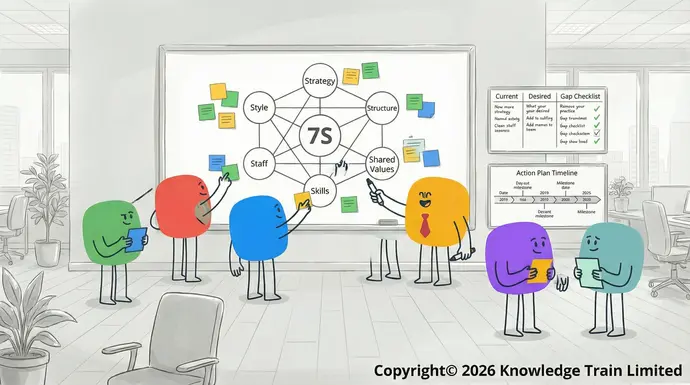
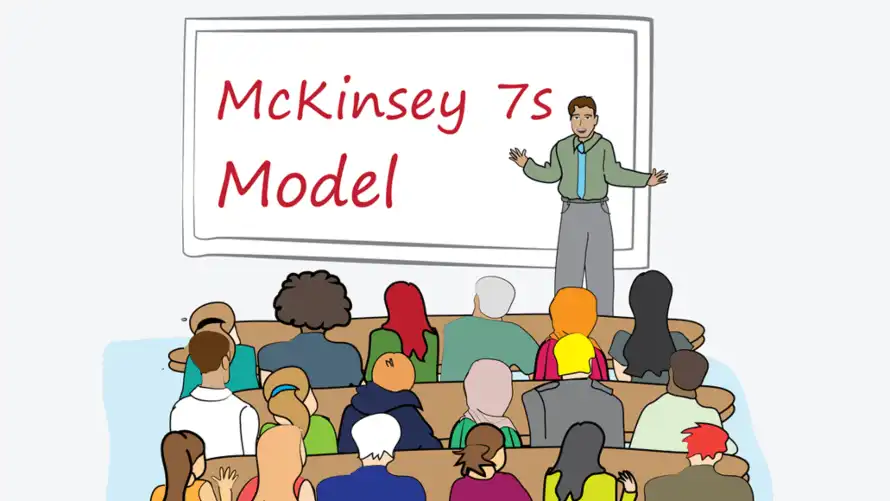
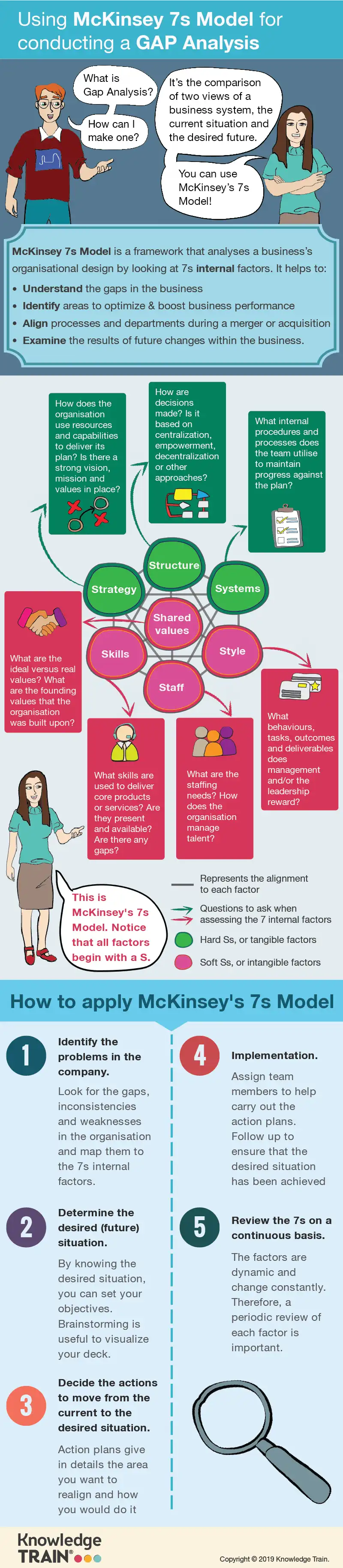
The McKinsey 7S Model serves as a powerful tool for Simon Buehringstrategic planning19 Feb 2026. It provides a comprehensive framework for assessing an organisation’s current state and aligning all elements towards future goals. By examining each of the seven components, leaders can identify areas that require adjustment to support new strategies. This holistic approach ensures that all aspects of the organisation are considered when developing and implementing strategic initiatives.
Organisational change managementPrepare for your project management interview with our free ebook full of techniques and tips. Enhance your interview skills today.
In change management , the 7S Framework proves invaluable. It offers a structured approach to navigating complex organisational transformations. By analysing the interdependencies between the seven elements, change leaders can anticipate potential challenges and develop more effective change strategies. The model helps identify which elements need to be modified to support the desired change and ensures that all aspects of the organisation are aligned during the transition process.
Benefits and limitations
Key advantages
The McKinsey 7S Model provides a comprehensive framework for organisational analysis and improvement. It ensures alignment between PMO consulting: Unlocking project successstrategy , Knowledge Trainstructure23 Feb 2026, and other key elements, promoting holistic change. By considering both hard and soft elements, it creates a balanced approach that improves overall organisational performance.
Potential drawbacksProject success depends significantly on PMO consulting expertise. This service provides expert advice which helps improve your project management office functionality to achieve enhanced results and productivity.
Despite its benefits, the model has limitations. It may be time-consuming to apply thoroughly, requiring significant resources and stakeholder engagement. Additionally, the model focuses on internal elements whilst external factors such as market conditions and competition are not directly addressed. This may require complementary frameworks for comprehensive analysis.
Case study: McKinsey 7S in action
An international manufacturing company successfully utilised the McKinsey 7S Model to enhance operational efficiency. Facing challenges in aligning their global operations, the company applied the model to assess and realign their strategyHow to become a project management consultant and structureKnowledge Train. They identified that their 19 Feb 2026systems were outdated and required modernisation to support their strategic goals. By addressing these misalignments, they improved coordination and communication across different regions. The intervention also focused on developing Are you ready to take the leap into project management consulting? Our guide will give you an overview of the steps and key job boards to land your first role. Kickstart your consulting career in project management now.skills among staff through targeted training programmes . As a result, the company experienced increased productivity and a more cohesive organisational culture, demonstrating the model’s effectiveness in fostering sustainable change.
Conclusion
The McKinsey 7S Model offers a robust framework for analysing and improving organisational effectiveness. By assessing elements like Business case: definition, purpose, structure, and examples