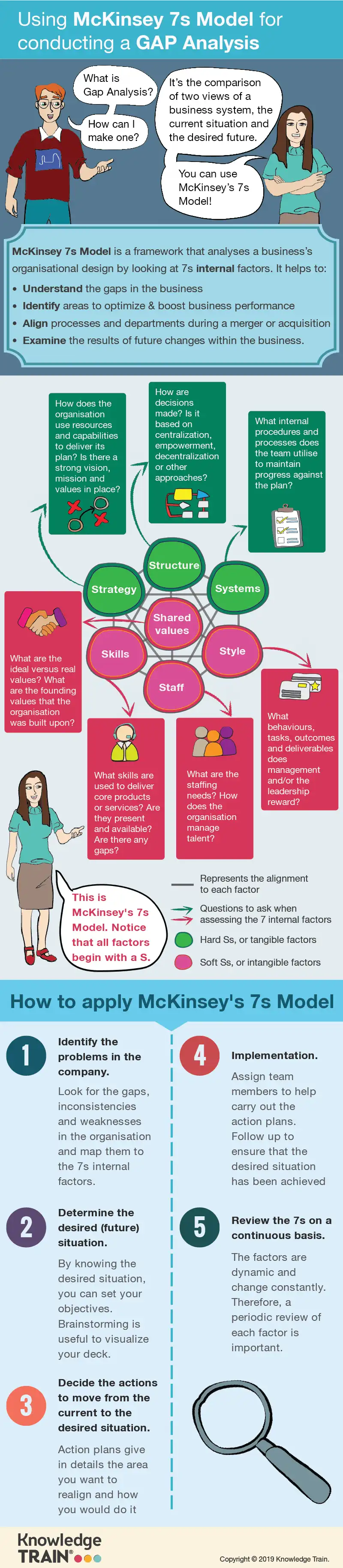
- : This refers to the organisational hierarchy and how different departments and teams are organised. The structure determines reporting lines, decision-making authority, and communication channels. An optimal structure facilitates efficient operations and supports the implementation of the strategy.Systems
- : These encompass all procedures, processes, and technologies that support daily operations. Systems include everything from IT infrastructure to performance management processes. Well-designed systems enhance productivity and ensure consistent quality across the organisation.Soft elements
The four
soft elements are less tangible but equally crucial for organisational success:Shared values
- : These are the core principles and beliefs that guide the organisation’s behaviour. Shared values form the foundation of corporate culture and influence decision-making at all levels. They should align with the organisation’s mission and strategy.Skills
- : This element represents the collective capabilities and expertise of the organisation’s workforce. It includes both technical and soft skills. Continuously developing and aligning skills with strategic objectives is essential for maintaining competitive advantage.Style
- : This refers to the leadership approach and overall organisational culture. The management style influences employee motivation, communication patterns, and decision-making processes. An effective style fosters innovation, collaboration, and high performance.Staff
- : This element encompasses human resource management practices, including recruitment, training, and retention strategies. It focuses on ensuring the right people are in the right roles and are properly motivated and developed.Understanding and aligning these seven elements is crucial for achieving organisational effectiveness and successfully implementing change initiatives.
Enhance your skills with our expert-led courses
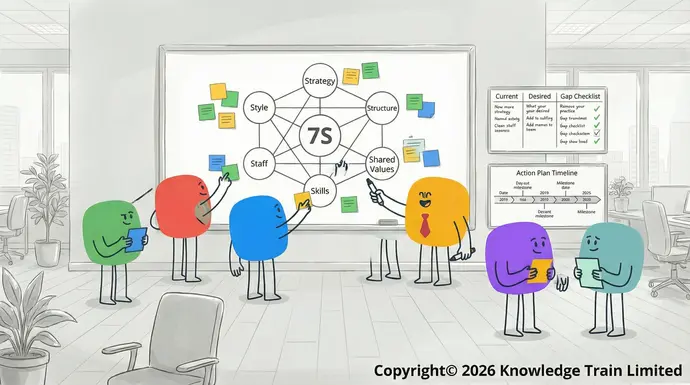
deployment. Prioritise issues that have the most significant impact on performance. This step is crucial for setting the foundation for an actionable plan that addresses these discrepancies.Developing an action plan
With a clear understanding of gaps and misalignments, the next step involves crafting an actionable plan. This plan should address each of the seven elements with specific, measurable objectives. Assign responsibilities and timelines to ensure accountability. Develop strategies to realign misaligned elements, such as restructuring teams or enhancing
skills through targeted training. Regularly review progress and adjust the plan as necessary to maintain alignment. Effective communication is key; keep all stakeholders informed and engaged throughout the process. This strategic approach encourages sustainable change and enhances organisational performance.Applications of the 7S framework
Strategic planning
The McKinsey 7S Model serves as a powerful tool for
strategic planning. It provides a comprehensive framework for assessing an organisation’s current state and aligning all elements towards future goals. By examining each of the seven components, leaders can identify areas that require adjustment to support new strategies. This holistic approach ensures that all aspects of the organisation are considered when developing and implementing strategic initiatives.Organisational change management
In
10 essential project management roles Knowledge Train19 Feb 2026
Get to know the 10 key project management roles. Understand these roles and their responsibilities to create high-performing teams and deliver exceptional results.