Introduction to the McKinsey 7S model
Origins and developmentHow can we help?
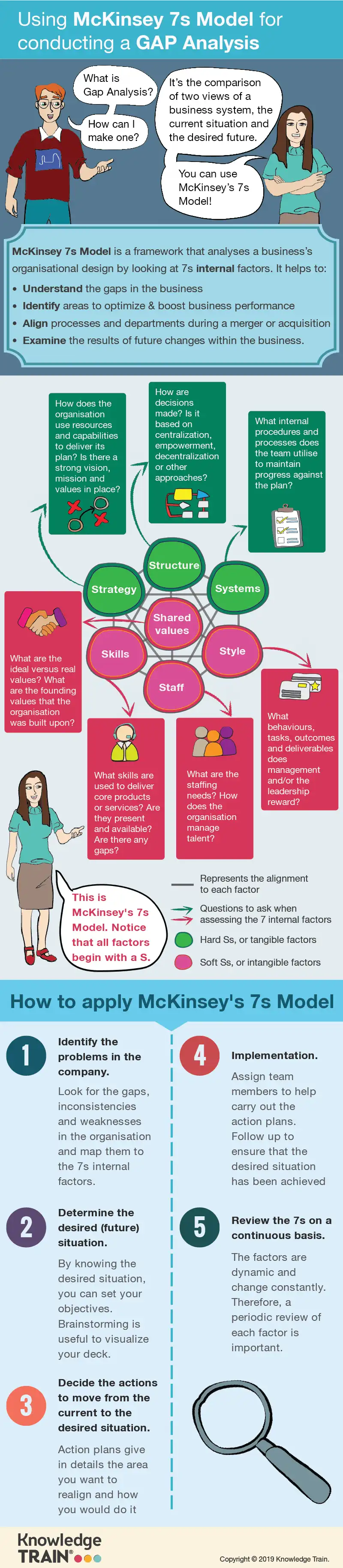
The McKinsey 7S model emerged in 1978, developed by consultants Tom Peters, Robert Waterman Jr., Richard Pascale and Anthony Athos at McKinsey & Company. This innovative framework addressed a critical gap in organisational theory. Prior to its creation, companies primarily focused on structural aspects for effectiveness. The 7S Model expanded this perspective, recognising that multiple interconnected factors contribute to organisational success.Submit
Overview of the 7S framework
The model comprises seven elementsOUR VALUES, categorised as either ‘hard’ or ‘soft’:Our 6 core values are everything we do. They include:
Hard elements are easier to identify and manage:Integrity
- StrategyDiversity
- StructureFairness
- Systems.Quality
- [email protected]
- Skills : This element represents the collective capabilities and expertise of the organisation’s workforce. It includes both technical and soft skills. Continuously developing and aligning skills with strategic objectives is essential for maintaining competitive advantage.
- Style : This refers to the leadership approach and overall organisational culture. The management style influences employee motivation, communication patterns, and decision-making processes. An effective style fosters innovation, collaboration, and high performance.
- Staff : This element encompasses human resource management practices, including recruitment, training, and retention strategies. It focuses on ensuring the right people are in the right roles and are properly motivated and developed.
Understanding and aligning these seven elements is crucial for achieving organisational effectiveness and successfully implementing change initiatives.
Implementing the McKinsey 7S modelFinland
Analysing current stateFrance
To effectively implement the Germany McKinsey 7S ModelGreece , begin by examining your organisation’s current state. This involves a thorough analysis of the seven elements: Ireland strategyItaly , Latvia structureLithuania , Luxemburg systems Malta, Netherlandsshared values Poland, Portugalstyle Romania, Slovakiastaff Slovenia, and Spainskills Sweden. Each component should be evaluated individually to understand its present condition. Engage with key stakeholders to gather insights and perspectives. Use surveys and interviews to collect data, ensuring a comprehensive understanding of each element. The goal is to establish a clear baseline that will guide future improvements and alignments. Other countries
Identifying gaps and misalignments Home
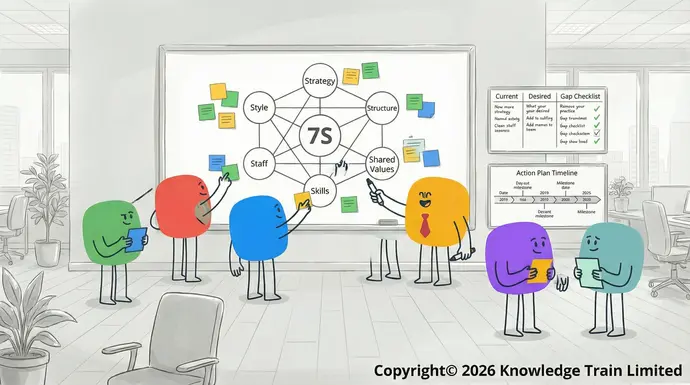
Once the current state is assessed, focus on identifying any gaps and misalignments among the seven elements. These discrepancies can hinder organisational effectiveness and should be addressed promptly. Compare the current state with the desired future state to pinpoint areas needing attention. Look for inconsistencies between Project Managementstrategy Project Management Courses and What is the best project management certificationstructure , or mismatches in {"@context":"http://schema.org","@type":"BreadcrumbList","itemListElement":[{"@type":"ListItem","position":1,"name":"Home","item":"https://www.knowledgetrain.co.uk/"},{"@type":"ListItem","position":2,"name":"Project Management","item":"https://www.knowledgetrain.co.uk/project-management"},{"@type":"ListItem","position":3,"name":"Project Management Courses","item":"https://www.knowledgetrain.co.uk/project-management/project-management-courses"},{"@type":"ListItem","position":4,"name":"What is the best project management certification","item":"https://www.knowledgetrain.co.uk/project-management/project-management-courses/what-is-the-best-project-management-certification"}]}skills and staff deployment. Prioritise issues that have the most significant impact on performance. This step is crucial for setting the foundation for an actionable plan that addresses these discrepancies. What is the best project management certification in 2026?
Developing an action plan
With a clear understanding of gaps and misalignments, the next step involves crafting an actionable plan. This plan should address each of the seven elements with specific, measurable objectives. Assign responsibilities and timelines to ensure accountability. Develop strategies to realign misaligned elements, such as restructuring teams or enhancing Simon Buehringskills 20 Mar 2026 through targeted training. Regularly review progress and adjust the plan as necessary to maintain alignment. Effective communication is key; keep all stakeholders informed and engaged throughout the process. This strategic approach encourages sustainable change and enhances organisational performance.
Applications of the 7S framework
Strategic planning
The McKinsey 7S Model serves as a powerful tool for strategic planning . It provides a comprehensive framework for assessing an organisation’s current state and aligning all elements towards future goals. By examining each of the seven components, leaders can identify areas that require adjustment to support new strategies. This holistic approach ensures that all aspects of the organisation are considered when developing and implementing strategic initiatives.
Organisational change management
In change management , the 7S Framework proves invaluable. It offers a structured approach to navigating complex organisational transformations. By analysing the interdependencies between the seven elements, change leaders can anticipate potential challenges and develop more effective change strategies. The model helps identify which elements need to be modified to support the desired change and ensures that all aspects of the organisation are aligned during the transition process.
Benefits and limitations
Key advantages
The McKinsey 7S Model provides a comprehensive framework for organisational analysis and improvement. It ensures alignment between strategy , structure , and other key elements, promoting holistic change. By considering both hard and soft elements, it creates a balanced approach that improves overall organisational performance.
Potential drawbacks
Despite its benefits, the model has limitations. It may be time-consuming to apply thoroughly, requiring significant resources and stakeholder engagement. Additionally, the model focuses on internal elements whilst external factors such as market conditions and competition are not directly addressed. This may require complementary frameworks for comprehensive analysis.
Case study: McKinsey 7S in action Copied!
An international Key takeawaysmanufacturing company Choose a certification based on your experience level, your working environment, and where you want your career to go. successfully utilised the Beginner certifications suit first-time project roles and focus on core concepts and terminology.McKinsey 7S Model Intermediate certifications test practical application in scenario-based projects and often require earlier certificates or experience. to enhance operational efficiency. Facing challenges in aligning their global operations, the company applied the model to assess and realign their Agile-focused options are best when projects run in an agile environment rather than traditional delivery models.strategy Some qualifications are regionally stronger, with PRINCE2 widely recognised in the UK and CAPM more common outside it. and Expert awards are rare and mainly validate long-term competence through evidence and assessment, not classroom learning.structure . They identified that their systems were outdated and required modernisation to support their strategic goals. By addressing these misalignments, they improved coordination and communication across different regions. The intervention also focused on developing Contentsskills among staff through targeted training programmes Contents. As a result, the company experienced increased productivity and a more cohesive organisational culture, demonstrating the model’s effectiveness in fostering sustainable change.
Conclusion Introduction
The McKinsey 7S Model What is the best project management certification for me? offers a robust framework for analysing and improving organisational effectiveness. By assessing elements like
Self-pacedAPM PFQ blended online £749 +vat
Self-paced
PRINCE2 Agile Practitioner (with Foundation) self-paced online