Key takeaways
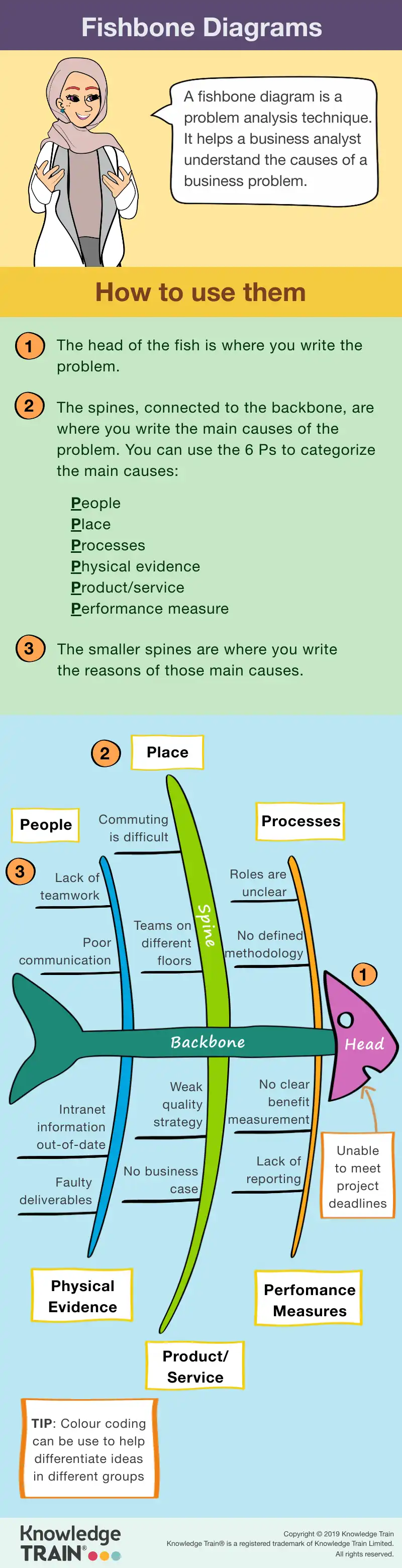
Fishbone diagrams help teams move from symptoms to root causes with a clear, shared view of the problem.Instructor-led
- Define a precise problem statement first, as it determines the focus and usefulness of the analysis.AgilePM Practitioner (with Foundation) course
- Brainstorm widely with cross-functional characters to reduce blind spots and incomplete cause lists.
- Group causes into clear categories, using standard headings or custom ones that fit your context.£1,699 +vat
- Review the diagram during the session to catch overlaps, duplicates, and missing factors early.
- Prioritise likely high-impact causes using simple ranking or voting before investigating solutions.See all dates
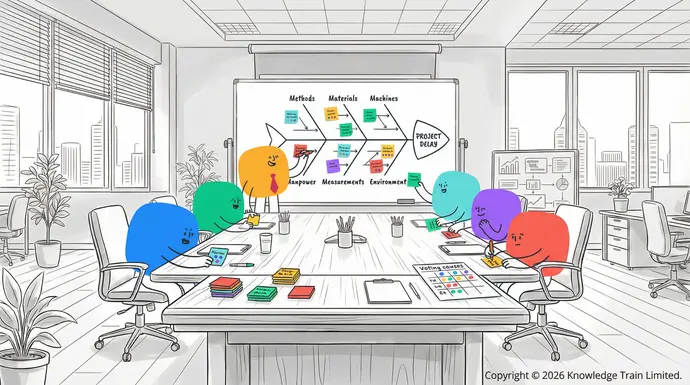

- : External conditions or settings that could affect outcomes.
These categories offer teams a structured approach to explore potential causes. £1,699 +vat
Custom categories
While standard categories are useful, organisations often benefit from tailoring categories to their specific needs or industries. Custom categories allow teams to focus on the unique aspects of their problem domain. For instance, a software development team might include categories like See all datesuser experience or software architecture . Meanwhile, a retail business might focus on Self-pacedcustomer feedback AgilePM Practitioner (with Foundation) self-paced online or supply chain£1,299 +vat .
The flexibility to customise categories ensures that the fishbone diagram remains relevant and effective for any given context. By adapting the diagram to suit their specific needs, organisations can enhance the accuracy and usefulness of their analysis, leading to more targeted and effective solutions.