Knowledge Train is a PRINCE2 Accredited Training Organization.

Knowledge Train is an AIPGF Accredited Training Organization.
- FAQs
- Infographic
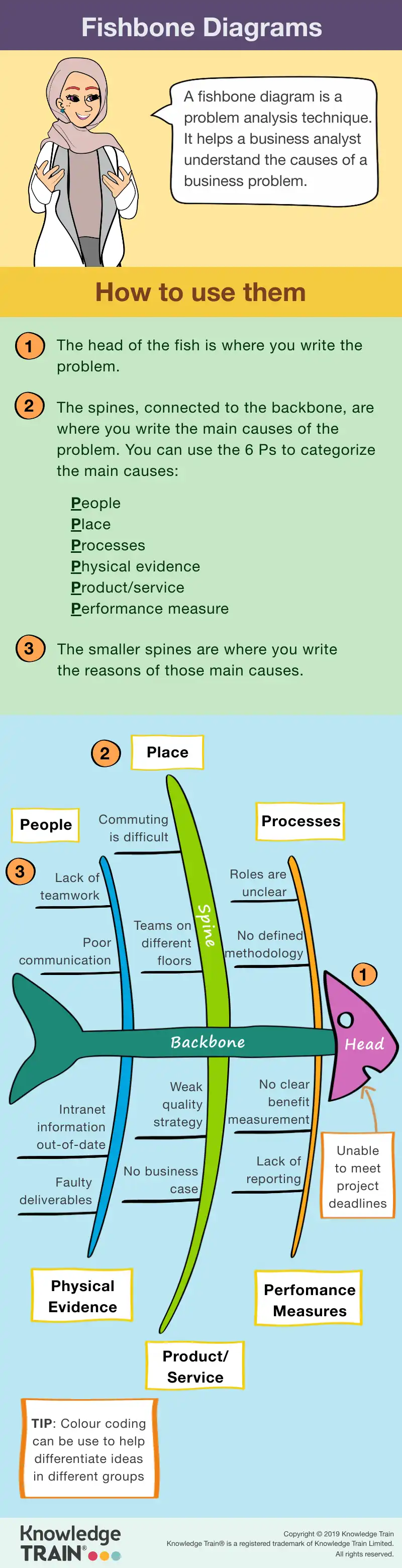
- Introduction to fishbone diagrams
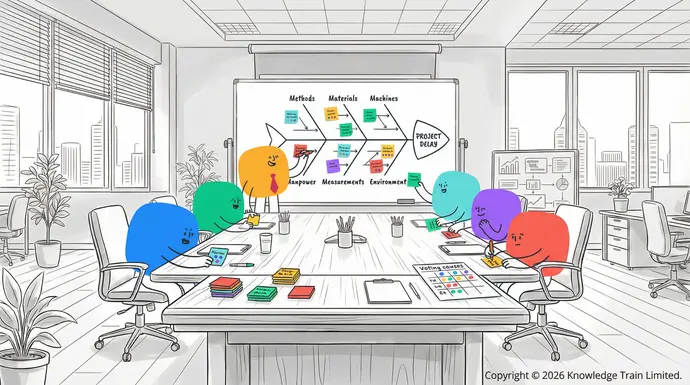
is a visual tool that helps teams identify and categorise the root causes of a problem. The diagram resembles the skeleton of a fish, making it intuitive and straightforward to use. At the ‘head’ of the diagram, you place the
problem statement
Find out more – the issue that needs addressing. This serves as the focal point of the analysis.+44 (0)207 148 5985 Branching off from the spine are the ‘bones,’ which represent potential causes[email protected] of the problem. These are organised into various categories, allowing teams to explore different angles of the issue systematically. Each ‘bone’ signifies a distinct cause or factor, and further branching can detail sub-causes. This structured layout not only clarifies complex problems but also encourages comprehensive brainstorming and analysis. Categories in fishbone diagrams Standard categories CONTACT USFishbone diagrams
often use standard categories to organise potential causes, especially in
quality management
- and engineering contexts. These categories help ensure a comprehensive analysis by covering different aspects of the problem. Commonly used categories include: MethodsUnited Kingdom
- : Processes or procedures that might contribute to the issue NameMaterials
- : Raw materials or components involved in the process Machines
Email: Equipment or tools used, which might have faults or limitations
Manpower
: Human factors, such as skills, training, or motivationSearch
PhoneMeasurements : Data or metrics that might be inaccurate or misleading Environment How can we help?: External conditions or settings that could affect outcomes. These categories offer teams a structured approach to explore potential causes.
Custom categoriesUnited KingdomSubmitWhile standard categories are useful, organisations often benefit from tailoring categories to their specific needs or industries. Custom categories allow teams to focus on the unique aspects of their problem domain. For instance, a software development team might include categories like Austria user experienceBelgium
or Bulgaria
OUR VALUESsoftware architectureCroatia
Our 6 core values are everything we do. They include:. Meanwhile, a retail business might focus on CyprusIntegritycustomer feedbackCzech RepublicDiversity or DenmarkFairnesssupply chainEstonia
- Quality.FinlandInnovationThe flexibility to customise categories ensures that the fishbone diagram remains relevant and effective for any given context. By adapting the diagram to suit their specific needs, organisations can enhance the accuracy and usefulness of their analysis, leading to more targeted and effective solutions.France
- Social responsibilityEnhance your skills with our expert-led coursesGermany
- SOCIAL RESPONSIBILITY Some of the charities we have helped over the years:
- Self-paced BCS Foundation Certificate in Business Analysis self-paced online
- £499 +vat
AWARDS
Self-pacedWe don’t go seeking awards, but here are two of the awards we have received for our training.
BCS International Diploma in Business Analysis self-paced online £2,199 +vat Request a quote Self-paced BCS Business Analysis Practice self-paced online+44 (0)207 148 5985
£749 +vat[email protected]
Belgium
Bulgaria
CroatiaCyprus
Purpose of a business caseservice company
The purpose of a business case is to provide a detailed and persuasive argument for a proposed initiative. It serves as a roadmap for decision-makers, outlining the steps and resources required to achieve specific goals and objectives. dealing with high complaint rates used fishbone diagrams to investigate recurring issues. The analysis highlighted problems such as inadequate staff training and poor communication channe
ls. By addressing these root causes, the company successfully reduced complaints and improved overall service quality. These case studies demonstrate the effectiveness of fishbone diagrams in solving real-world problems across diverse sectors. The business case provides a comprehensive analysis of the market, competition, and target audience, as well as a clear understanding of the costs and benefits of the proposed initiative.
Common challenges and solutions The purpose of a business case is to ensure that all stakeholders have a clear understanding of the project’s goals, the potential risks and benefits, and the resources required to achieve success.Challenges in using fishbone diagrams A business case helps organisations make informed decisions, allocate resources effectively, and ultimately achieve their desired outcomes.While fishbone diagrams are valuable tools, they are not without challenges. One typical obstacle is Benefits of developing a strong business caseincomplete cause identification Developing a strong business case has numerous benefits for organisations. Firstly, it helps to ensure that all stakeholders have a clear understanding of the initiative, its goals, and the resources required to achieve them.. Teams may overlook significant factors due to limited brainstorming or narrow focus areas. Another common issue is Secondly, a well-structured business case provides a comprehensive analysis of the market and competition, allowing organisations to identify potential risks and benefits. Additionally, a business case helps organisations allocate resources effectively and make informed decisions, maximising the chances of success.
category overlap Furthermore, it provides a clear framework for monitoring and evaluating the initiative’s progress, allowing organisations to make any necessary adjustments.
, where causes are placed in multiple categories, leading to confusion and redundancy. These challenges can hinder the effectiveness of the diagram and compromise the analysis. Overall, a strong business case provides organisations with a roadmap to success, reducing the risk of failure and increasing the chances of achieving their desired outcomes.Solutions and best practices Enhance your skills with our expert-led coursesTo overcome these challenges, teams should employ several strategies. For comprehensive cause identification , establish clear definitions for each category before starting the analysis. This clarity helps in appropriately categorising causes and minimises redundancy. Additionally, regular reviews of the diagram during the analysis process can help identify and rectify any overlaps or omissions, enhancing the diagram’s overall effectiveness., include team members from different departments in the brainstorming process. This ensures a broad range of perspectives and reduces the likelihood of missing critical causes. To address Related articles
FAQscategory overlap Instructor-led