Introduction to fishbone diagramsChoose from these project management certifications
What is a fishbone diagram?
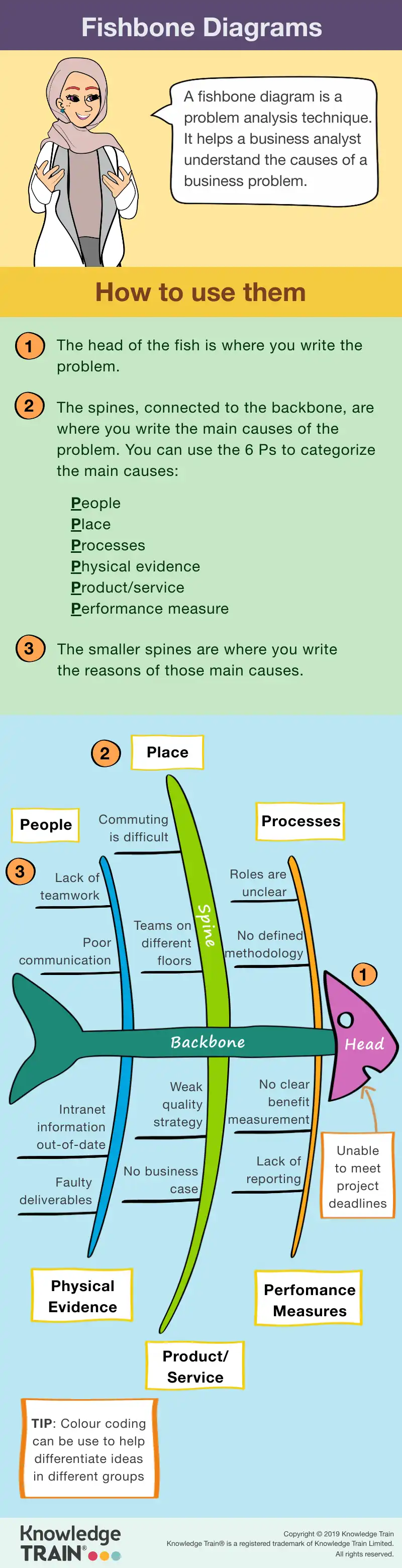
A fishbone diagram , also known as an Self-pacedIshikawa diagramAPM PFQ blended online or a cause-and-effect diagram, is a fundamental tool in quality management£749 +vat. Named after its creator, Kaoru Ishikawa, this diagram helps in identifying root causes of a problem by organising potential causes into useful categories. The visual structure resembles a fish skeleton, with the problem statement at the ‘head’ and contributing factors branching off as ‘bones.’ This structured approach facilitates effective brainstorming sessions, enabling teams to explore a wide range of possible causes systematically.
Importance in problem-solving
Fishbone diagrams are vital in quality management and continuous improvement efforts across numerous industries. They are one of the Seven Basic Quality Tools, essential for identifying and resolving issues efficiently. The diagrams help teams develop specific solutions and are particularly valuable in
- Manufacturing sectorsSelf-paced use them to identify and address production process inefficienciesPRINCE2 Agile Practitioner (with Foundation) self-paced online
- Healthcare organisations use them to improve patient care by analysing procedural issues£1,399 +vat
- Service industries use them to enhance customer satisfaction by resolving service concerns.
In essence, fishbone diagrams not only aid in identifying the root causes of problems but also promote a culture of systematic analysis and continuous improvement. By applying this method, organisations can ensure that they address issues comprehensively, leading to more effective and lasting solutions.
Understanding fishbone diagram componentsSelf-paced
Basic structure of a fishbone diagramAgilePM Practitioner (with Foundation) self-paced online
A fishbone diagram£1,299 +vat is a visual tool that helps teams identify and categorise the root causes of a problem. The diagram resembles the skeleton of a fish, making it intuitive and straightforward to use. At the ‘head’ of the diagram, you place the Beginner project management certificationsproblem statementThis category includes only those certifications that have no entry requirements and are suitable for new project managers or those who have some prior experience in project management and want to gain their first certification.
Categorising causes
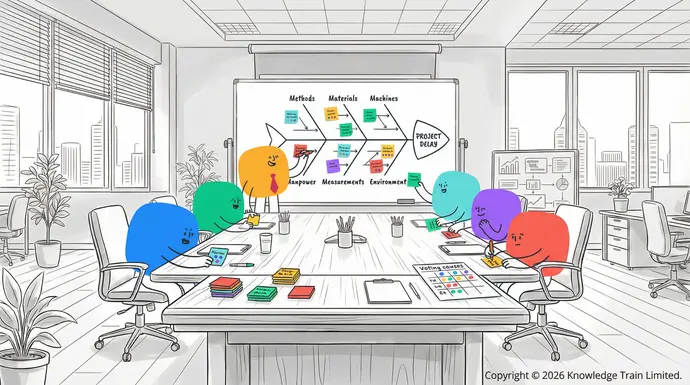
After brainstorming, organise the identified causes into relevant categories. These categories can be standard ones like Methods, Materials, and Manpower, or custom ones tailored to your specific context. Proper categorisation helps in visualising the problem from different angles and ensures no potential cause is overlooked.
Self-paced
Create categories relevant to your personal challenge, such as daily habits, environment, and relationships. Then list potential causes under each category to understand what’s affecting your situation.APM PFQ blended online