Key takeawaysCoursesGive us a call
Fishbone diagrams help teams move from symptoms to root causes with a clear, shared view of the problem.PROJECT MANAGEMENT
- Define a precise problem statement first, as it determines the focus and usefulness of the analysis.PRINCE2
- Brainstorm widely with cross-functional characters to reduce blind spots and incomplete cause lists.®+44 (0)207 148 5985
- Group causes into clear categories, using standard headings or custom ones that fit your context.Foundation
- Review the diagram during the session to catch overlaps, duplicates, and missing factors early.Learn the fundamentals of the PRINCE2 method.Or chat with us using the link at the bottom of the screen.
- Prioritise likely high-impact causes using simple ranking or voting before investigating solutions.Practitioner Contact us with questions about the courses on this page, or about which project management certification or training is best for you.
Introduction to fishbone diagramsIncludes Foundation & Practitioner combined option.PRINCE2 course
What is a fishbone diagram?AI Project Governance Framework (AIPGF), or an
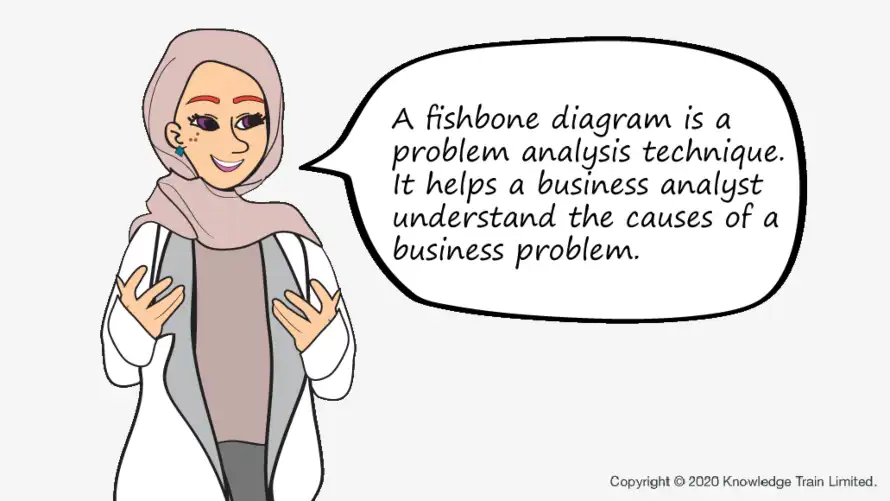
A Foundation agile project management coursefishbone diagramLearn the fundamentals of the governance framework. to boost your career. , also known as an Practitioner PRINCE2Ishikawa diagramIncludes Foundation & Practitioner combined option.® or a cause-and-effect diagram, is a fundamental tool in Better Business Cases, MSPquality management™®. Named after its creator, Kaoru Ishikawa, this diagram helps in identifying root causes of a problem by organising potential causes into useful categories. The visual structure resembles a fish skeleton, with the problem statement at the ‘head’ and contributing factors branching off as ‘bones.’ This structured approach facilitates effective brainstorming sessions, enabling teams to explore a wide range of possible causes systematically.Foundation , ITIL
Importance in problem-solvingLearn the fundamentals of Better Business cases.®
Fishbone diagrams are vital in quality management and continuous improvement efforts across numerous industries. They are one of the Seven Basic Quality Tools, essential for identifying and resolving issues efficiently. The diagrams help teams develop specific solutions and are particularly valuable inPractitioner , P3O
- Manufacturing sectorsIncludes Foundation & Practitioner combined option.® use them to identify and address production process inefficienciesP3O, PRINCE2
- Healthcare organisations®® use them to improve patient care by analysing procedural issuesFoundation Agile, RESILIA
- Service industriesLearn the fundamentals of the P3O project management office.® use them to enhance customer satisfaction by resolving service concerns.Practitioner , and the Swirl logo are registered trademarks of the PeopleCert group. Used under licence from PeopleCert. All rights reserved. AgilePM
In essence, fishbone diagrams not only aid in identifying the root causes of problems but also promote a culture of systematic analysis and continuous improvement. By applying this method, organisations can ensure that they address issues comprehensively, leading to more effective and lasting solutions.Includes Foundation & Practitioner combined option.®
Understanding fishbone diagram componentsWorkshops and AgileBA
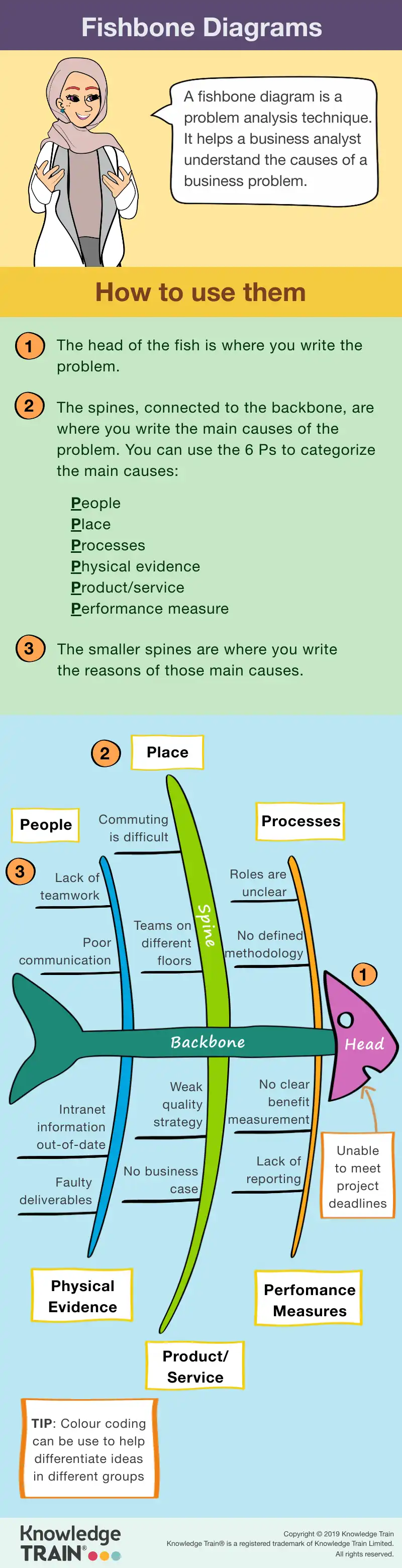
Basic structure of a fishbone diagramIntroduction to Project Management ®
A 1-day workshop to learn the basics of project management. are registered trademarks of Agile Business Consortium Limited. All rights reserved. The APMG International AgilePM and Swirl Device logo, APMG International AgileBA and Swirl Device Logo, APMG International Change Management and APMG International Better Business Cases and Swirl Device logo are trademarks of The APM Group Limited, used under permission of The APM Group Limited. All rights reserved. Better Business Cases™ is a trademark of Her Majesty’s Treasury. All rights reserved. DevOps Foundationfishbone diagramProject Management Essentials ® is a visual tool that helps teams identify and categorise the root causes of a problem. The diagram resembles the skeleton of a fish, making it intuitive and straightforward to use. At the ‘head’ of the diagram, you place the 2-day workshop to learn how to manage projects without getting certified. is a registered mark of the DevOps Institute. “PMI”, “PMBOKproblem statementWriting Business Cases ® – the issue that needs addressing. This serves as the focal point of the analysis.Half-day workshop to learn to write robust business cases. Guide”, “PMP” and “CAPM” are registered marks of Project Management Institute, Inc. Knowledge Train Scrum Essentials™, Business Learning Library (BLL)™, Business Analysis Learning Library (BALL)™, Agile Learning Library (ALL)™, IT Learning Library (ITLL)™, and Compliance Learning Library (CLL)™ are trademarks of Knowledge Train Limited. All rights reserved.
Branching off from the spine are the ‘bones,’ which represent potential AI in Project Management Knowledge Train Ltd is an Introducer Appointed Representative of NewDay Cards Ltd for the Newpay finance product provided by NewDay Ltd. NewDay Cards Ltd acts as a credit broker, not a lender. We will introduce you exclusively to Newpay finance products provided by NewDay Limited under this Introducer Appointed Representative arrangement. Finance available from other lenders is not covered by this arrangement. NewDay Ltd and Newday Cards Ltd are authorised and regulated by the Financial Conduct Authority (ref nos 690292 and 682417 respectively).causesLearn how to use AI tools in everyday project work. of the problem. These are organised into various categories, allowing teams to explore different angles of the issue systematically. Each ‘bone’ signifies a distinct cause or factor, and further branching can detail sub-causes. This structured layout not only clarifies complex problems but also encourages comprehensive brainstorming and analysis.ARTIFICIAL INTELLIGENCE (AI)
Categories in fishbone diagramsBCS AI
Standard categoriesFoundation
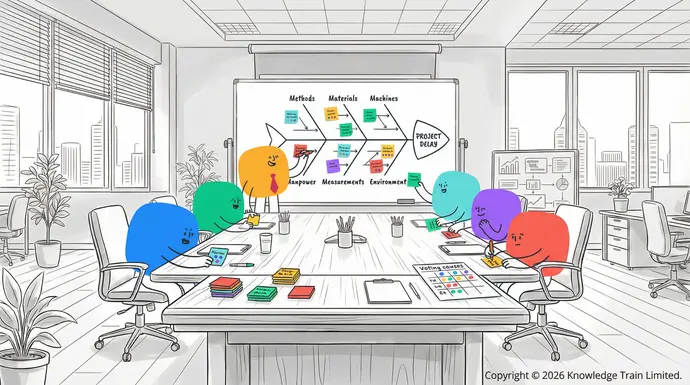
Fishbone diagramsLearn the fundamentals of artificial intellegence. often use standard categories to organise potential causes, especially in AI Project Governance Framework (AIPGF)Searchquality managementFoundation and engineering contexts. These categories help ensure a comprehensive analysis by covering different aspects of the problem. Commonly used categories include:Learn the fundamentals of the governance framework.
- MethodsPractitioner : Processes or procedures that might contribute to the issueIncludes Foundation & Practitioner combined option.
- MaterialsWorkshops : Raw materials or components involved in the processAI in Project Management
- MachinesLearn how to use AI tools in everyday project work. : Equipment or tools used, which might have faults or limitationsAGILE
- ManpowerAgilePM : Human factors, such as skills, training, or motivation®Request a quote
- Measurements – Agile Project Management : Data or metrics that might be inaccurate or misleadingFoundation
- EnvironmentLearn the key principles of Agile Project Management. : External conditions or settings that could affect outcomes.Practitioner
These categories offer teams a structured approach to explore potential causes.Includes Foundation & Practitioner combined option.
Custom categoriesPRINCE2
While standard categories are useful, organisations often benefit from tailoring categories to their specific needs or industries. Custom categories allow teams to focus on the unique aspects of their problem domain. For instance, a software development team might include categories like AgileManage Consentuser experienceFoundation or Learn the fundamentals of the PRINCE2 Agile method.To provide the best experiences, we use technologies like cookies to store and/or access device information. Consenting to these technologies will allow us to process data such as browsing behavior or unique IDs on this site. Not consenting or withdrawing consent, may adversely affect certain features and functions.software architecturePractitioner . Meanwhile, a retail business might focus on Includes Foundation & Practitioner combined option. customer feedbackScrum or Scrum Essentials supply chainSelf-paced training course to learn the essentials of Scrum.Functional.Scrum Master
The flexibility to customise categories ensures that the fishbone diagram remains relevant and effective for any given context. By adapting the diagram to suit their specific needs, organisations can enhance the accuracy and usefulness of their analysis, leading to more targeted and effective solutions.Choose Scrum Alliance or Scrum.org Scrum Master training courses.
Fishbone diagram variations and procedures Learn the fundamentals of business analysis.
Variations of the fishbone diagram Modelling Business Processes
Fishbone diagrams come in several variations, each designed to suit specific analytical needs. These nuanced versions adapt the basic structure to address particular types of problems or sectors. For instance, some organisations may opt for a Gain practitioner certificate in modelling business processes.simple fishbone diagram Business Analysis Practices without predetermined categories. This approach allows teams to define categories that are most relevant to their context, promoting flexibility in analysis. Gain practitioner certificate in business analysis practices.
Other variations may incorporate additional layers of complexity. For example, a Requirements Engineering complex fishbone diagramThe technical storage or access is necessary for the legitimate purpose of storing preferences that are not requested by the subscriber or user.Gain practitioner certificate in requirements engineering. might include sub-categories or integrate quantitative data to enhance the depth of analysis. These variations are particularly useful in industries that require detailed scrutiny, such as engineering or pharmaceuticals. By tailoring the diagram to specific needs, teams can ensure a more precise and effective root cause analysis. Business Analysis International Diploma
Step-by-step procedure for creating a fishbone diagram All 4 courses bundled into this Diploma certification package.
Identifying the problem AgileBA
The first step in creating a fishbone diagram is to clearly define the ®problem statementStatistics – Agile Business Analysis. This should be a concise description of the issue you are trying to address. A well-defined problem statement serves as the ‘head’ of the diagram and guides the entire analysis process. Foundation training
Brainstorming causes Learn the fundamentals of Agile Business Analysis.
Once the problem is defined, the next step is to Practitioner brainstorm potential causesStatistics4-day course including Foundation.. Encourage team collaboration to gather a wide range of possible factors. Use techniques such as mind mapping or group discussions to ensure all perspectives are considered. This comprehensive list of causes will form the ‘bones’ of your diagram. PMI
Categorising causes ®
After brainstorming, organise the identified causes into PMI-PBA relevant categories Self-paced course to prepare you for the exam (exam not included).. These categories can be standard ones like Methods, Materials, and Manpower, or custom ones tailored to your specific context. Proper categorisation helps in visualising the problem from different angles and ensures no potential cause is overlooked. Business Analysis Learning Library (BALL)™
Analysing and prioritising causes CHANGE MANAGEMENT
The final step is to APMG Change Managementanalyse and prioritise the causesThe technical storage or access that is used exclusively for statistical purposes.Foundation . Evaluate each potential cause in terms of its impact on the problem. Use techniques such as voting or ranking to identify the most critical causes for further investigation. Focusing on these key factors will help in developing targeted and effective solutions. Learn the fundamentals of enterprise change management.
Practical applications and case studiesThe technical storage or access that is used exclusively for anonymous statistical purposes. Without a subpoena, voluntary compliance on the part of your Internet Service Provider, or additional records from a third party, information stored or retrieved for this purpose alone cannot usually be used to identify you.Practitioner
Real-world applications of fishbone diagrams Includes Foundation & Practitioner combined option.
Fishbone diagrams are widely used across various industries to identify and resolve complex issues. In PROGRAMME MANAGEMENTmanufacturing MSP, these diagrams help pinpoint inefficiencies in production processes, leading to improved efficiency and reduced waste. By systematically analysing potential causes, manufacturers can address issues such as equipment malfunctions or material defects. ®
In the Foundation healthcareMarketingLearn the fundamentals of programme management. sector, fishbone diagrams are instrumental in enhancing patient safety and care quality. They allow healthcare professionals to identify factors contributing to medical errors or delays in treatment, leading to better patient outcomes. Practitioner
In the Includes Foundation & Practitioner combined option.service INFORMATION TECHNOLOGY (IT) industry, companies employ fishbone diagrams to improve customer satisfaction. By analysing complaints and service delivery processes, businesses can identify root causes of customer dissatisfaction and implement effective solutions. This results in enhanced service quality and customer loyalty.MarketingITIL
Case studies showcasing success ®
Several organisations have successfully employed fishbone diagrams to tackle complex challenges. A notable example is a Foundation manufacturing company Learn the fundamentals of ITIL service management. that faced frequent production line stoppages. By using a fishbone diagram, the team identified multiple contributing factors, including outdated machinery and insufficient staff training. Addressing these issues led to a significant reduction in downtime and increased productivity. Strategist DPI
In 3-day ITIL Strategist: Direct, Plan & Improve (DPI) course.healthcare Specialist: DSV , a hospital used fishbone diagrams to analyse the root causes of high patient waiting times. The analysis revealed several factors, such as inefficient scheduling and understaffed departments. Implementing targeted solutions based on these findings resulted in reduced waiting times and improved patient satisfaction. 3-day ITIL Specialist: Drive Stakeholder Value (DSV) course.
A The technical storage or access is required to create user profiles to send advertising, or to track the user on a website or across several websites for similar marketing purposes.service company Specialist: CDS Manage services
Manage {vendor_count} vendors
Read more about these purposes
Accept Deny
View preferences