Using fishbone diagrams effectively in your projectsReviews & success stories

Key takeawaysJonathan E., Programme Support Officer
Fishbone diagrams help teams move from symptoms to root causes with a clear, shared view of the problem.
- Define a precise problem statement first, as it determines the focus and usefulness of the analysis.
- Brainstorm widely with cross-functional characters to reduce blind spots and incomplete cause lists.
- Group causes into clear categories, using standard headings or custom ones that fit your context.The live online sessions were engaging and interactive, and the self-paced materials slotted easily around my workload.
- Review the diagram during the session to catch overlaps, duplicates, and missing factors early.Mark C., Delivery Lead
- Prioritise likely high-impact causes using simple ranking or voting before investigating solutions.Knowledge Train by numbers
Introduction to fishbone diagrams
What is a fishbone diagram?
A fishbone diagram , also known as an Ishikawa diagramJoin thousands of successful AgilePM learners or a cause-and-effect diagram, is a fundamental tool in quality managementEnrol today!. Named after its creator, Kaoru Ishikawa, this diagram helps in identifying root causes of a problem by organising potential causes into useful categories. The visual structure resembles a fish skeleton, with the problem statement at the ‘head’ and contributing factors branching off as ‘bones.’ This structured approach facilitates effective brainstorming sessions, enabling teams to explore a wide range of possible causes systematically.
Importance in problem-solvingFAQs
Fishbone diagrams are vital in quality management and continuous improvement efforts across numerous industries. They are one of the Seven Basic Quality Tools, essential for identifying and resolving issues efficiently. The diagrams help teams develop specific solutions and are particularly valuable inDoes the AgilePM Foundation course include the exam?
- Manufacturing sectors use them to identify and address production process inefficiencies
- Healthcare organisationsYes, Knowledge Train’s AgilePM Foundation courses include both the exam and the AgilePM Handbook. use them to improve patient care by analysing procedural issuesThis ensures you have everything you need to prepare effectively and gain the
- Service industriesAgilePM Foundation use them to enhance customer satisfaction by resolving service concerns. certification.
In essence, fishbone diagrams not only aid in identifying the root causes of problems but also promote a culture of systematic analysis and continuous improvement. By applying this method, organisations can ensure that they address issues comprehensively, leading to more effective and lasting solutions.How long does AgilePM Foundation training take?
Understanding fishbone diagram components
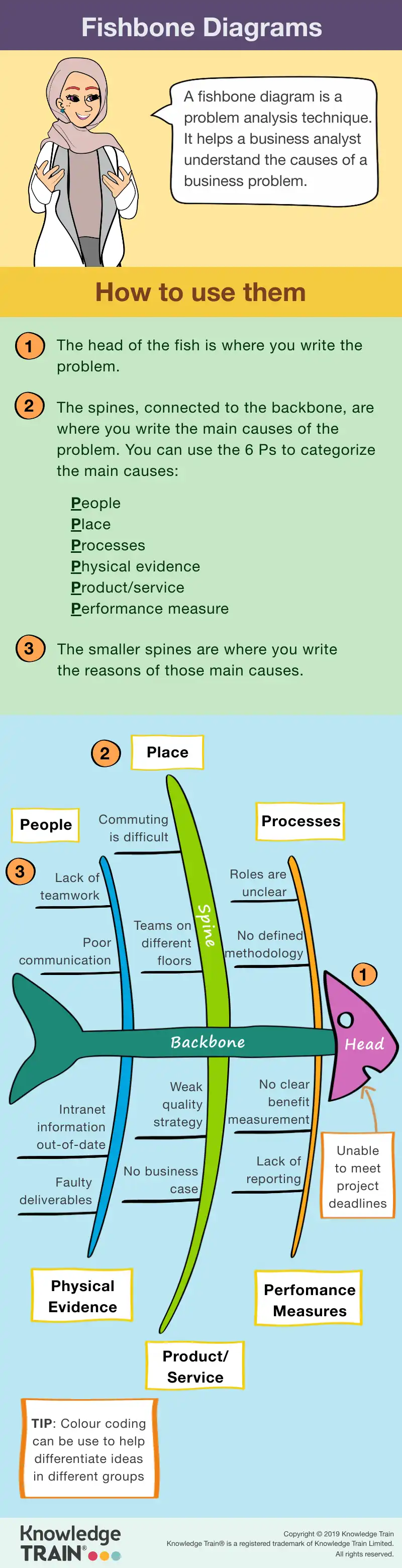
Basic structure of a fishbone diagram
A Instructor-led AgilePM Foundation trainingfishbone diagram: 3 days is a visual tool that helps teams identify and categorise the root causes of a problem. The diagram resembles the skeleton of a fish, making it intuitive and straightforward to use. At the ‘head’ of the diagram, you place the Self-paced AgilePM Foundation online trainingproblem statement: 23 hours – the issue that needs addressing. This serves as the focal point of the analysis.Both formats provide comprehensive coverage of Agile principles and practices, with flexibility to suit your schedule and learning style.
Branching off from the spine are the ‘bones,’ which represent potential Is the AgilePM Foundation difficult?causes of the problem. These are organised into various categories, allowing teams to explore different angles of the issue systematically. Each ‘bone’ signifies a distinct cause or factor, and further branching can detail sub-causes. This structured layout not only clarifies complex problems but also encourages comprehensive brainstorming and analysis.
Categories in fishbone diagramsNo. A high pass rate at Knowledge Train shows that AgilePM Foundation training and certification are not difficult if you dedicate time to preparation.
Standard categoriesStudents with prior experience in Agile or project management generally find the exam straightforward. Even beginners can pass with adequate study and practice.
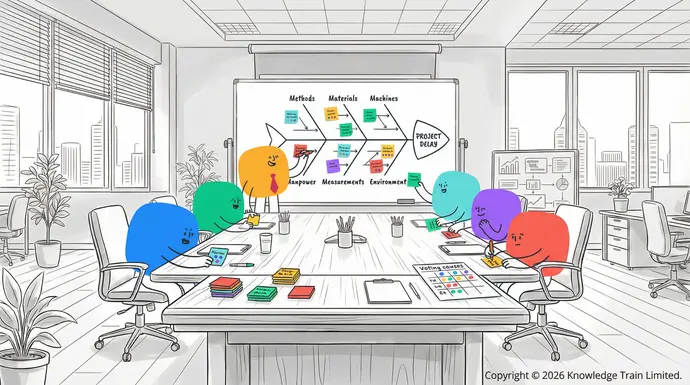
Fishbone diagramsWe recommend a consistent study plan and use of official AgilePM Foundation materials, including the syllabus, course handbook, and sample exams. often use standard categories to organise potential causes, especially in Is the AgilePM Foundation worth doing?quality management and engineering contexts. These categories help ensure a comprehensive analysis by covering different aspects of the problem. Commonly used categories include:
- MethodsYes, the : Processes or procedures that might contribute to the issueAgilePM Foundation
- Materials is definitely worth doing.: Raw materials or components involved in the processThis certification demonstrates your understanding of Agile project management and strengthens your CV. It can enhance your career prospects, make you more appealing to employers, and potentially lead to higher salaries and advancement opportunities.
- MachinesWhat do you learn on an AgilePM Foundation course?: Equipment or tools used, which might have faults or limitations
- Manpower : Human factors, such as skills, training, or motivationAn AgilePM Foundation course teaches the core philosophy, principles, and lifecycle of Agile projects.
- MeasurementsYou’ll learn about the key products produced during an Agile project, their purpose, and how Agile roles collaborate to deliver value efficiently.: Data or metrics that might be inaccurate or misleadingThis foundation equips you to apply Agile approaches confidently in real-world project environments.
- EnvironmentWhat is AgilePM Foundation?: External conditions or settings that could affect outcomes.
These categories offer teams a structured approach to explore potential causes.
Custom categoriesAgilePM Foundation is the entry-level qualification from APMG International for Agile project management.
While standard categories are useful, organisations often benefit from tailoring categories to their specific needs or industries. Custom categories allow teams to focus on the unique aspects of their problem domain. For instance, a software development team might include categories like You can earn this certification through a 3-day classroom course or approximately 23 hours of online self-paced study.user experienceTo pass, you must achieve at least or 60% (30 out of 50 questions)software architecture in a 40-minute multiple-choice exam.. Meanwhile, a retail business might focus on What is the format for the AgilePM Foundation exam?customer feedback or supply chainThe AgilePM Foundation exam is a .multiple-choice, closed-book
The flexibility to customise categories ensures that the fishbone diagram remains relevant and effective for any given context. By adapting the diagram to suit their specific needs, organisations can enhance the accuracy and usefulness of their analysis, leading to more targeted and effective solutions. test. It contains
Fishbone diagram variations and proceduresOpening hours
Variations of the fishbone diagramMonday to Friday – 09:00 to 17:15
Fishbone diagrams come in several variations, each designed to suit specific analytical needs. These nuanced versions adapt the basic structure to address particular types of problems or sectors. For instance, some organisations may opt for a Get in touchsimple fishbone diagram without predetermined categories. This approach allows teams to define categories that are most relevant to their context, promoting flexibility in analysis.
Other variations may incorporate additional layers of complexity. For example, a complex fishbone diagram might include sub-categories or integrate quantitative data to enhance the depth of analysis. These variations are particularly useful in industries that require detailed scrutiny, such as engineering or pharmaceuticals. By tailoring the diagram to specific needs, teams can ensure a more precise and effective root cause analysis.
Step-by-step procedure for creating a fishbone diagramName
Identifying the problem
The first step in creating a fishbone diagram is to clearly define the problem statementPhone. This should be a concise description of the issue you are trying to address. A well-defined problem statement serves as the ‘head’ of the diagram and guides the entire analysis process.
Brainstorming causes
Once the problem is defined, the next step is to Emailbrainstorm potential causes . Encourage team collaboration to gather a wide range of possible factors. Use techniques such as mind mapping or group discussions to ensure all perspectives are considered. This comprehensive list of causes will form the ‘bones’ of your diagram.
Categorising causesSubmit
After brainstorming, organise the identified causes into relevant categories . These categories can be standard ones like Methods, Materials, and Manpower, or custom ones tailored to your specific context. Proper categorisation helps in visualising the problem from different angles and ensures no potential cause is overlooked.{"@context":"http://schema.org","@graph":[{"@type":"WebPage","headline":"Agile PM Foundation Training and Online Courses with Exam","url":"https://www.knowledgetrain.co.uk/agile/agile-project-management/agile-project-management-course/agile-pm-foundation","significantLink":"https://apmg-international.com/product/agilepm/foundation","about":[{"@type":"Thing","name":"training","sameAs":["http://en.wikipedia.org/wiki/Training","https://www.google.com/search?&kgmid=/m/014jg3","https://www.wikidata.org/wiki/Q918385"]},{"@type":"Thing","name":"certification","sameAs":["http://en.wikipedia.org/wiki/Professional_certification","https://www.google.com/search?&kgmid=/m/01vt2","https://www.wikidata.org/wiki/Q16023913"]},{"@type":"Thing","name":"agile project management","sameAs":["http://en.wikipedia.org/wiki/Agile_software_development","https://www.google.com/search?&kgmid=/m/02zhbn","https://www.wikidata.org/wiki/Q30232"]}],"mentions":[{"@type":"Thing","name":"elearning","sameAs":["https://en.wikipedia.org/wiki/Educational_technology","https://www.google.com/search?&kgmid=/m/067_f8","https://www.wikidata.org/wiki/Q1068473"]},{"@type":"Thing","name":"online course","sameAs":["https://en.wikipedia.org/wiki/Educational_technology","https://www.google.com/search?&kgmid=/m/067_f8","https://www.wikidata.org/wiki/Q1068473"]},{"@type":"Thing","name":"online courses","sameAs":["https://en.wikipedia.org/wiki/Educational_technology","https://www.google.com/search?&kgmid=/m/067_f8","https://www.wikidata.org/wiki/Q1068473"]},{"@type":"Thing","name":"e-learning","sameAs":["https://en.wikipedia.org/wiki/Educational_technology","https://www.google.com/search?&kgmid=/m/067_f8","https://www.wikidata.org/wiki/Q1068473"]},{"@type":"Thing","name":"online learning","sameAs":["https://en.wikipedia.org/wiki/Educational_technology","https://www.google.com/search?&kgmid=/m/067_f8","https://www.wikidata.org/wiki/Q1068473"]},{"@type":"Thing","name":"agile","sameAs":["https://en.wikipedia.org/wiki/Agile_software_development","https://www.google.com/search?&kgmid=/m/02zhbn","https://www.wikidata.org/wiki/Q30232"]},{"@type":"Thing","name":"agile project management","sameAs":["https://en.wikipedia.org/wiki/Agile_software_development","https://www.google.com/search?&kgmid=/m/02zhbn","https://www.wikidata.org/wiki/Q30232"]},{"@type":"Thing","name":"agile methodology","sameAs":["https://en.wikipedia.org/wiki/Agile_software_development","https://www.google.com/search?&kgmid=/m/02zhbn","https://www.wikidata.org/wiki/Q30232"]},{"@type":"Thing","name":"product owner","sameAs":["https://en.wikipedia.org/wiki/Scrum_(software_development)","https://www.google.com/search?&kgmid=/m/0ck_p8","https://www.wikidata.org/wiki/Q460387"]},{"@type":"Thing","name":"virtual classroom","sameAs":["https://en.wikipedia.org/wiki/Distance_education","https://www.google.com/search?&kgmid=/m/02h32","https://www.wikidata.org/wiki/Q159595"]},{"@type":"Thing","name":"project management","sameAs":["https://en.wikipedia.org/wiki/Project_management","https://www.google.com/search?&kgmid=/m/05_p2","https://www.wikidata.org/wiki/Q179012"]},{"@type":"Thing","name":"curriculum","sameAs":["https://en.wikipedia.org/wiki/Curriculum","https://www.google.com/search?&kgmid=/m/02fk8v","https://www.wikidata.org/wiki/Q207137"]},{"@type":"Thing","name":"examinations","sameAs":["https://en.wikipedia.org/wiki/Exam","https://www.google.com/search?&kgmid=/m/01gd1c","https://www.wikidata.org/wiki/Q1355298"]},{"@type":"Thing","name":"examination","sameAs":["https://en.wikipedia.org/wiki/Exam","https://www.google.com/search?&kgmid=/m/01gd1c","https://www.wikidata.org/wiki/Q1355298"]},{"@type":"Thing","name":"exams","sameAs":["https://en.wikipedia.org/wiki/Exam","https://www.google.com/search?&kgmid=/m/01gd1c","https://www.wikidata.org/wiki/Q1355298"]},{"@type":"Thing","name":"exam","sameAs":["https://en.wikipedia.org/wiki/Exam","https://www.google.com/search?&kgmid=/m/01gd1c","https://www.wikidata.org/wiki/Q1355298"]},{"@type":"Thing","name":"scrum","sameAs":["https://en.wikipedia.org/wiki/Scrum_(software_development)","https://www.google.com/search?&kgmid=/m/0ck_p8","https://www.wikidata.org/wiki/Q460387"]},{"@type":"Thing","name":"scrum master","sameAs":["https://en.wikipedia.org/wiki/Scrum_(software_development)","https://www.google.com/search?&kgmid=/m/0ck_p8","https://www.wikidata.org/wiki/Q460387"]},{"@type":"Thing","name":"dsdm atern","sameAs":["https://en.wikipedia.org/wiki/Dynamic_systems_development_method","https://www.google.com/search?&kgmid=/m/031748","https://www.wikidata.org/wiki/Q2335896"]},{"@type":"Thing","name":"instructor led training","sameAs":["https://en.wikipedia.org/wiki/Instructor-led_training","https://www.google.com/search?&kgmid=/m/05t01p3","https://www.wikidata.org/wiki/Q6041810"]}]},{"@type":"FAQPage","mainEntity":[{"@type":"Question","name":"Does the AgilePM Foundation course include the exam?","acceptedAnswer":{"@type":"Answer","text":"
Yes, Knowledge Train’s AgilePM Foundation courses include both the exam and the AgilePM Handbook.
No. A high pass rate at Knowledge Train shows that AgilePM Foundation training and certification are not difficult if you dedicate time to preparation.
An AgilePM Foundation course teaches the core philosophy, principles, and lifecycle of Agile projects.
You’ll learn about the key products produced during an Agile project, their purpose, and how
Challenges in using fishbone diagrams
While fishbone diagrams are valuable tools, they are not without challenges. One typical obstacle is incomplete cause identification. Teams may overlook significant factors due to limited brainstorming or narrow focus areas. Another common issue is category overlap, where causes are placed in multiple categories, leading to confusion and redundancy. These challenges can hinder the effectiveness of the diagram and compromise the analysis.
Solutions and best practicesAgile roles collaborate to deliver value efficiently.
You can earn this certification through a 3-day classroom course or approximately 23 hours of online self-paced study.
60% (30 out of 50 questions)
in a 40-minute multiple-choice exam.
"}},{"@type":"Question","name":"What is the format for the AgilePM Foundation exam?","acceptedAnswer":{"@type":"Answer","text":"
multiple-choice, closed-book
test. It contains
50 questions
, and you must score
at least 25 marks (50%)