What is Agile?Portugal

- Working software over comprehensive documentationCore project management philosophies
- Customer collaboration over contract negotiationProject management methodologies
- Responding to change over following a plan may be classified into two broad categories, based on their fundamental philosophies. These are
Agile principleslinear
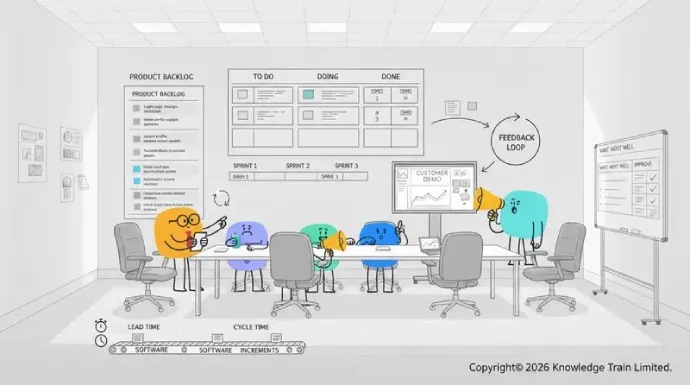
Agile is supported by twelve guiding principles, intended to help teams create successful products in an ever-changing environment. These principles inform day-to-day Agile practices. and
- Satisfy the customer through early and continuous delivery of valuable softwareiterative
- Welcome changing requirements, even late in development. It’s important to be aware of these core strategies when choosing the best approach for your project.
- Deliver working software frequently, from a couple of weeks to a couple of monthsLinear (Waterfall) approach
- Collaborate daily between business people and developersDescription and key principles
- Build The projectsWaterfall around motivated individuals and provide support strategy is a linear approach where a project is broken down into distinct phases, and each phase is completed before progressing to the next. Core tenets of this approach include detailed upfront planning, comprehensive documentation at each phase, rigorous change control processes, and a strong emphasis on following the planned path.
- Convey information face-to-face whenever possibleAdvantages and disadvantages
- Working software is the primary measure of progressAdvantages:
- Maintain a sustainable development paceClear structure and defined milestones
- Continuous attention to technical excellence and good designWell-defined deliverables
- Simplicity – the art of maximising the work not done – is essentialEasier costs and timelines estimation.
- Self-organising teams produce the best architectures, requirements, and designsDisadvantages:
- Regularly reflect and adapt to improve effectivenessLimited flexibility to accommodate changes
Historical origins and evolution of AgileLate identification of issues or misalignments
The Agile approach originated in the late 1990s as software teams sought alternatives to rigid project management models like the Potentially longer development cycles.WaterfallIterative (Agile) approach model. In 2001, seventeen thought leaders signed Description and key principlesthe Agile ManifestoAgile, formalising Agile values and sparking the formation of the Agile Alliance. Since then, Agile has evolved beyond software development into methodologies, on the other hand, emphasise flexibility, collaboration, and the rapid delivery of working products. Core tenets of Agile approaches include iterative development cycles (known as sprints), continuous feedback and adaptation, close collaboration with stakeholders, and a focus on delivering value early and frequently.project managementAdvantages and disadvantages, product development, and operations.Advantages:
Benefits of AgileAdaptability to changing requirements
- Flexibility:Early and frequent delivery of usable products Respond rapidly to changing customer needs and market conditions.Increased stakeholder satisfaction
- Continuous improvement:Quicker identification and resolution of issues. Regular retrospectives help teams adapt and improve their processes.Disadvantages:
- Customer satisfaction:Risk of scope creep Frequent delivery ensures customer requirements are met early and often.Challenges in estimating overall project timelines
- Transparency:Requires highly skilled and self-motivated team members. Iterative development and open communication foster stakeholder trust.It’s worth noting that choosing between linear and iterative strategies depends on several factors, such as project complexity, stakeholder involvement, and the team’s capabilities. Additionally, some
- Reduced risk:projects Incremental delivery allows for earlier issue detection and correction. may benefit from a hybrid approach that combines elements of both strategies to leverage their respective strengths.
- Enhanced team collaboration:Enhance your skills with our expert-led courses Cross-functional teams communicate daily to resolve challenges efficiently.
Agile vs waterfall model
| Aspect | AgileInstructor-led | WaterfallIntroduction to Project Management course |
|---|---|---|
| Process | Iterative and incremental£499 +vat | Sequential and linear |
| FlexibilitySee all dates | Adaptive to change | Resistant to change after initial planning |
| Customer involvement | High, continuous feedbackInstructor-led | Typically only during requirements and acceptance stagesProject Management Essentials |
| Delivery | Frequent, partial releases£999 +vat | Full product delivered at project end |
| RiskSee all dates | Problems discovered earlyTraditional project management methodologies | Issues often found lateIn this article, we will dive deep into several traditional |
Agile frameworks and practicesproject management
Scrum framework methodologies. These have been in use for years, and if you are new to the field or are simply curious to learn more, read on!
ScrumWaterfall is a widely adopted Agile framework structured around short, timeboxed periods called Process and stagessprintsWaterfall. Teams maintain a methodology follows a linear and sequential approach consisting of the following stages:product backlogRequirements gathering of features and tasks, delivering increments of working software at the end of each sprint. Roles in Scrum include Product Owner, DesignScrum MasterImplementation, and Development Team. Daily stand-ups, sprint planning, reviews, and retrospectives reinforce team collaboration and transparency.Testing
KanbanDeployment
Kanban emphasises visualising work, limiting work in progress, and optimising flow. Teams use Kanban boards to track tasks and identify bottlenecks, often integrating continuous improvement practices.Maintenance.
User stories and Product BacklogEach stage must be completed before proceeding to the next, with an emphasis on documentation and clear milestones.
Features are typically described as Best use casesuser storiesConstruction projects, manufacturing processes, large-scale infrastructure projects and projects with well-defined and stable requirements are particularly suitable for Waterfall. in a product backlog. This backlog is prioritised by the Product Owner and guides the work to be pulled into each sprint or iteration.Pros and cons
Agile project managementPros:
Agile project managementClear structure and timeline focuses on iterative planning, adaptive resource allocation, and continuous stakeholder engagement. Leaders support self-organising, cross-functional teams, encourage regular customer feedback, and facilitate incremental value delivery.Easy to understand and manage
Key concepts: Iterative and incremental deliveryDetailed documentation at each stage.
Agile projects proceed in small iterations, each resulting in an incrementally improved product. This iterative approach enables rapid adaptation, regular feedback, and incremental value to stakeholders.Cons:
Team collaboration and cross-functional teamsLimited flexibility for changes
Agile emphasises collaboration between customers, stakeholders, and team members from diverse disciplines. Cross-functional teams are empowered to make decisions and deliver complete solutions within each iteration.Late identification of issues
Continuous improvement practicesPotentially lengthy development cycles.
Agile teams conduct regular retrospectives to identify areas for improvement and adjust their processes. This culture of continuous improvement leads to increased quality, productivity, and team morale over time.Critical Path Method (CPM)
Further ResourcesKey concepts and implementation
FAQsSuitable projects and industries
What is Agile methodology?CPM is commonly used in construction projects, product development, research initiatives, and event planning.
Agile methodologyPRINCE2 (PRojects IN Controlled Environments) is a set of practices and values that promote adaptive planning, evolutionary development, early delivery, and continual improvement. Agile methods empower teams to respond quickly to change and collaborate closely with stakeholders.Framework overview
What are the 12 principles of Agile?PRINCE2
The is a process-based method that emphasises organisation and control. Its key features include division into manageable stages, defined roles and responsibilities, product-based planning approach and a strong focus on business justification.12 Agile principlesWhen to use PRINCE2 include prioritising customer satisfaction through early and continual delivery, welcoming changing requirements, delivering working software frequently, fostering daily collaboration, supporting motivated teams, preferring face-to-face communication, using working software as the main progress measure, maintaining a sustainable pace, focusing on technical excellence, maximising simplicity, enabling self-organising teams, and reflecting regularly for process improvement.PRINCE2 is well-suited for large-scale government projects, IT implementations, business transformations and
What is the difference between Agile and waterfall?projects
Agile is iterative, adaptable, and focuses on incremental delivery with frequent stakeholder feedback. with a need for strict governance.WaterfallProject Management Body of Knowledge (PMBOK) is linear, sequential, and requires upfront planning, often only allowing changes late in the project cycle.Core principles and processes
What are Scrum and Kanban frameworks?PMBOK
Scrum is a comprehensive guide that offers best practices across five process groups: is an Agile framework that organises work into fixed-length sprints and uses roles like Product Owner and InitiatingScrum MasterPlanning. Kanban is a visual method for managing workflow, limiting work in progress, and focusing on incremental improvements.Executing
How does Agile improve team collaboration?Monitoring and Controlling
Agile improves collaboration through daily communication, cross-functional team structures, and regular stakeholder engagement, ensuring all members align towards shared goals.Closing.