What is Agile?

Key takeaways
Agile combines a mindset with practical routines that help teams deliver value in changing conditions.
- Agile prioritises working software, collaboration, and adapting plans based on frequent feedback.
- Iterative, incremental delivery reduces risk by surfacing issues and learning earlier.
- Scrum uses timeboxed sprints and clear roles to create a predictable cadence for delivery and review.
- Kanban improves flow by visualising work and limiting work in progress to expose bottlenecks.
- Healthy Agile adoption relies on clear roles, shared quality standards, and sustainable pace.
- Measure outcomes and flow with metrics like lead time and defect rate, then refine through retrospectives.
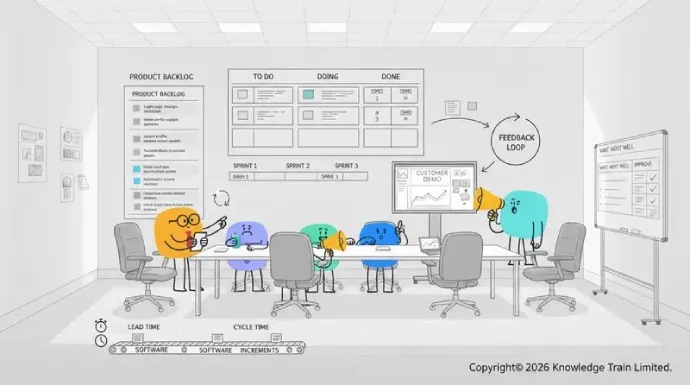
Definition of Agile
Agile refers to a set of principles and practices that guide teams in developing software products through incremental delivery, adaptive planning, and continual improvement. Agile emphasises iterative development, close team collaboration, and frequent customer feedback to deliver high-quality solutions quickly and efficiently.
| Delivery | ||