
Agile principlesAdvantages:
Agile is supported by twelve guiding principles, intended to help teams create successful products in an ever-changing environment. These principles inform day-to-day Agile practices. Flexibility, real-time workflow visualisation, easy adoption without role changes
- Satisfy the customer through early and continuous delivery of valuable softwareLean
- Welcome changing requirements, even late in developmentMain focus:
- Deliver working software frequently, from a couple of weeks to a couple of months Elimination of waste, maximising value, continuous improvement
- Collaborate daily between business people and developersCore elements:
- Build Value stream mapping, optimised flow, customer focusprojectsAdvantages: around motivated individuals and provide support Improved efficiency, reduced delays, enhanced quality
- Convey information face-to-face whenever possibleExtreme Programming (XP)
- Working software is the primary measure of progressMain focus:
- Maintain a sustainable development pace Technical excellence, frequent releases, customer involvement
- Continuous attention to technical excellence and good designCore practices:
- Simplicity – the art of maximising the work not done – is essential Pair programming, test-driven development, continuous integration,
- Self-organising teams produce the best architectures, requirements, and designsuser stories
- Regularly reflect and adapt to improve effectivenessAdvantages:
Historical origins and evolution of Agile Rapid feedback, high product quality, adaptability to change
The Agile approach originated in the late 1990s as software teams sought alternatives to rigid project management models like the Comparison: Scrum, Kanban, Lean, XPWaterfallFramework model. In 2001, seventeen thought leaders signed Main focus
| Agile project managementCustomer involvement | High, continuous feedback contrasts this with its focus on flexible planning, iterative progress, and stakeholder feedback throughout: | Typically only during requirements and acceptance stagesAspect |
| DeliveryAgile | Frequent, partial releasesWaterfall | Full product delivered at project endApproach |
| RiskIterative and incremental | Problems discovered earlySequential and linear | Issues often found lateFlexibility |
Agile frameworks and practicesHighly adaptive to change
Scrum frameworkChange-resistant
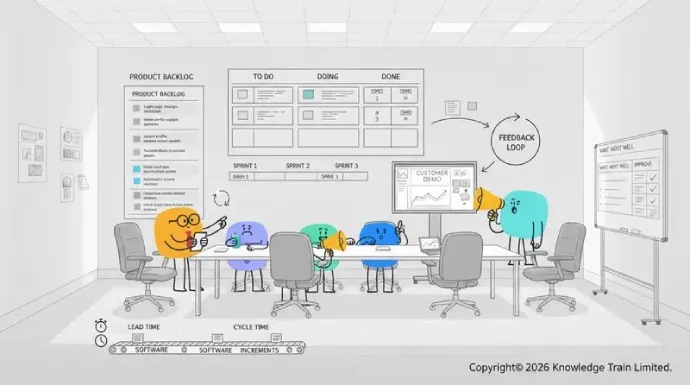
ScrumCustomer Involvement is a widely adopted Agile framework structured around short, timeboxed periods called Continuous collaborationsprintsPrimarily at start/end. Teams maintain a Risk managementproduct backlogLate-stage identification of features and tasks, delivering increments of working software at the end of each sprint. Roles in Scrum include Product Owner, DeliveryScrum MasterWork delivered frequently, and Development Team. Daily stand-ups, sprint planning, reviews, and retrospectives reinforce team collaboration and transparency.Single final delivery
KanbanSuitable for
Kanban emphasises visualising work, limiting work in progress, and optimising flow. Teams use Kanban boards to track tasks and identify bottlenecks, often integrating continuous improvement practices.Complex, evolving
User stories and Product Backlogprojects
Features are typically described as Clear, fixed requirementsuser storiesKey roles and concepts in Agile projects in a product backlog. This backlog is prioritised by the Product Owner and guides the work to be pulled into each sprint or iteration.Product Owner: