What is Agile?

Key takeaways
Agile combines a mindset with practical routines that help teams deliver value in changing conditions.
- Agile prioritises working software, collaboration, and adapting plans based on frequent feedback.
- Iterative, incremental delivery reduces risk by surfacing issues and learning earlier.Functional
- Scrum uses timeboxed sprints and clear roles to create a predictable cadence for delivery and review.
- Kanban improves flow by visualising work and limiting work in progress to expose bottlenecks.
- Healthy Agile adoption relies on clear roles, shared quality standards, and sustainable pace.
- Measure outcomes and flow with metrics like lead time and defect rate, then refine through retrospectives.
Functional, formalising Agile values and sparking the formation of the Agile Alliance. Since then, Agile has evolved beyond software development into project management , product development, and operations.
Benefits of Agile
- Flexibility:Functional Respond rapidly to changing customer needs and market conditions.
- Continuous improvement: Always active Regular retrospectives help teams adapt and improve their processes.
- Customer satisfaction: Frequent delivery ensures customer requirements are met early and often.
- Transparency: Iterative development and open communication foster stakeholder trust.
- Reduced risk: Incremental delivery allows for earlier issue detection and correction.The technical storage or access is strictly necessary for the legitimate purpose of enabling the use of a specific service explicitly requested by the subscriber or user, or for the sole purpose of carrying out the transmission of a communication over an electronic communications network.
- Enhanced team collaboration: Cross-functional teams communicate daily to resolve challenges efficiently.
Agile vs waterfall model
| Aspect | AgilePreferences | Waterfall |
|---|---|---|
| Process | Iterative and incremental | Sequential and linearPreferences |
| Flexibility | Adaptive to change | Resistant to change after initial planning |
| Customer involvement | High, continuous feedback | Typically only during requirements and acceptance stages |
| Delivery | Frequent, partial releasesThe technical storage or access is necessary for the legitimate purpose of storing preferences that are not requested by the subscriber or user. | Full product delivered at project end |
| Risk | Problems discovered early | Issues often found late |
Agile frameworks and practicesStatistics
Scrum framework
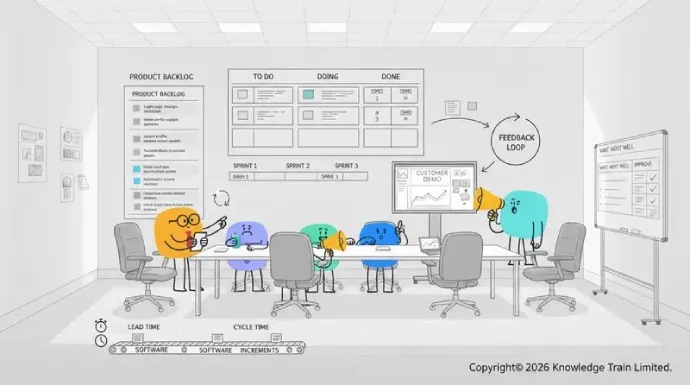
Scrum is a widely adopted Agile framework structured around short, timeboxed periods called sprintsStatistics. Teams maintain a product backlog of features and tasks, delivering increments of working software at the end of each sprint. Roles in Scrum include Product Owner, Scrum Master , and Development Team. Daily stand-ups, sprint planning, reviews, and retrospectives reinforce team collaboration and transparency.
Kanban
Kanban emphasises visualising work, limiting work in progress, and optimising flow. Teams use Kanban boards to track tasks and identify bottlenecks, often integrating continuous improvement practices.
User stories and Product BacklogThe technical storage or access that is used exclusively for statistical purposes.
Features are typically described as user storiesThe technical storage or access that is used exclusively for anonymous statistical purposes. Without a subpoena, voluntary compliance on the part of your Internet Servi
The technical storage or access is required to create user profiles to send advertising, or to track the user on a website or across several websites for similar marketing purposes.The 12 Agile principles include prioritising customer satisfaction through early and continual delivery, welcoming changing requirements, delivering working software frequently, fostering daily collaboration, supporting motivated teams, preferring face-to-face communication, using working software as the main progress measure, maintaining a sustainable pace, focusing on technical excellence, maximising simplicity, enabling self-organising teams, and reflecting regularly for process improvement.Manage options
What is the difference between Agile and waterfall?Manage services
Agile is iterative, adaptable, and focuses on incremental delivery with frequent stakeholder feedback. Manage {vendor_count} vendorsWaterfallRead more about these purposes is linear, sequential, and requires upfront planning, often only allowing changes late in the project cycle.
What are Scrum and Kanban frameworks?Accept
Scrum is an Agile framework that organises work into fixed-length sprints and uses roles like Product Owner and DenyScrum Master . Kanban is a visual method for managing workflow, limiting work in progress, and focusing on incremental improvements.View preferences
How does Agile improve team collaboration?
Agile improves collaboration through daily communication, cross-functional team structures, and regular stakeholder engagement, ensuring all members align towards shared goals.Save preferences