Agile project management: Frameworks, benefits and how it worksKnowledge Train is a Lean Six Sigma Accredited Training Organization.

Agile Manifesto core valuesOur 6 core values are everything we do. They include:
- Individuals and interactions over processes and toolsIntegrity
- Working software (or product) over comprehensive documentationDiversity
- Customer collaboration over contract negotiationFairness
- Responding to change over following a planQuality
Twelve principles of AgileInnovation
- Customer satisfaction through early and continuous deliverySocial responsibility
- Welcome changing requirements, even late in development
- Deliver working products frequentlySOCIAL RESPONSIBILITY
- Close, daily cooperation between business people and developersSome of the charities we have helped over the years:
- Build projects around motivated individuals
- Face-to-face conversation as the best form of communication
- Working product as the primary measure of progress
- Sustainable development pace
- Continuous attention to technical excellence and good designAWARDS
- Simplicity – the art of maximising the amount of work not done – is essentialWe don’t go seeking awards, but here are two of the awards we have received for our training.
- Self-organising teams produce the best results
- Regular reflections for continuous improvement
Key Agile frameworks and methodologies Request a quote
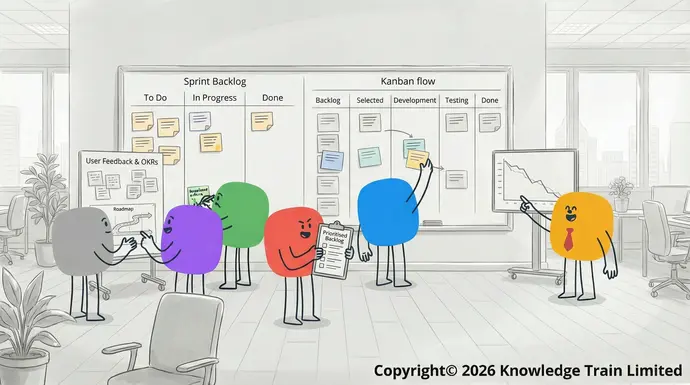
Agile encompasses various frameworks, each with its own practices and terminology. The most widely used Agile frameworks were designed for more efficient product delivery, rather than project management . They include Scrum+44 (0)207 148 5985, Kanban, Lean, and Extreme Programming (XP):
Scrum[email protected]
- Main focus: Team roles, time-boxed sprints, and iterative delivery
- Core roles: Product Owner, Scrum Master , Team Members
- Artefacts: Product backlog, sprint backlogUnited Kingdom
- Key events: Sprint planning, daily scrum, sprint review, sprint retrospectives
- Advantages: Well-defined structure, clear accountability, transparency
Kanban
- Main focus: Visualisation of workflow, limiting work in progress, continuous flowSearch
- Core elements: Kanban board, work-in-progress limits, cards/tasks
- Advantages: Flexibility, real-time workflow visualisation, easy adoption without role changes
Lean
- Main focus:United Kingdom Elimination of waste, maximising value, continuous improvementAustria
- Core elements:Belgium Value stream mapping, optimised flow, customer focusBulgaria
- Advantages:Croatia Improved efficiency, reduced delays, enhanced qualityCyprus
Extreme Programming (XP)Czech Republic
- Main focus:Denmark Technical excellence, frequent releases, customer involvementEstonia
- Core practices:Finland Pair programming, test-driven development, continuous integration, Franceuser storiesGermany
- Advantages:Greece Rapid feedback, high product quality, adaptability to changeIreland
Comparison: Scrum, Kanban, Lean, XPItaly
| FrameworkLatvia | Main focusLithuania | Key practiceLuxemburg | Team structureMalta | Best use caseNetherlands |
|---|---|---|---|---|
| ScrumPoland | Time-boxed iterations (Sprints)Portugal | Predefined roles and eventsRomania | Cross-functionalSlovakia | Complex projects needing structureSlovenia |
| KanbanSpain | Visual workflow & limitsSweden | Kanban board, WIP limitsOther countries | Flexible rolesHome | Ongoing support/operationsAgile |
| LeanScrum | Eliminate wasteHow to become a Scrum Master | Value stream mapping | Any{"@context":"http://schema.org","@type":"BreadcrumbList","itemListElement":[{"@type":"ListItem","position":1,"name":"Home","item":"https://www.knowledgetrain.co.uk/"},{"@type":"ListItem","position":2,"name":"Agile","item":"https://www.knowledgetrain.co.uk/agile"},{"@type":"ListItem","position":3,"name":"Scrum","item":"https://www.knowledgetrain.co.uk/agile/scrum"},{"@type":"ListItem","position":4,"name":"How to become a Scrum Master","item":"https://www.knowledgetrain.co.uk/agile/scrum/how-to-become-a-scrum-master"}]} | Process improvement, efficiency |
| XP | Technical best practices | Pair programming, TDDHow to become a Scrum Master |
Scrum , Kanban, Lean, and Extreme Programming (XP). Each offers a unique structure for managing roles, processes, and workflow.
What are the benefits and challenges of Agile project management?
Advantages include adaptability, stakeholder engagement, and high product quality. Challenges may include initial resistance, need for team discipline, and less suitability for projects with fixed, unchanging requirements.
Where is Agile project management commonly used?Instructor-led
While most common in software development, Agile is used in industries such as marketing, manufacturing, construction, and education wherever flexible, iterative approaches add value.Certified Scrum Master course