>Agile principles<

Those performing key roles in the design, development, and delivery of organisational change programmes
Change project managers
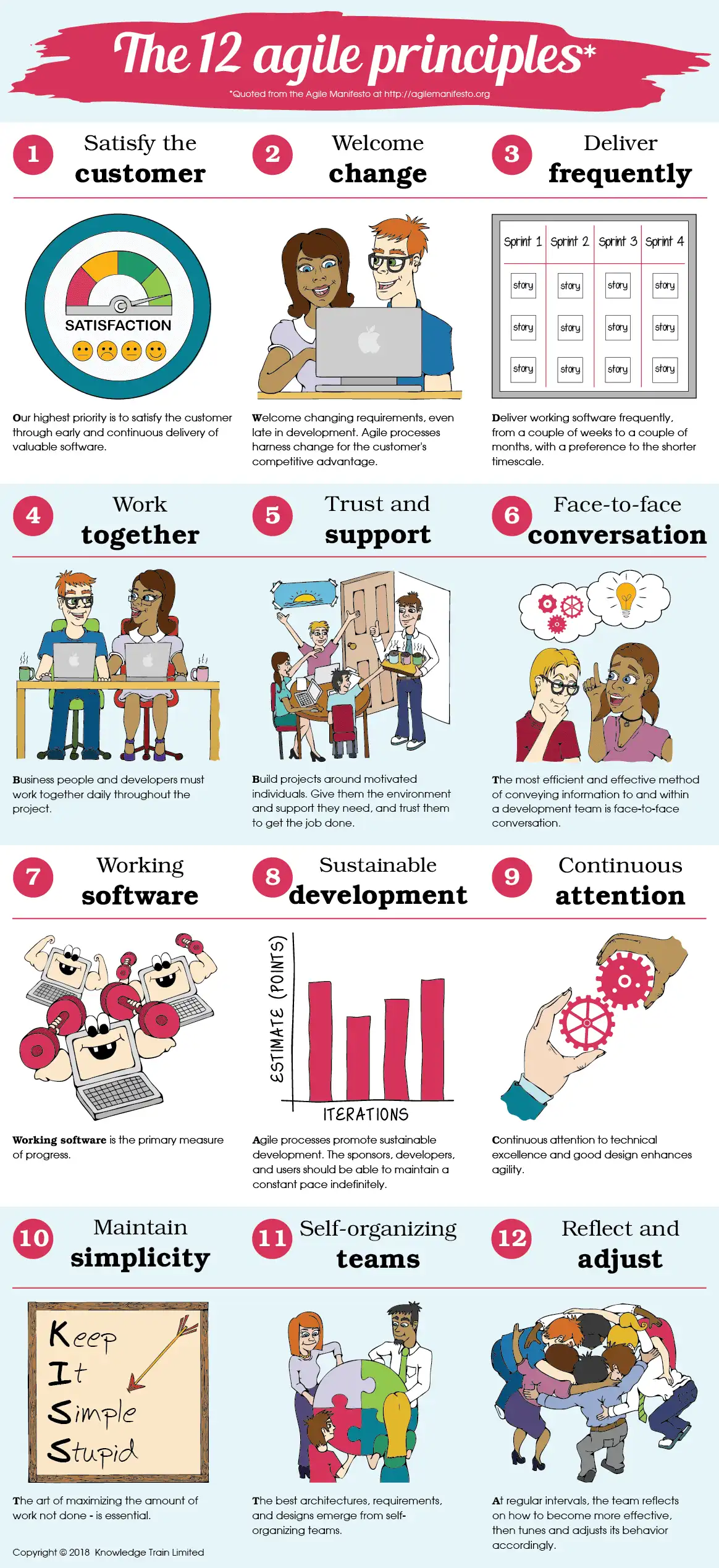
Agile aims to deliver a functioning product in the very first development iteration. It will be a long way from being finished; but it just has to give the customer enough of an idea so that developers can receive valuable feedback. In doing so, agile projects can tailor the product as it is being developed to deliver something that satisfies customers’ needs.
Agile takes large tasks and breaks them up into smaller, more manageable chunks. The interactive nature of agile not only improves project development but also service delivery.
<2. Embrace changespan>Transformation managers
<3. Frequent deliveryspan>Business change managers
"},"aggregateRating":{"@type":"AggregateRating","ratingValue":"4.8","reviewCount":"227"},"location":{"@type":"VirtualLocation","url":"https://www.knowledgetrain.co.uk/change-management/change-management-courses/apmg-change-management-course/change-management-practitioner"},"image":["https://www.knowledgetrain.co.uk/training-courses/res/logos/apmg-change-management-accredited-training-organisation-logo.svg"],"offers":{"@type":"Offer","url":"https://www.knowledgetrain.co.uk/change-management/change-management-courses/apmg-change-management-course/change-management-practitioner","price":"","priceCurrency":"","availability":"http://schema.org/InStock","validFrom":"2026-06-04"},"performer":{"@type":"Person","name":"Susan Tuttle"},"organizer":{"@type":"Organization","name":"Knowledge Train","url":"https://www.knowledgetrain.co.uk/change-management/change-management-courses/apmg-change-management-course/change-management-practitioner"}}
Many businesses apply this principle so that they deliver new iterations of software or products every few days. This just goes to show the importance of frequent delivery, which is arguably one of the most defining agile principles .
4. Cooperation24 Sep - 25 Sep
In traditional management, the work business owners and stakeholders is usually kept distinct from the work of developers. Analysist are put in place to ‘translate’ business needs into development plans and project managers simply help mediate the demands of owners in a way that doesn’t negatively affect product development.
Agile requires that stakeholders, customers and developers work in unison (often in the same room) to achieve project goals. This reduces the risk inherent to project development, by helping improve communication and cooperation. In addition, the more closely management is involved with development, the easier it is for them to understand the challenges faced by developers and the ramifications of changes made to development.Enrol now
5. Autonomy and motivation
Excessive meddling by management rarely benefits project development. Managers have to trust their development teams to get the work done without constant micro-management. Given the correct agile training , tools and resources, developers should otherwise be given total autonomy to complete tasks in whichever way they see fit.
li>Owners and managers need to create an environment that rewards success, fosters healthy working relationships and helps improve employees’ work/life balance. Give developers the tools and motivation to succeed and you’ll be rewarded with easier project development and better returns on investment.<
span>Change project managers6. Better communication
>Technology provides businesses a hundred different ways to communicate with employees, but none will ever be as good as face-to-face communication. 2020 has drastically changed the way we work, with more employees working remotely than ever before, businesses are becoming reliant on communication tools such as Skype and Microsoft Teams. While these might be just good enough, the changes of error do increase when teams lack fact-to-face communication. Information gets lost in translation, emails and memos get buried in inboxes etc.
{"@context":"http://schema.org","@type":"EducationEvent","name":"Change Management Foundation course","startDate":"2026-10-19","endDate":"2026-10-21","description":"Change Management Foundation course","url":"https://www.knowledgetrain.co.uk/change-management/change-management-courses/apmg-change-management-course/change-management-foundation","eventStatus":"EventScheduled","eventAttendanceMode":"OnlineEventAttendanceMode","audience":{"@type":"Audience","name":"In other industries, this principle might be summarized as such: “A working product is more valuable than a checklist.” Requirements analysis documents, models and mock-ups may be useful, but they aren’t very useful if you can’t convert this information into a working product.<
ul>Project managers and business owners alike need to focus on minimizing paperwork and maximizing productivity. Unfinished products are inventory and inventory is an expense that provides no value.<
li>8. Stable work environments<
span>Anyone interested in understanding the basic principles of achieving successful organisational change, transition, or transformationAgile promotes the idea of sustainable development. In short, this means that with the correct implementation of agile methods, there should never be the need for developers to work ridiculous hours just to meet deadlines.
>Agile requires stakeholders, customers and developers to act as one coherent team. When everyone involved feeds information into an agile framework, it becomes very easy to create accurate forecasts, budgets and timelines.
>Customers tell developers what they need, stakeholders understand how changes may affect development and teams can make informed decisions as to how progress is to be made. No one is left out of the loop and no one is taken by surprise by unexpected developments.<
li>This helps reduce stress and avoids employee ‘burn out.’<
span>Professionals pursuing the Change Management Practitioner certificate – for which the Change Management Foundation certificate is a prerequisite.9. Quality assurance
>Many businesses prioritize speed or quantity over quality. In some cases, this makes a lot of sense. Sometimes customers don’t care as much for quality so whether or not a product works.
>But, if development teams neglect quality for too long, their ability to adapt the product to suit current consumer demands diminishes and it becomes less agile.
This principle should be an ongoing effort. Agile teams need to recognize that there is always room for improvement. Technology provides us more varied, easier ways of doing things. Project management research helps managers and business continuously improve their practices to suit modern trends etc.
Being agile requires businesses hold weekly or even daily meetings. A large part of these should be dedicated towards finding new and better ways of accomplishing tasks.
11. Self-organizing teams{"@context":"http://schema.org","@type":"EducationEvent","name":"Change Management Practitioner (with Foundation) course","startDate":"2026-10-19","endDate":"2026-10-23","description":"Change Management Practitioner (with Foundation) course","url":"https://www.knowledgetrain.co.uk/change-management/change-management-courses/apmg-change-management-course/change-management-practitioner","eventStatus":"EventScheduled","eventAttendanceMode":"OnlineEventAttendanceMode","audience":{"@type":"Audience","name":"
Why agile principles matterEnrol now
Although the 12 agile principles were developed almost 2 decades ago, they are still relevant and will likely remain relevant for a long time to come.
That is because the key agile principles are anthropocentric . That is to say, they are based on human values and helps improve the quality of life in the workspace. Agile aims to improve the well-being of workers just as much as it aims to deliver high-quality products.
Better, smoother, more efficient development means happier, less stressed workers and more satisfied customers.{"@context":"http://schema.org","@type":"EducationEvent","name":"Change Management Practitioner course","startDate":"2026-10-22","endDate":"2026-10-23","description":"Change Management Practitioner course","url":"https://www.knowledgetrain.co.uk/change-management/change-management-courses/apmg-change-management-course/change-management-practitioner","eventStatus":"EventScheduled","eventAttendanceMode":"OnlineEventAttendanceMode","audience":{"@type":"Audience","name":"