
Key takeaways
Agile certification can boost credibility and career mobility when matched to your role and context.
- Agile certifications validate practical capability in frameworks such as Scrum, Kanban, and SAFe.
- Choose CSM for a strong entry point, PMI-ACP for broad, experience-backed practice, and SAFe for enterprise-scale change.
- Check prerequisites early, as some routes require logged project hours and formal training.
- Online training offers flexibility, while in-person courses add networking and hands-on practice.
- Budget for total costs, including course fees, exam charges, and any renewal or CPD requirements.
What is Agile certification?Understanding the project triangle
Agile certification recognises a professional’s knowledge and expertise in Agile methodologyBenefits of the project triangle, Agile frameworks, and Agile Project ManagementManaging the project triangle. These certifications, awarded by recognised organisations such as Scrum Alliance, the Project Management Institute (PMI), and Scaled Agile, signal proficiency in roles like Scrum Master, Product Owner, and Agile coach. Gaining certificationStrategies for balancing constraints validates your ability to deliver value using Agile practices, whether in Scrum, Kanban, or SAFe environments.
Why pursue Agile certification?Tools for managing the project triangle
- Career advancement: Many organisations value certified Agile practitioners, with Common challenges and solutionsindustry surveys revealing higher demand and salary prospects for certified professionals.Project management triangle best practices
- Professional development: Stay current with best practices, new Agile frameworks, and tools.Applying the project management triangle
- Organisational value: Certified staff often achieve improved project outcomes, enhanced collaboration, and faster delivery.Conclusion
According to the Project Management Institute’s Talent Gap ReportFAQs, Agile skills are among the most sought-after in project managementInfographic and digital product development.Introduction
Major Agile certifications comparedThe
The most recognised certifications in project management triangleAgile, also known as the triple constraint model, is a concept that visualises the constraints of include Certified ScrumMaster (CSM), PMI-ACP (scopeAgile Certified Practitioner, ), and SAFe Agilist. Each addresses different roles and Agile frameworks.time
| Certification, and | Organisationcost | Primary focus in | Ideal forproject management | Average Cost (GBP). It highlights the interconnected nature of these three aspects in delivering a successful project. |
|---|---|---|---|---|
| Certified ScrumMaster (CSM)The triangle model is a crucial tool for project managers to understand and balance the competing demands of a | Scrum Allianceproject | Scrum, Scrum Master role. The scope refers to the project’s requirements, objectives, and deliverables. Time refers to the schedule and deadlines. Cost encompasses the budget and resources. The challenge is to optimise all three to meet project goals. | Beginners, aspiring Scrum MastersEach corner of the triangle is dependent on the other two. A change in one element typically results in a change in at least one other. By understanding and managing these constraints, project teams can make informed decisions and adjustments to ensure project success. | £850–£1,200The project management triangle is a fundamental concept that helps |
| AgilePMproject managers | APMG Internationalvisualise and optimise the key constraints of any project. By balancing scope, time, and cost, project teams can deliver successful outcomes that meet stakeholder expectations. | Agile project managementUnderstanding the project management triangle | Project managersThe three constraints explained | £1,300–£1,600The project management triangle is made up of three main constraints: |
| PRINCE2 Agilescope | PeopleCert, | Agile project managementtime | Project managers and | £1,300–£1,600cost |
| PMI-ACP. Let’s have a detailed look at each of these. | Project Management Institute (ScopePMI: Scope refers to the boundaries, objectives and deliverables of a project. It includes the goals and requirements of the project, as well as the specific features, functionalities and quality standards.)Time | Agile methodology (: The time constraint of a project refers to its duration and schedule. It involves factors such as the project start and end dates, milestones and deadlines, as well as the sequencing and dependencies of tasks.ScrumCost, Kanban, XP): The cost constraint relates to the financial and resource aspects of a project. This includes the budget allocated to the project as well as the human resources and labour costs, and equipment and material expenses. | Experienced Relationship between constraintsproject managersThe three constraints of scope, time and cost are interconnected and can impact each other. Changes to one constraint will likely influence the other constraints. For example, an increase in scope will often require additional time and resources, whereas a reduction in time may increase costs or decrease scope. Similarly, a reduction in budget may affect the project scope or timeline. | £350–£500 (exam), plus trainingProject managers |
| SAFe Agilist must carefully balance these constraints throughout the project lifecycle. | Scaled AgileImpact on project quality | Scaled Agile Framework (SAFe)The balance of scope, time and cost also has an impact on the | Leaders in large organisationsquality | £800–£1,200 of the project outcomes. If the three constraints are well-balanced, the project is more likely to achieve high-quality results. On the other hand, if there is an imbalance in any of the constraints, the quality of the project may be compromised. For example: |
Certification bodies at a glanceA tight deadline may lead to a rushed project, resulting in lower quality outputs.
- Scrum Alliance:A limited budget may result in a project being understaffed or under-resourced, which may also affect quality. Pioneers in Agile education, offering globally recognised Scrum and Agile Project Management certifications.A project with an overambitious scope can strain resources and time, leading to poor results.
- APMG International:Successful project management involves finding the right balance and making trade-offs between the three constraints while maintaining the desired level of quality. By understanding the impact of these constraints on each other, project managers can make informed decisions to lead the Wide range of certifications including project management, business analysis, AI, and IT.project
- PeopleCert: to a successful outcome. Owners of PRINCE2 project, programme and portfolio management best practice suite of certifications.Benefits of using the project management triangle
- Project Management Institute (PMI):Utilising the project management triangle provides some distinct benefits to the project team and stakeholders. These are as follows. Renowned for PMI-ACP and PMP qualifications, the PMI covers a range of Agile and hybrid methodologies.Easier change management
- Scaled Agile:The triangle model helps to Focuses on SAFe certification, designed for scaling Agile practices across enterprises.make changes easier
Pros and cons. This is because if a change arises, the project managers can easily evaluate how this change will affect the scope, time and cost, decide, as such it helps to quickly evaluate a change request, understand the ripple effects, and make an informed decision on change.
- CSM:Priority clarification Excellent for newcomers but limited in advanced Agile concepts.Visualising the three constraints helps to
- AgilePM:clarify priorities Ideal for a project management focused agile delivery.. This will make it possible for the team to quickly identify important elements in the project, direct resources to important tasks and make trade-offs as required based on the project goals.
- PRINCE2 Agile:Improved client communication Ideal for organisations already standardising project practices with PRINCE2.The triangle is a helpful
- PMI-ACP:communication tool Recognised across industries but requires documented project experience. to both communicate with and educate clients. The project managers can use the triangle to show the project’s constraints to the clients, visualise how changes would affect them, and set realistic expectations regarding project deliverables.
- SAFe:Risk reduction Ideal for enterprise teams; may be too niche for small organisations.Utilising the triangle will help in
Which Agile certification should you choose?managing risks
Your choice depends on your role, experience, and organisational context. Use our . This is possible because this will help the team to predict potential problems earlier in the process, have a contingency plan, and balance the risks in all three constraints.Agile Certification Selector ToolThe use of the project management triangle allows for below:managers
- New to to make decisions in a balanced manner. As such, it becomes possible to deal with complex projects with great ease.AgileEnhance your skills with our expert-led courses? Start with CSM for core Scrum knowledge.
- New to project management? Start with Instructor-ledAgilePMIntroduction to Project Management course for a well-established Agile project management framework.
- Experienced in £499 +vatproject management ?See all dates PRINCE2 Agile would be suitable.
- Experienced in multiple Agile frameworks? PMI-ACP may be ideal.
- Leading large-scale transformation?Instructor-led SAFe Agilist is suited to leaders and change agents in bigger organisations.Project Management Essentials
Quick reference: top Agile certifications requirements & costs
| Certification£899 +vat | Prerequisites | Exam requirementsSee all dates | Training providersManaging the project management triangle | CostMaintaining the balance of the project management triangle requires strategic decisions and careful trade-offs between scope, time, and cost. Here are some tips to help: |
|---|---|---|---|---|
| CSMChoose at least one flexible constraint | NoneOne constraint should be identified as more flexible than the others. This allows some wiggle room when dealing with changes or issues. Ask yourself: | Attend course, pass exam (50 MCQs)Which constraint is easiest or least impactful to change? | Accredited Scrum Alliance partners, online & in-personAre stakeholders willing to adjust scope, extend deadlines, or increase budget if necessary? | £850–£1,200 (includes training & exam)How will increased flexibility in one constraint impact the other two? |
| AgilePMIdentifying a flexible constraint up-front allows for better risk management and issue resolution. | NonePrioritise features and requirements | 1 hour Foundation exam, 2.5-hour Practitioner exam.It is important to carefully evaluate the importance of each project deliverable. This will help you focus on what is essential to project success. Create a comprehensive list of features and requirements, then: | AgilePM Accredited Training OrganisationRank or score each based on value and importance | Leverage prioritisation to inform trade-off decisions. |
| PRINCE2 AgileThis prioritisation process allows for objective trade-off discussions if needed. | NoneDevelop a risk management plan | 1 hour Foundation exam, 2.5-hour Practitioner exam.Proactively identifying and managing risks will help avoid imbalances in the triangle. A | PRINCE2 Agile Accredited Training Organisationrisk management | £1,300–£1,600 plan |
| PMI-ACP should include: | 2,000 hrs project exp.Identification of risks that could impact any of the constraints 1,500 hrs Agile exp.Risk scoring based on probability and impact | 120 MCQ examDetailed contingency plans for high-priority risks | Authorised A monitoring process to reassess risks throughout the project.PMIRisk management training providers, online & in-person ensures prevention of imbalances before they happen. | £350–£500 (exam), training extraCreate a change management plan |
| SAFeChange is inevitable on projects. A | Some Agile experience recommendedchange management plan | Attend course, pass SAFe exam provides a process for considering how changes impact the constraints. A plan should include: | Scaled Agile partners, online & in-personA system for submitting, reviewing, and approving changes | £800–£1,200 (includes training & exam)Procedures for assessing change impact on each constraint |
How to obtain Agile certification: step by stepApproval thresholds based on change type and size
- Choose your Communication plans for approved changescertificationA structured change management process helps to prevent imbalances. — select based on career path, current role, and organisational goals.Match management methodology to priority constraints
- Ensure you meet prerequisitesThe project management methodology used should complement the project’s constraints. Consider: — check experience and education requirements above.Waterfall methodologies
- Select training providers like traditional or predictive project management focus on upfront planning and are best suited for fixed-scope projects where time and cost can be more flexible. — compare leading providers for in-person and online certification training.Agile methodologies
- Complete mandatory training like Scrum or Kanban emphasise iterative development and are best for projects where scope may need to be flexible or change over time. — most certifications require attendance at approved courses.Lean approaches
- Register and book your exam prioritise efficiency and cost control and are useful when budget is the main constraint. — follow the certification body guidance for scheduling.Choosing the right approach from the beginning aligns with the key constraints.
- Pass the examFollow the tips above to help manage the project management triangle and balance constraints throughout your project. The most important thing is to continuously monitor and maintain alignment of the three sides. Assess the status of scope, time, and cost regularly to identify imbalances. Be willing to make informed decisions and trade-offs as necessary. And communicate clearly with stakeholders about any changes to plans or constraints. — prepare with official study materials and sample questions.Strategies for balancing constraints
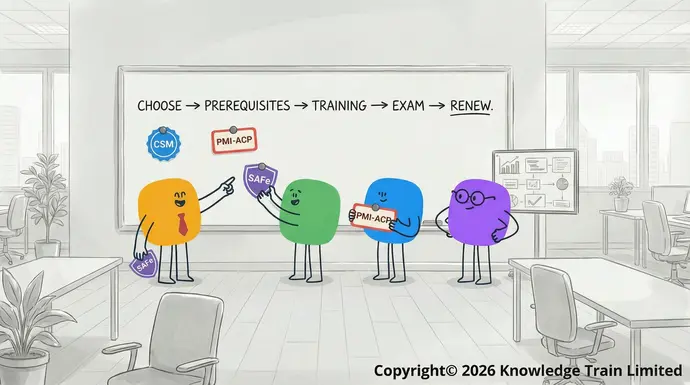
- Maintain your certificationManaging constraints effectively requires specific strategies for each side of the project management triangle. Here are some tips for balancing scope, time, cost and quality: — most bodies require continuing education or regular renewal (e.g., Scrum Alliance: every 2 years).Scope management techniques
Online certification vs in-person trainingWhen managing project scope, you can try these tips:
Training can be taken online or in person. Online options offer greater flexibility and access to global providers, while in-person sessions enable networking and hands-on exercises.Define project boundaries
FAQs: Clearly outline the scope of the project and its deliverables at the beginning.
Are Agile certifications recognised internationally?Scope change control
Yes, major : Establish a process for handling changes to the project scope.Agile certificationsMonitor for scope creep from organisations such as Scrum Alliance, Project Management Institute (PMI), and Scaled Agile are recognised and valued by employers around the globe. These : Regularly review project requirements to ensure they align with the defined scope.certificationsPrioritisation demonstrate your understanding of : Use a prioritisation method, such as Agile methodologiesMoSCoW and your ability to apply them in practical settings., to determine which features are essential, desirable, optional, or not required.
Because Agile practices are now used worldwide, holding a respected certification can significantly enhance your global career mobility and professional credibility.Time management approaches
Can I get Agile certified for free?When managing project time, you can try these tips:
No, you cannot get Critical path
- When choosing a project management tool, consider these vital features and capabilities:: 2 days or 12 hours onlineConstraint tracking
- PRINCE2 Agile Practitioner: The ability to track and manage scope, time and cost constraints concurrently: 2 days or 21 hours onlineResource allocation
- Project Management Institute (PMI) – awards the PMI-ACP certification for experienced practitioners.
- Scaled Agile – offers SAFe® certifications for large-scale Agile frameworks.
Each body has global recognition and rigorous standards, helping ensure certification quality and career relevance.
What is Agile Foundation certification?
There isn’t a single “Agile Foundation” qualification. Instead, several popular entry-level Agile certifications serve as foundations for Agile learning, including:Communicate regularly with stakeholders to manage expectations.