Waterfall methodSpain

Key takeaways
Waterfall is a linear delivery model that suits stable, well-specified work but struggles when change is frequent.
- Waterfall runs through fixed phases, and each phase is completed and documented before the next begins.
- It works best when requirements are clear, unlikely to change, and acceptance criteria can be agreed upfront.
- Strong documentation and upfront planning support predictable costs, resourcing, and stakeholder reporting.
- Late feedback can increase the risk of building the wrong thing and discovering issues near the end.
- Regulated and high-compliance environments often prefer waterfall for traceability and control of change.
- Success depends on rigorous requirements capture, formal change control, and thorough testing and QA.
Introduction to the waterfall method
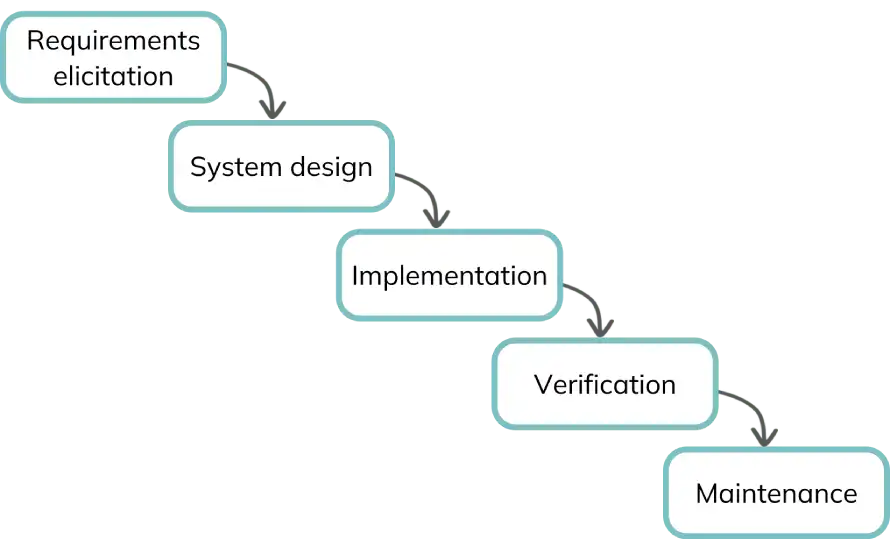
The waterfall method of project management is a Waterfall best practicessequential approach to a Waterfall tools and techniquesproject . The phases of this methodology are completed one after another in the following order:Conclusion
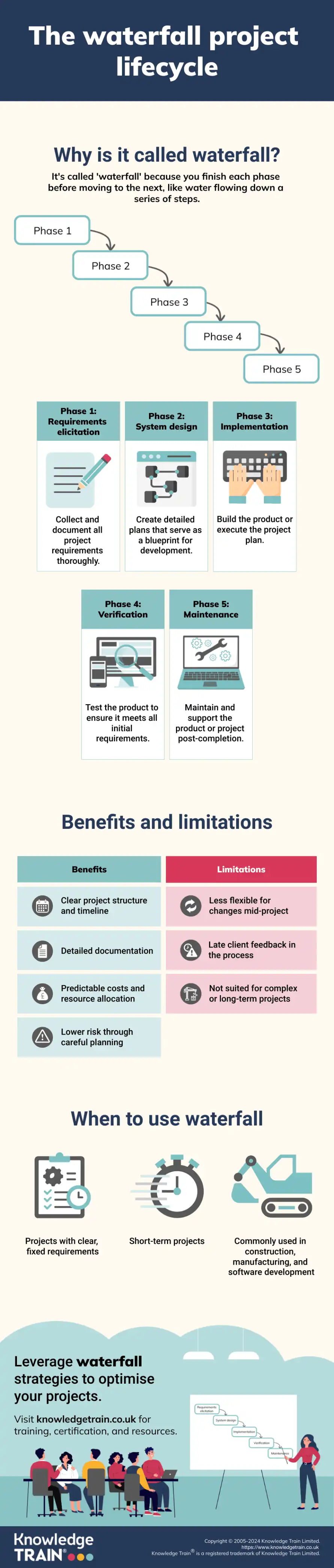
- Requirements elicitation
- DesignFAQs
- Implementation
- VerificationInfographic
- Maintenance.Introduction to the waterfall method
Each of these steps should be completed and fully documented before the next step is taken. This linear approach is most known for the following characteristics:The
- Rigid structurewaterfall method
- Comprehensive documentation of project management is a
- Clear milestonessequential approach
- Predictable timelines. to a
Waterfall method is the opposite of the projectAgile approach. The phases of this methodology are completed one after another in the following order:. It is less flexible and works on a fixed scope. Traditional waterfall method was not designed to be iterative like the Agile methodology. Waterfall project is best for software products and projects that have well-defined requirements that will not change much. It is good for software with certain endpoints and certain regulatory compliance checks needed for the software to function.Requirements elicitation
Waterfall phasesDesign
WaterfallImplementation is a VerificationstructuredMaintenance., sequential approach that includes distinct phases with each phase building on the output of the previous phase. In this subsection, we will cover the phases in a waterfall lifecycle.Each of these steps should be completed and fully documented before the next step is taken. This linear approach is most known for the following characteristics:
Requirements elicitationRigid structure
In this phase, the team gathers and documents all project requirements. This includes defining the project scope and objectives, identifying stakeholders and their expectations, and creating a Comprehensive documentationdetailed specification
System designClear milestones
Based on the requirements, the team designs the system architecture, user interface, database schemas, and detailed technical specifications.Predictable timelines.
ImplementationWaterfall method is the opposite of the
During this phase, developers write code according to the design specifications, adhere to coding standards and best practices, and create unit tests for individual components.Agile approach
Verification. It is less flexible and works on a fixed scope. Traditional waterfall method was not designed to be iterative like the Agile methodology. Waterfall project is best for software products and projects that have well-defined requirements that will not change much. It is good for software with certain endpoints and certain regulatory compliance checks needed for the software to function.
Testers rigorously evaluate the system by executing test cases based on requirements, performing integration and system testing, identifying and reporting bugs, and verifying bug fixes and retesting.Waterfall phases
After testing is complete, the team:Waterfall
- Prepares the production environmentstructured
- Migrates data if needed, sequential approach that includes distinct phases with each phase building on the output of the previous phase. In this subsection, we will cover the phases in a waterfall lifecycle.
- Deploys the system to usersRequirements elicitation
- Provides user training and documentation.In this phase, the team gathers and documents all project requirements. This includes defining the project scope and objectives, identifying stakeholders and their expectations, and creating a
Maintenance and supportdetailed specification
After the system is deployed, ongoing activities include: document.
- Monitoring system performanceSystem design
- Addressing user-reported issuesBased on the requirements, the team designs the system architecture, user interface, database schemas, and detailed technical specifications.
- Implementing minor enhancementsImplementation
- Providing technical support to users.During this phase, developers write code according to the design specifications, adhere to coding standards and best practices, and create unit tests for individual components.
Each phase in the waterfall process must be completed before the next phase can begin. This approach ensures that all necessary documentation is created and minimises the risk of overlooking important requirements. It can be inflexible if requirements change mid-project. The Verificationsequential natureTesters rigorously evaluate the system by executing test cases based on requirements, performing integration and system testing, identifying and reporting bugs, and verifying bug fixes and retesting. of waterfall requires meticulous planning and clear communication throughout the development lifecycle.After testing is complete, the team:
Benefits of the waterfall methodPrepares the production environment
Waterfall project management is a sequential and linear approach to executing tasks, and it has several advantages. Let’s discuss each one of them:Migrates data if needed
Clear project structure and timelineDeploys the system to users
The Provides user training and documentation.sequential natureMaintenance and support of waterfall provides:After the system is deployed, ongoing activities include:
- Phases with clearly defined start and end pointsMonitoring system performance
- A planned structure with a timeline for when the work is to be completedAddressing user-reported issues
- Milestones that are easily communicated to stakeholders.Implementing minor enhancements
Comprehensive documentationProviding technical support to users.
Waterfall methodology advocates comprehensive documentation, leading to well-defined project requirements and specifications, detailed design documents for future reference and valuable historical records for similar projects.Each phase in the waterfall process must be completed before the next phase can begin. This approach ensures that all necessary documentation is created and minimises the risk of overlooking important requirements. It can be inflexible if requirements change mid-project. The
Predictable costs and resource allocationsequential nature
The upfront planning involved in the waterfall model allows for accurate budget estimation, efficient resource allocation throughout the project lifecycle and minimised unexpected expenses. of waterfall requires meticulous planning and clear communication throughout the development lifecycle.
Easier tracking and progress assessmentBenefits of the waterfall method
Waterfall’s structured approach facilitates easy tracking of progress with clear indicators at each phase, simplified reporting to stakeholders and easy identification of bottlenecks or delays.Waterfall project management is a sequential and linear approach to executing tasks, and it has several advantages. Let’s discuss each one of them:
Reduced risk through upfront planningClear project structure and timeline
Upfront planning in waterfall can help:The
- Identify potential risks early in the projectsequential nature
- Develop mitigation strategies before the work commences of waterfall provides:
- Minimise costly changes during the later stages of the project.Phases with clearly defined start and end points
These strengths make waterfall ideal for projects with clearly defined requirements and relatively few changes expected. The methodology’s robustness is also very appropriate to the complexity of the work and the need for strict and complete control of change for medical device software development.A planned structure with a timeline for when the work is to be completed
Limitations of the waterfall method£499 +vat
The waterfall method is a structured approach to project managementSee all dates that follows a linear sequence of phases. However, it has some limitations.
Limited flexibility for changes
The structured approachInstructor-led of waterfall can make changes challenging once a phase is completed. This rigidity can lead to difficulties in adapting to new requirements, costly revisions if requirements change mid-project and can inhibit creativity and innovation during the development process.Project Management Essentials
Delayed feedback and product validation
The linear nature of the waterfall methodology means that user feedback and validation of the product often come late in the process. This delay can result in missed opportunities to address market needs, reduced chances of early validation of the product and increased risk of developing features that users don’t want.£999 +vat
Potential for longer delivery times
Waterfall methodology can result in longer delivery times due to the extensive upfront planning. This approach can lead to delays in delivering working software to end-users and slower time-to-market compared to more iterative approaches.See all dates
Challenges with customer collaborationLimitations of the waterfall method
Waterfall may present obstacles by restricting customer collaboration after the requirements phase. This can lead to limited stakeholder input and a potential mismatch between the final product and the evolving needs of the customer.The waterfall method is a structured approach to
Risk of late-stage issues and reworkproject management
The that follows a linear sequence of phases. However, it has some limitations.linear progressionLimited flexibility for changes may result in:The
- Key issues to be identified late in the development processstructured approach
- The need for costly and time-consuming rework of waterfall can make changes challenging once a phase is completed. This rigidity can lead to difficulties in adapting to new requirements, costly revisions if requirements change mid-project and can inhibit creativity and innovation during the development process.
- Challenges in addressing fundamental issues near the end of the project.Delayed feedback and product validation
These limitations of Waterfall reveal why it may not be appropriate for all types of projects, especially those with dynamic requirements or in rapidly changing markets. Identifying these drawbacks allows The linear nature of the waterfall methodology means that user feedback and validation of the product often come late in the process. This delay can result in missed opportunities to address market needs, reduced chances of early validation of the product and increased risk of developing features that users don’t want.project managersPotential for longer delivery times to make informed decisions on when to explore alternative approaches or adapt the waterfall model to mitigate these risks.Waterfall methodology can result in longer delivery times due to the extensive upfront planning. This approach can lead to delays in delivering working software to end-users and slower time-to-market compared to more iterative approaches.
Waterfall vs Agile methodsChallenges with customer collaboration
Waterfall and Waterfall may present obstacles by restricting customer collaboration after the requirements phase. This can lead to limited stakeholder input and a potential mismatch between the final product and the evolving needs of the customer.Agile methodsRisk of late-stage issues and rework are the most popular software development techniques. To decide which one is best for you, it’s important to understand their main differences. So, let’s compare two methods based on the most important aspects:The
Key differences in approachlinear progression
Career path example may result in::Key issues to be identified late in the development process
| WaterfallThe need for costly and time-consuming rework | AgileChallenges in addressing fundamental issues near the end of the project. |
| Linear, sequentialThese limitations of Waterfall reveal why it may not be appropriate for all types of projects, especially those with dynamic requirements or in rapidly changing markets. Identifying these drawbacks allows | Iterative, incrementalproject managers |
| Fixed scope to make informed decisions on when to explore alternative approaches or adapt the waterfall model to mitigate these risks. | Flexible scopeWaterfall vs Agile methods |
| Long-term planningWaterfall and | Short-term planningAgile methods |
| Comprehensive documentation are the most popular software development techniques. To decide which one is best for you, it’s important to understand their main differences. So, let’s compare two methods based on the most important aspects: | Minimal documentationKey differences in approach |
Flexibility and adaptabilityCareer path example
Waterfall:
- Rigid structure with defined phasesWaterfall
- Difficult to accommodate changes once a phase is completeAgile
- Best for Linear, sequentialprojectsIterative, incremental with stable requirements.Fixed scope
AgileFlexible scope
- Highly flexible, embracing change throughout the projectLong-term planning
- Adapts easily to evolving requirementsShort-term planning
- Suitable for projects in dynamic environments.Comprehensive documentation
Customer involvement and feedbackMinimal documentation
WaterfallFlexibility and adaptability
- Limited customer involvement after initial requirements gatheringWaterfall
- Feedback primarily at project completion.Rigid structure with defined phases
AgileDifficult to accommodate changes once a phase is complete
- Continuous customer collaboration throughout the projectBest for
- Regular feedback and adjustments based on customer input.projects
Team structure and collaboration with stable requirements.
WaterfallAgile
- Hierarchical team structureHighly flexible, embracing change throughout the project
- Specialised roles with limited cross-functional work.Adapts easily to evolving requirements
AgileSuitable for projects in dynamic environments.
- Self-organising, cross-functional teamsCustomer involvement and feedback
- Emphasises collaboration and shared responsibility.Waterfall
Risk management and quality controlLimited customer involvement after initial requirements gathering
WaterfallFeedback primarily at project completion.
- Upfront risk identification and mitigation planningAgile
- Quality control primarily at project end.Continuous customer collaboration throughout the project
AgileRegular feedback and adjustments based on customer input.
- Continuous risk assessment and mitigationTeam structure and collaboration
- Ongoing quality control through regular testing and reviews.Waterfall