Waterfall method

Key takeaways
Waterfall is a linear delivery model that suits stable, well-specified work but struggles when change is frequent.
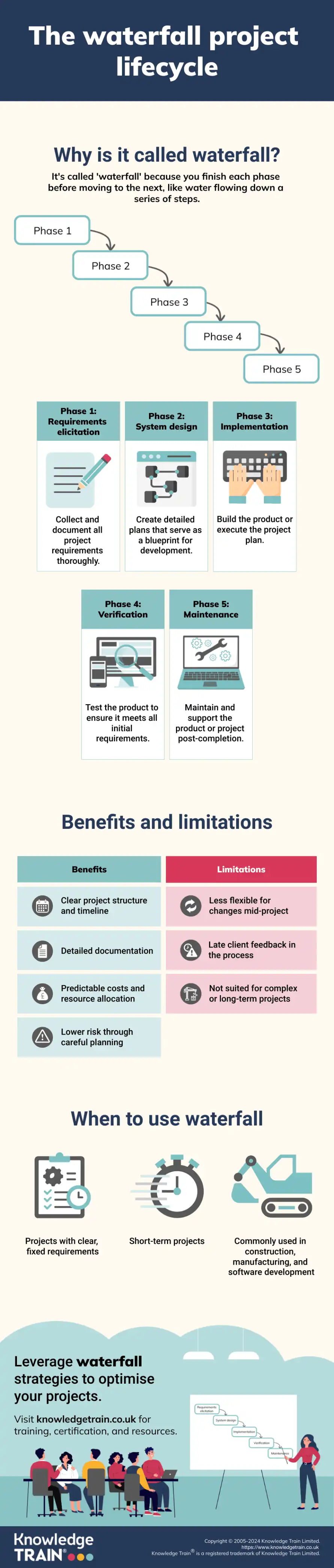
- Waterfall runs through fixed phases, and each phase is completed and documented before the next begins.Construction project management guide
- It works best when requirements are clear, unlikely to change, and acceptance criteria can be agreed upfront.
- Strong documentation and upfront planning support predictable costs, resourcing, and stakeholder reporting.Knowledge Train
- Late feedback can increase the risk of building the wrong thing and discovering issues near the end.19 Feb 2026
- Regulated and high-compliance environments often prefer waterfall for traceability and control of change.
- Success depends on rigorous requirements capture, formal change control, and thorough testing and QA.Our comprehensive guide provides insights into construction project management. Discover ten top UK university courses that will boost your career in this vital industry sector.
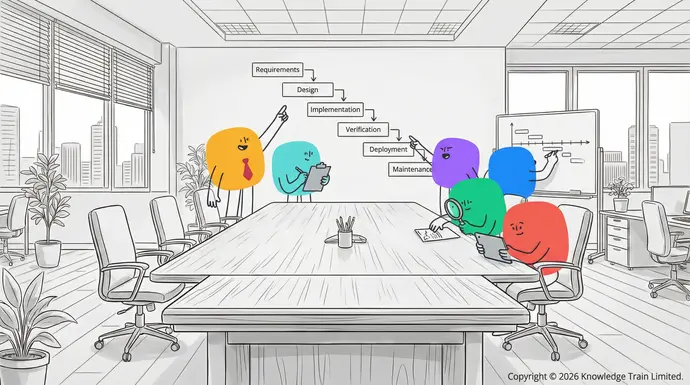
Introduction to the waterfall method
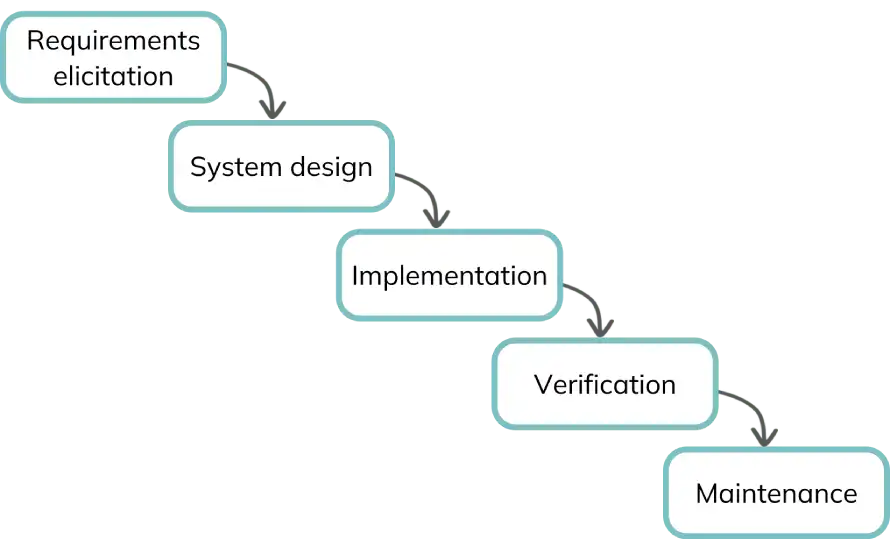
The waterfall method of project management is a sequential approachPRINCE2 helped this student get a job to a projectSimon Buehring. The phases of this methodology are completed one after another in the following order:19 Feb 2026
- Requirements elicitation
- DesignMany people ask us if PRINCE2 gets you a job or helps you progress in your career. The simple answer is – yes! This interview with Lisa Gobell, a former Knowledge Train student, proves how valuable PRINCE2 is to your project management career. Read on to find out more!
- Implementation
- Verification
- Maintenance.
Each of these steps should be completed and fully documented before the next step is taken. This linear approach is most known for the following characteristics:
- Rigid structure
- Comprehensive documentation
- Clear milestones
- Predictable timelines.Waterfall method
Waterfall method is the opposite of the Agile approachKnowledge Train. It is less flexible and works on a fixed scope. Traditional waterfall method was not designed to be iterative like the Agile methodology. Waterfall project is best for software products and projects that have well-defined requirements that will not change much. It is good for software with certain endpoints and certain regulatory compliance checks needed for the software to function.19 Feb 2026
Waterfall phases
WaterfallLearn about the linear and sequential approach to software development and project management called the waterfall method. The article will detail the steps, pros, and cons of this method. is a structured , sequential approach that includes distinct phases with each phase building on the output of the previous phase. In this subsection, we will cover the phases in a waterfall lifecycle.
Requirements elicitation
In this phase, the team gathers and documents all project requirements. This includes defining the project scope and objectives, identifying stakeholders and their expectations, and creating a detailed specification document.
System designProject controls – your driver to project success
Based on the requirements, the team designs the system architecture, user interface, database schemas, and detailed technical specifications.
ImplementationKnowledge Train
During this phase, developers write code according to the design specifications, adhere to coding standards and best practices, and create unit tests for individual components.19 Feb 2026
Verification
Testers rigorously evaluate the system by executing test cases based on requirements, performing integration and system testing, identifying and reporting bugs, and verifying bug fixes and retesting.Project controls are an essential part of project management. Find out how you can use them to measure project progress, predict outcomes and steer projects on the right course.
After testing is complete, the team:
- Prepares the production environment
- Migrates data if needed
- Deploys the system to users
- Provides user training and documentation.
Maintenance and support
After the system is deployed, ongoing activities include:
- Monitoring system performance
- Addressing user-reported issues
- Implementing minor enhancements
- Providing technical support to users.
Each phase in the waterfall process must be completed before the next phase can begin. This approach ensures that all necessary documentation is created and minimises the risk of overlooking important requirements. It can be inflexible if requirements change mid-project. The sequential nature of waterfall requires meticulous planning and clear communication throughout the development lifecycle.
Benefits of the waterfall method
Waterfall project management is a sequential and linear approach to executing tasks, and it has several advantages. Let’s discuss each one of them:
Clear project structure and timeline
The sequential nature of waterfall provides:
- Request a quoteDifficult to accommodate changes once a phase is complete
- Best for projects with stable requirements.
Agile
- Highly flexible, embracing change throughout the project
Waterfall best practices
To enhance the success rate of waterfall project management, consider the following best practices:
Thorough requirements gathering and documentation
To set a solid foundation for the project, gather and document all requirements comprehensively. This includes conducting detailed stakeholder interviews, creating a comprehensive functional specification, develop clear and measurable acceptance criteria and utilise formal sign-off processes for requirements documentation.
Effective communication and stakeholder management
To ensure a project stays on track, ensure clear and regular communication with all stakeholders. This includes establishing regular status meetings and progress reports, clearly define roles and responsibilities for team members, maintain open channels for stakeholder feedback and utilise visual tools like Gantt charts to communicate project timelines and milestones.
- Definition of clear deliverables, scope, and milestones
- Facilitating accurate resource allocation and estimation.
Critical path analysis
- Identification of the sequence of critical tasks that determine project durationFunctional
- Calculation of the minimum time required to complete the project
- Focus on activities that directly impact the project timeline.
Project management software solutions
- Centralised project documentation, communication, and collaboration
- Automation of task assignments, progress tracking, and reportingFunctional
- Generation of reports and analytics for informed decision-making.
These Always active tools and techniques provide visibility into project progress, facilitate communication among stakeholders, and enable better control over project activities. By utilising these resources, project managers can effectively manage and execute waterfall projects within the structured framework of the methodology.
Conclusion
Recap of key points
Advantages of waterfall project management:The technical storage or access is strictly necessary for the legitimate purpose of enabling the use of a specific service explicitly requested by the subscriber or user, or for the sole purpose of carrying out the transmission of a communication over an electronic communications network.
- Crisp process and timelines
- Vast documentation
- Predictable costs and resource needs.
Drawbacks of waterfall project management:
- Inflexibility to changePreferences
- Late feedback and product validation.
Final thoughts on relevance
The traditional waterfall methodology still has relevancePreferences in modern software development, despite the popularity of . It is especially useful for projects with:
- Well-defined and fixed requirements
- Strict regulatory compliance
- Large and complex projects with rigid timeline.
Acknowledging both its strengths and weaknesses, The technical storage or access is necessary for the legitimate purpose of storing preferences that are not requested by the subscriber or user.project managers can decide when to use waterfall methodology. With a proper context and mindset, waterfall remains a valuable approach to successfully delivering projects .