Key takeaways
Waterfall is a linear delivery model that suits stable, well-specified work but struggles when change is frequent.
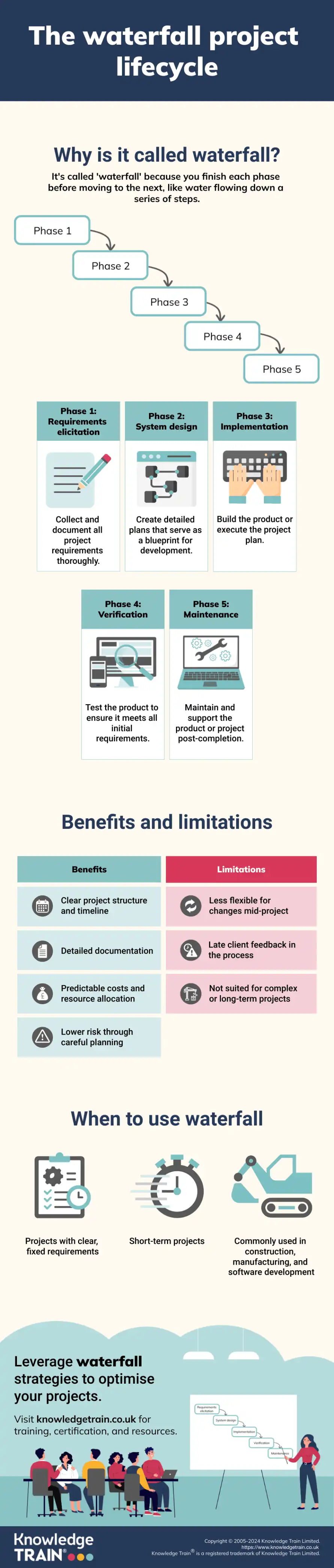
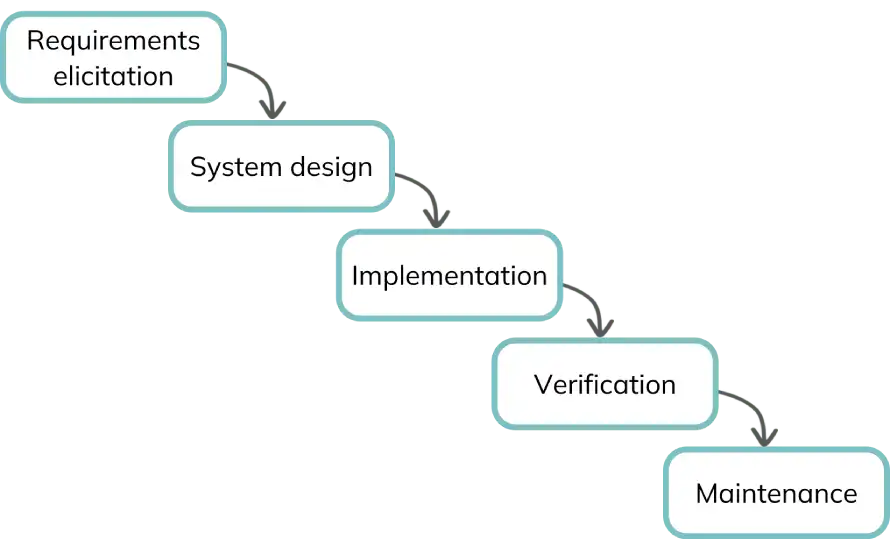
- Waterfall runs through fixed phases, and each phase is completed and documented before the next begins.
- It works best when requirements are clear, unlikely to change, and acceptance criteria can be agreed upfront.
- Strong documentation and upfront planning support predictable costs, resourcing, and stakeholder reporting.
- Late feedback can increase the risk of building the wrong thing and discovering issues near the end.
- Regulated and high-compliance environments often prefer waterfall for traceability and control of change.
- Success depends on rigorous requirements capture, formal change control, and thorough testing and QA.
- Request a quoteMonitoring system performance
- Addressing user-reported issues
- Implementing minor enhancements
- Providing technical support to users.
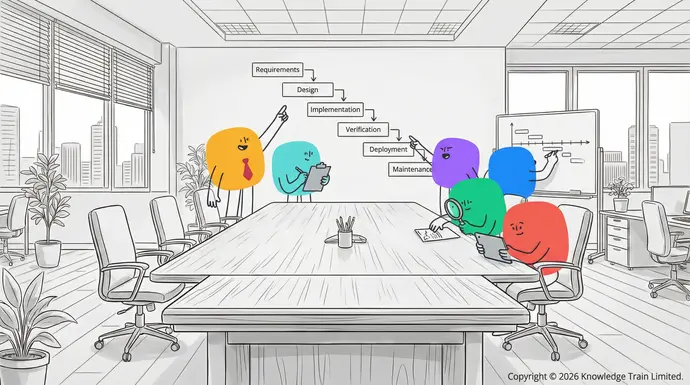
Each phase in the waterfall process must be completed before the next phase can begin. This approach ensures that all necessary documentation is created and minimises the risk of overlooking important requirements. It can be inflexible if requirements change mid-project. The sequential nature of waterfall requires meticulous planning and clear communication throughout the development lifecycle.
Benefits of the waterfall method
Waterfall project management is a sequential and linear approach to executing tasks, and it has several advantages. Let’s discuss each one of them:Manage Consent
Clear project structure and timeline
The To provide the best experiences, we use technologies like cookies to store and/or access device information. Consenting to these technologies will allow us to process data such as browsing behavior or unique IDs on this site. Not consenting or withdrawing consent, may adversely affect certain features and functions.sequential nature of waterfall provides:
- Phases with clearly defined start and end points
- A planned structure with a timeline for when the work is to be completed
- Milestones that are easily communicated to stakeholders.Functional
The upfront planning involved in the waterfall model allows for accurate budget estimation, efficient resource allocation throughout the project lifecycle and minimised unexpected expenses.
Easier tracking and progress assessment
Waterfall’s structured approach facilitates easy tracking of progress with clear indicators at each phase, simplified reporting to stakeholders and easy identification of bottlenecks or delays.Functional
Reduced risk through upfront planning
Upfront planning in waterfall can help: Always active
- Develop mitigation strategies before the work commences
- Minimise costly changes during the later stages of the project.
making it well-suited for projects with well-defined requirements and stable environments. Agile offers flexibility and adaptability, making it ideal for projects with evolving requirements or uncertain outcomes. The decision to use waterfall or Agile depends on several factors, such as project complexity, team dynamics, and organisational culture.The technical storage or access is strictly necessary for the legitimate purpose of enabling the use of a specific service explicitly requested by the subscriber or user, or for the sole purpose of carrying out the transmission of a communication over an electronic communications network.
When to use the waterfall method
Agile methodologies have become popular in recent years, but the waterfall approach still has its place in certain situations. Let’s explore how and when waterfall can be successfully used.
Projects with well-defined requirements
This methodology works best when:Preferences
- Requirements are known and unlikely to change
- Stakeholders have a clear vision of the desired outcome
- The scope of the project is well-defined from the beginning.
Industries with strict regulatory compliancePreferences
Regulated industries such as healthcare and medical device development, aerospace and defence and financial services with strict compliance requirements often adopt the waterfall methodology. These fields often require extensive documentation and adherence to specific protocols.
Large-scale, complex projects with fixed timelines
Waterfall is often used for large projects that have many interconnected components, lengthy development cycles and strict deadlines and budget constraints. Infrastructure projects or large-scale enterprise-wide system implementations are examples of projects where waterfall is often used.
Projects with limited customer involvement during development
Projects that don’t need much customer involvement during the project
Waterfall can be used when:
- The only customer interaction is at the start and finishThe technical storage or access is necessary for the legitimate purpose of storing preferences that are not requested by the subscriber or user.
- Little or no user involvement is required in the development cycle
- The needs of the user are clear and stable.
This method is effective when requirements are well understood upfront and do not change over time, as it follows a linear approach .Statistics
Marketing
The technical storage or access is required to create user profiles to send advertising, or to track the user on a website or across several websites for similar marketing purposes.
- Manage options Manage services
- Manage {vendor_count} vendors
- Read more about these purposes