Risk management on projectsSweden

Key takeaways
Strong risk management improves delivery certainty by surfacing threats early and agreeing responses.
- Define risks as uncertain events that can help or harm scope, schedule, cost, or quality.
- Classify risks (internal, external, technical, financial, operational, strategic) to avoid blind spots.
- Use a repeatable cycle: identify, assess likelihood and impact, plan responses, then monitor and adapt.
- Maintain a live risk register, supported by tools such as a risk matrix, SWOT, and project software alerts.
- Prevent common failures by controlling scope changes, monitoring budgets, managing dependencies, and planning resources.
- Keep stakeholders engaged with clear communication so risks are understood, owned, and acted on.
Introduction
Project managementHow long does it take to get a project management certification? is a challenging process that is prone to many possible failures. Risk managementSummary is a key aspect of project management that can help increase the likelihood of project success. This involves the process of identifying, assessing, and mitigating risks that can threaten the project.Introduction
In this article, we will explore some of the risks that can arise on projects and how to deal with them effectively. We will discuss the following topics:Traditionally,
- The definition and importance of understanding project risksproject management
- The different types of common project risks is practiced as a discipline within a pre-existing position. That means project managers are rarely just project managers. They’re most often IT specialists or external contractors who help
- The process of risk management on projectsmanage projects
- The tools and techniques used in risk management in addition to their main roles.
- The strategies for effective risk mitigationSometimes
- The best practices for successful risk management on projects.project management roles
By the end of this article, you will be able to: will grow naturally out of your current job. Say for example, you work for a print publication and must ensure your marketing department correctly places advertisements. You may not consider yourself a project manager, but eliciting requirements is a big part of what project managers do as part of their role.
- Identify potential risks on your projectsIf you can identify tasks in your current role that qualify as project management duties and clearly communicate how they might help you in a full-time project management role, you’ll be sure to impress interviewers.
- Apply effective risk management strategiesThat’s not to say professional project management certifications are without value, far from it. Some
- Improve the chances of your project’s success.project management qualifications
You can also learn about project risk management on a such as a project management coursePRINCE2 such as , are seen as an industry standard. You’ll be at a disadvantage if you don’t have yours. If nothing else, project management certifications are an easy way to show employers you have the skills and knowledge necessary to oversee PRINCE2 courseprojects or an to try to ensure they succeed.APM courseWhat jobs can I get with a project management certificate?.Project manager roles generally grow from existing roles. It’s all well and good to understand what it means to be a
Let’s begin and explore the world of project managerproject risk management, but without relevant industry experience you won’t know how to use the resources at your disposal. and how to protect your projects from potential risks.If you want to be a construction project manager for example, you will need to know the unique risks involved in construction projects (such as safety hazards, bad weather and legal issues), how to budget a project (the cost of hiring builders, subcontractors and equipment) and much more.
Understanding project risksTake any industry, tack on ‘project manager’ to the end, and you’ll have a rough list of roles you might find yourself working in – IT project manager, construction project manager, engineering project manager. You get the idea.
Definition of project riskIf you don’t have
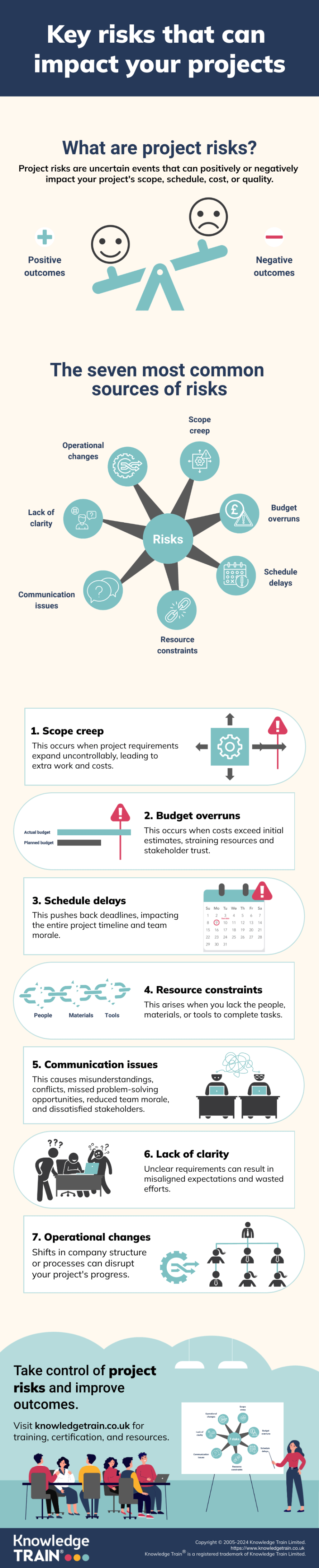
A relevant industry experienceproject risk, don’t worry You can still find project management roles that don’t require any special refers to an uncertain event or condition that, if it occurs, has the potential to either positively or negatively affect the outcome of a project. Risks can impact project objectives such as scope, schedule, cost, or quality. Examples of project risks include changes in customer requirements, budget constraints, delays in schedules, technical issues, resource shortages, and more.project management training
Types of project risks. These roles will generally be low risk/low visibility, meaning you’ll be managing a tiny team and the only resources you have at your disposal will be the skills your team brings to the table. It’s not much but working up from the bottom will guarantee that by the time you’re managing complex projects, you’ll be an expert in your field.
Project risks can be classified into various categories, including:Enhance your skills with our expert-led courses
- Internal risks : These risks originate from within the project or the organisation itself. They can be related to factors such as team dynamics, resource availability, or management decisions.
- External risks : These risks arise from factors outside the project’s control, such as economic conditions, regulatory changes, natural disasters, or market trends.Self-paced
- Technical risksAPM PFQ blended online: Technical risks are associated with the technology or methodologies used in the project. They may involve issues like software glitches, hardware failures, integration challenges, or inadequate technical expertise.
- Financial risks£749 +vat: Financial risks impact the project’s budget, funding, or financial resources. They can include factors like unexpected cost overruns, currency fluctuations, or inadequate financial planning.
- Operational risks : Operational risks affect the day-to-day functioning of the project. They can encompass issues like human errors, process inefficiencies, supply chain disruptions, or equipment failures.
- Strategic risksSelf-paced: Strategic risks influence the project’s alignment with the organisation’s overall business goals. They may involve risks related to changing market demands, competitive pressures, or organisational changes.PRINCE2 Agile Practitioner (with Foundation) self-paced online
Impact of risks on project success
Risks can have a variety of impacts on a project’s success:£1,399 +vat
- Positive effects : These could include opportunities for innovation or efficiency improvements
- Negative effects : These could lead to delays, cost overruns, or quality issues.Self-paced
Effective AgilePM Practitioner (with Foundation) self-paced onlinerisk management is important for minimising negative impacts and maximising the potential for opportunities and overall project success.£1,299 +vat
By identifying and assessing risks, Are project managers in demand?
Common project management risks, we always offer competitive prices. Our course costs include bot
Scope creep
Common causes
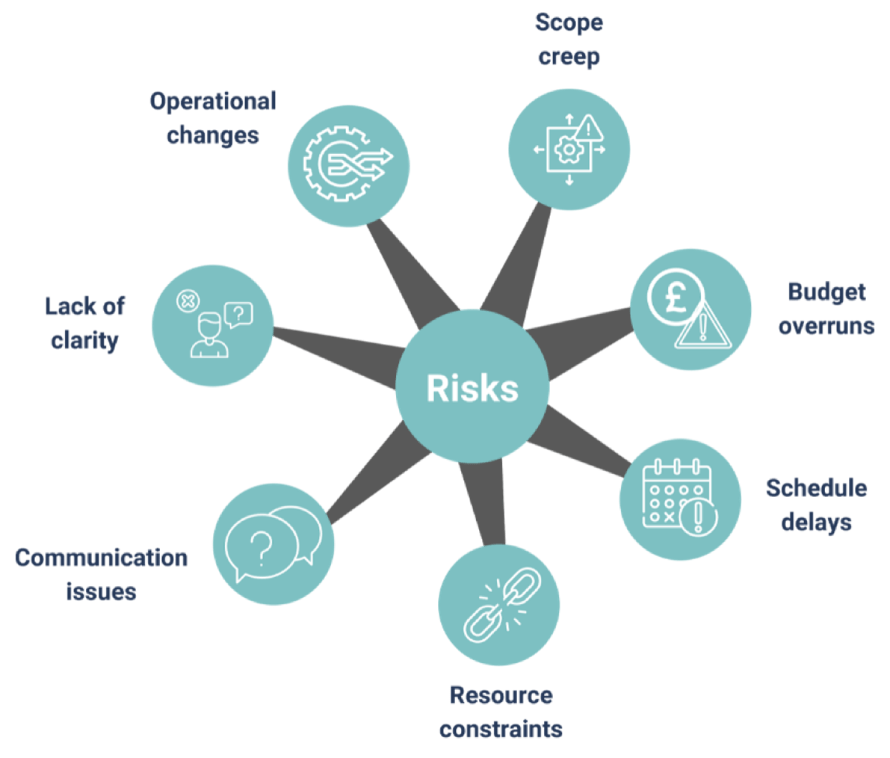
Scope creep is the uncontrolled expansion of a project’s scope without corresponding adjustments to time, budget, and resources. Common causes of scope creep include ambiguous initial requirements, lack of change control processes, Stakeholder pressure for additional features, and insufficient stakeholder engagement.
PRINCE2 Agile Practitioner (with Foundation) self-paced onlineTypes of resource risks
. Project management may seem intimidating, but you’ll find all sorts of useful resources online to get you started.
Consequences of poor communicationA
Poor communication can lead to misunderstandings and conflicts, missed opportunities for problem-solving, reduced team morale and productivity and stakeholder dissatisfaction.project management course
Establish clear communication channels and protocols to promote open and transparent dialogue throughout the project. may not guarantee a role in project management, but it’s a step in the right direction.
Lack of claritySubscribe to our exclusive offers and promotions
Sources of unclear requirements
Unclear requirementsSubscribe now can stem from ambiguous project objectives, insufficient stakeholder input, lack of detailed documentation and changing business needs.
Effects on project outcomesRelated articles
Lack of clarity can lead to misaligned expectations, rework and wasted resources, delayed decision-making and compromised project quality.
Invest time in gathering and documenting clear requirements and maintain ongoing stakeholder engagement to ensure alignment.
Operational changes
Types of operational risks
Operational changes can include:
- Organisational restructuring
- Process modifications
- Technology upgrades
- Regulatory changes.
Impact on project execution
Operational changes can affect projects by disrupting established workflows, requiring additional training or resources, altering project priorities and necessitating scope or timeline adjustments.Project management vs programme management
Stay informed about potential organisational changes and maintain flexibility in project planningKnowledge Train to accommodate operational shifts.19 Feb 2026
By knowing about common project management risks, you can make specific plans to help prevent or overcome them. In addition, proactive risk management involves:
- Regular risk assessmentsDive into the differences between project and programme management to determine which is best suited for your organisation and can improve your project delivery. Read on to find out more.
- Clear communication with stakeholders
- Robust change management processes
- Continuous monitoring and adaptation.
Keep in mind that effective risk management is an ongoing process that needs careful monitoring and flexibility throughout the project. If you plan and work for these common risks, you will be able to increase the probability of success in your project.
Risk management process
Risk identification
The first step in risk management is to identify potential risks that could impact your project. Some common techniques include:
- Brainstorming with team members11 essential project management techniques
- Reviewing historical information from similar projectsKnowledge Train
- Conducting stakeholder interviews19 Feb 2026
- Analysing project documentation.
Create a Enhance your project management skills with these 11 essential techniques. From project planning and visualisation to quality assurance and risk assessment, our ultimate guide will help you learn the art of managing projects for excellent results.risk register to document all identified risks.
Risk assessment and prioritisation
After identifying risks, assess their potential impact and likelihood of occurrence. Tools you can use include:
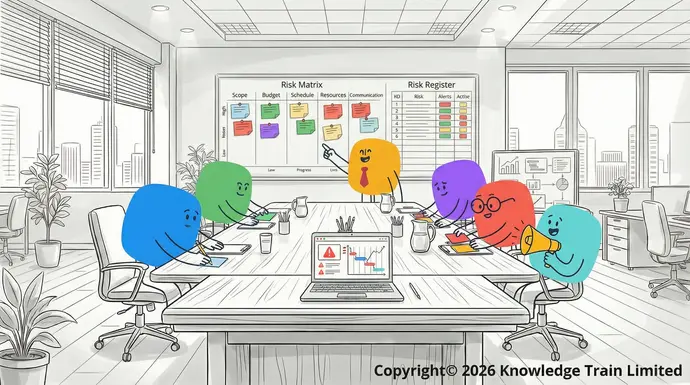
- Risk matrix : Plot risks on a chart based on their probability and impact
- Quantitative analysis : Assign numerical values to risksRAID in project management
- Qualitative analysis : Categorise risks based on severity.Knowledge Train
Prioritise risks based on their potential impact.19 Feb 2026
Risk response planning
For each prioritised risk, develop a response strategy. Common responses include:Enter the world of RAID in project management. Explore how this approach helps teams identify potential challenges and make informed decisions, leading to project success.
- Avoidance : Eliminate the threat by changing project plans
- Mitigation : Reduce the probability or impact of the risk
- Transfer : Shift the risk to a third party (e.g. insurance)
- AcceptanceWhat soft skills do project managers need?: Acknowledge the risk and prepare contingency plans.
Document your response strategies in a risk management plan.Simon Buehring
Risk monitoring and control19 Feb 2026
Continuously monitor risks throughout the project lifecycle. This includes:
- Regular risk reviews and updatesDiscover essential soft skills for project managers and why they are crucial for successful project delivery. Read on to enhance your skill set.
- Tracking risk triggers and early warning signs
- Implementing planned responses when necessary
- Evaluating the effectiveness of risk responses.
Adjust your risk management approach as needed based on new information and changing project conditions.
By following this structured process, you can effectively manage risks and increase your project’s chances of success.
Tools and techniques for project risk management
Risk registerConfused between PRINCE2, Agile, or PRINCE2 Agile? Discover their distinctions and how they can be effectively combined in projects by reading on.
A risk register is a document that lists all identified risks along with their potential impact and planned mitigation. Components to include are:
- Risk description
- Probability and impact assessment
- Risk owner
- Mitigation strategies
- Contingency plans.
Maintain your risk register throughout the project, regularly updating it as needed.Managing small projects
SWOT analysis
Can large project management practices be scaled down? Explore the application of these practices in smaller projects by reading further. is used to identify factors that may impact your project:
- Strengths: Project advantages
- Weaknesses: Areas for improvement
- Opportunities: Potential benefits
- Threats: Possible risks.
Performing a SWOT analysis gives you a well-rounded view of your project’s risk landscape.
Brainstorming sessions
Organise structured Project management KPIsbrainstorming sessions with your team to identify potential risks. Encourage open discussion and creative thinking. Techniques you can use include:Knowledge Train
- Nominal group technique19 Feb 2026
- Affinity diagramming
- Mind mapping.Discover the most important KPIs in project management. Check out our project management KPIs guide and learn how to use them.
Brainstorming sessions can help identify risks that might be overlooked otherwise.
Project management software
Project management software is a valuable tool for helping to streamline your risk management processes. Features to consider include:
- Risk tracking and monitoring
- Automated alerts for risk triggers
- Collaboration tools for team communication
- Reporting capabilities for stakeholder updates.12 websites for project management templates
Project management software can greatly improve your ability to manage risks throughout your project.
Strategies for mitigating common project risksKnowledge Train
Preventing scope creep19 Feb 2026
- Clearly define project boundaries and scope during the planning stage
- Implement a change control process to evaluate and approve scope changesListicle of best websites to find project management templates to help you stay organised. Scroll down to read more.
- Communicate the impact of scope changes to all stakeholders.
Managing budget risks
- Accurate cost estimation and inclusion of contingency reserves
- Regular budget monitoring and reporting
- Cost control measures and prioritisation of expenses.
Addressing schedule delays
- Utilise critical path analysisProject management frameworks to identify key milestones and dependencies
- Build buffer time into Knowledge Trainproject schedules19 Feb 2026
- Regularly review and adjust timelines based on progress updates.
Optimising resource allocationExplore essential project management frameworks and discover how these can enhance your effectiveness. Understand the structured approaches behind these frameworks for successful project outcomes and improved team collaboration.
- Conduct thorough resource planning at the outset of the project
- Utilise resource levelling techniques to balance workloads
- Maintain a skills inventory to quickly identify and address skill gaps.
Improving communication
- Establish clear communication channels and protocols
- Schedule regular team meetings and stakeholder updates
- Utilise collaboration tools to facilitate information sharing.
Ensuring clarity in project requirements
- Conduct thorough requirements gathering sessions with stakeholders
- Create detailed, unambiguous project specifications
- Implement formal requirements review and approval process.
Adapting to changes
- Stay informed of potential changes within the organisation
- Build flexibility into project plans to accommodate operational shifts
- Develop contingency plans for significant operational disruptions.
By following these tips, you can avoid most of the common pitfalls that can cause problems in your projects. Keep in mind that risk management is a continuous process. It is important to revisit the steps in this process as you continue with your project.
Best practices for effective risk management
Proactive approach to risk identification
- Try to spot potential risks at the start of a project
- Ask team members to raise red flags as soon as possible
- Look at past data and apply any relevant lessons learnt.
Regular risk assessment
- Hold Give us a callregular check-ins to review identified risks and their status
- Re-evaluate risks as the project progresses and circumstances change+44 (0)207 148 5985
- Revise risk mitigation plans as necessary.
Stakeholder involvement in risk managementOr chat with us using the link at the bottom of the screen.
- Include stakeholders in identifying and assessing risksContact us with questions about the courses on this page, or about which project management certification or training is best for you.
- Keep stakeholders informed of risk management plans and progressFinance FAQs
- Seek stakeholder input on risk mitigation strategies.Contact
Continuous learning and improvementCookies
- Record lessons learnt from risk management successes and failuresPrivacy
- Share information with other project teams to improve organisational risk managementTerms
- Invest in ongoing training and development of risk management skills.Customer Support
Follow these tips to help you establish a positive risk management culture and improve project success.
Conclusion®
Recap of key points, MSP
Effective project risk management is a multi-faceted approach that involves identifying and assessing potential risks, developing mitigation strategies, utilising appropriate tools and techniques, and implementing best practices for continuous improvement.®
These elements form a comprehensive framework for managing uncertainties in project management., ITIL
Importance of ongoing risk management®
Risk management, P3O is an ongoing process that requires constant vigilance, regular reassessment and adaptation to changing project conditions.®
By prioritising risk management throughout the project lifecycle, you increase the likelihood of project success. Remember, proactive risk management is an investment in your project’s future, safeguarding its objectives and deliverables., PRINCE2
FAQs®
What is the difference between internal and external project risks? Agile, RESILIA
Internal risks are those that originate within the project or organisation, while external risks stem from outside factors beyond the direct control of the project team.®
How often should risk assessments be conducted during a project?, and the Swirl logo are registered trademarks of the PeopleCert group. Used under licence from PeopleCert. All rights reserved. AgilePM
Risk assessments should be conducted regularly throughout a project, often at predetermined intervals or key project milestones. Monthly risk assessments are typical for most projects.®
What role do stakeholders play in project risk management? and AgileBA
Stakeholders can provide valuable input in identifying risks, assessing their potential impact, and helping to develop risk mitigation strategies.®
Can all project risks be eliminated? are registered trademarks of Agile Business Consortium Limited. All rights reserved. The APMG International AgilePM and Swirl Device logo, APMG International AgileBA and Swirl Device Logo, APMG International Change Management and APMG International Better Business Cases and Swirl Device logo are trademarks of The APM Group Limited, used under permission of The APM Group Limited. All rights reserved. Better Business Cases™ is a trademark of Her Majesty’s Treasury. All rights reserved. DevOps Foundation
No, not all project risks can be eliminated. The focus should be on effectively managing and mitigating risks.®
How can small teams effectively manage project risks with limited resources? is a registered mark of the DevOps Institute. “PMI”, “PMBOK
Small teams can prioritise risks based on their potential impact, use simple risk assessment tools, and leverage the diverse expertise of team members to ensure comprehensive risk management.®
Infographic Guide”, “PMP” and “CAPM” are registered marks of Project Management Institute, Inc. Knowledge Train Scrum Essentials™, Business Learning Library (BLL)™, Business Analysis Learning Library (BALL)™, Agile Learning Library (ALL)™, IT Learning Library (ITLL)™, and Compliance Learning Library (CLL)™ are trademarks of Knowledge Train Limited. All rights reserved.