
Projects in modern organizations
means they have a clear beginning and an end, differentiating them from ongoing business operations.
Riskier
Because projects often involve work which has never been done before, they inherently have more uncertainty over the work compared with everyday operations. This makes project riskier than business-as-usual.
Require project managementInstructor-led
When staff within an organization work in their everyday operations, they report to a line manager. In projects, the people doing the work report to a Certified Scrum Master courseproject manager who is likely not their usual line manager. This presents greater risks. £699 +vatSee all dates is a discipline that has developed to address these challenges.
Cross-functional
Most projects in modern organizations affect multiple functional areas within the same business which requires more extensive efforts at communication and stakeholder engagement.
Furthermore, they exhibit progressive elaboration; they commence with a broad vision that gets refined over time as more information becomes available.Self-paced
Types of projectsScrum Essentials self-paced online
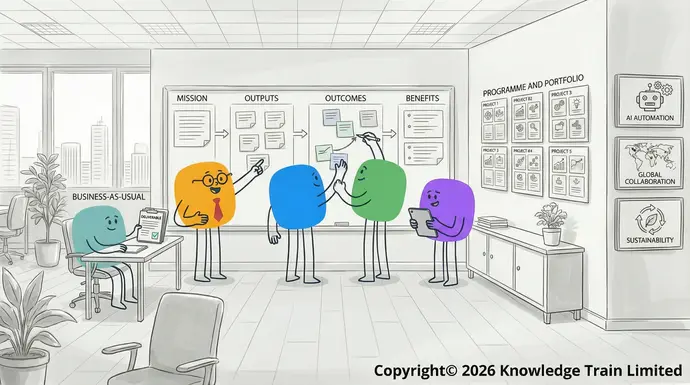
There can be many different types of projects, but every project delivers something tangible (known as outputs£499 +vat). Using these outputs enable business operations to do things differently (known as Must-have skills for any aspiring Scrum MasteroutcomesA successful Scrum Master is expected to motivate the team members and streamline development. For this, the Scrum Master requires certain soft-skills in addition to whichever hard-skills are required by the industry, project, or organisation:), and the positive results of these outcomes can be measured in the form of Intuition and observationbenefitsScrum Masters observe the activities of team members daily. They must use their skills of observation and a little rational thinking to figure out how development can be improved and share this information via workshops, and meetings., or Communication and listening skillsvalueOn a closely related note, Scrum Masters must be experts in communication in order to provide clear and concise instructions to stakeholders and developers. Because sharing ideas is an important part of a Scrum Masters’ role, it’s important to listen to other points of view too! gained.Flexibility
Projects can be classified in three main ways.A great Scrum Master know when they are needed and when they are not. Scrum Masters support the growth team members in such a way that, as time goes on, the input of a Scrum Master should be needed less and less. The role of the Scrum Master usually progresses from a daily mentor to a periodical advisor. Knowing how and when to take a step back is an important skill!
Operational projectsBecoming a Scrum Master
These enhance or streamline ongoing operations, ensuring businesses remain efficient.The usual way of
Strategic projectsbecoming a Scrum Master
These are directed at achieving long-term objectives, aligning with the company’s overarching vision. is by taking a course either with, or without
Transformational projectsScrum Master certification
Such projects result in fundamental shifts in how the business operates or is perceived, like a company-wide digital transformation or a complete rebranding.. The
Examples of projectsScrum Essentials training course
Apple’s iPhone launch is a classic example of a product-driven project that redefined communication and technology. is another way of learning about the Scrum Master role but without the expense of one of the 2 main Scrum Master certifications.
Similarly, IBM’s transformation from a hardware company to a service-oriented business showcases the impact of transformational projects. These cases underscore the potential of well-executed projects to revolutionize industries and steer companies towards unprecedented success.Enhance your skills with our expert-led courses
Furthermore, in a rapidly changing market, projects provide a means to respond to market changes, ensuring the organization remains competitive and relevant.Related articles
Why projects fail
However, not all projects achieve their desired outcomes. Scope creep , where projects extend beyond their initial objectives, is a common challenge. Projects can also falter due to insufficient resources or if they are misaligned with stakeholder expectations.
The repercussions of such failures are profound: financial setbacks, wasted time, and the considerable cost of missed opportunities.
Relationship with the organization
Projects and business-as-usual are two sides of the same coin. While they are distinct—projects being unique and operations being routine —they often overlap.
For instance, the outcome of a project might be integrated into daily operations. It’s crucial to understand this relationship to ensure that projects, once completed, enhance, and align with an organization’s daily functions.
In addition, projects can often form part of a programme or portfolio of change.
Contributing to programmes
If a project is part of a programme it contributes to the programme’s goals by delivering one or more outputs. These outputs, when combined with those from other related projects, produce an impact that helps achieve the overarching outcomes envisaged by the program. Each project within the program has a unique role to play, and the successful completion of every project is imperative to realize the programme’s objectives.
Contributing to portfoliosSix Sigma
Additionally, a project can also be a component of a broader portfolio comprising various projects and programmes. Within such a portfolio, each programme or project should adhere to the organization’s strategic objectives. The overall success of the portfolioSimon Buehring hinges on the combined performance of these 22 Apr 2026programmes and projects. Through the delivery of their distinct outputs and outcomes, they actively contribute to the realization of the strategic objectives encompassed within the portfolio.Six Sigma offers tools for improving business processes and quality. Read on to see how it can benefit your projects.
The future of projects
The future promises projects that are even more integrated with technological advancements. As AI and automation become integral to businesses, projects will encompass these to create smarter, more efficient outcomes.
Additionally, as the world grows more interconnected, projects will take on a global dimension, with teams collaborating from different parts of the world. Crucially, the emphasis will increasingly shift towards sustainability and social responsibility, reflecting the global demand for eco-friendly initiatives and projects that benefit communities.
Summary
In this dynamic environment, understanding and leveraging the power of projects is not just beneficial—it’s imperative.Simon Buehring