Project management triangle

- Understanding project communication plans
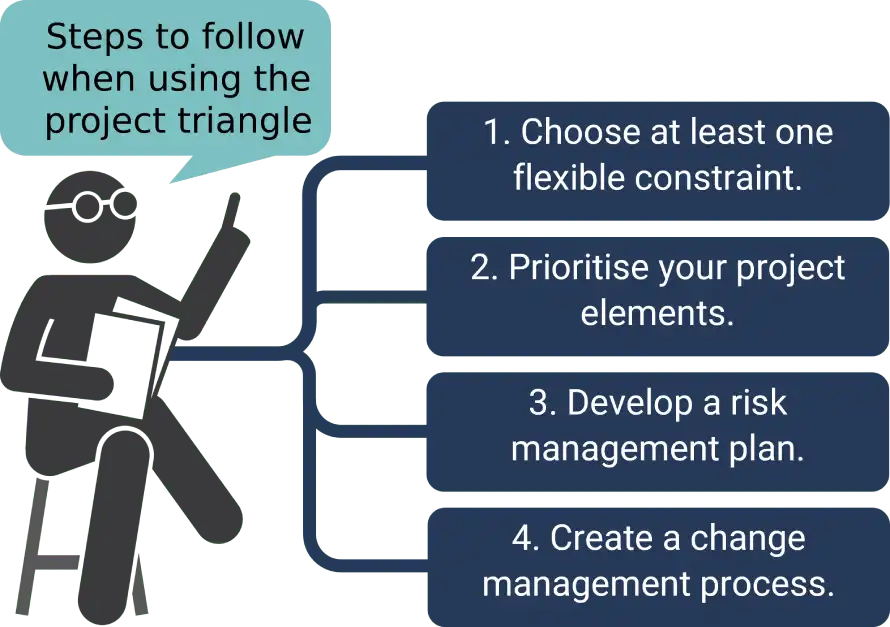
- Use prioritisation and formal change control to prevent scope creep and keep decisions objective.
- Monitor risks and progress continuously, and communicate trade-offs clearly to stakeholders.Creating effective project communication plans
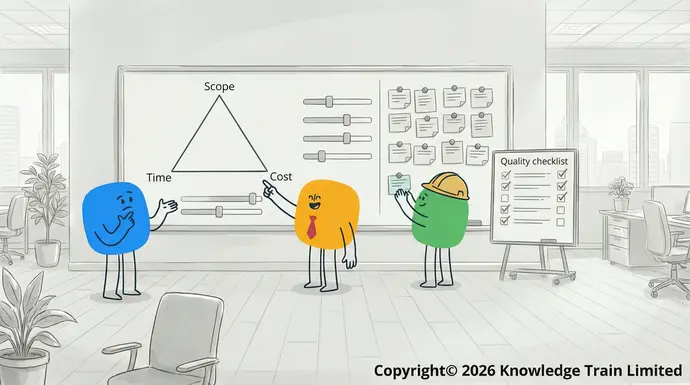
Introductionproject management software
The . The project team must create a schedule that establishes how often updates will be sent and when they will occur. The project communication plan must include specific details about each team member’s project management trianglerole and responsibility, also known as the triple constraint model, is a concept that visualises the constraints of when performing communication tasks.scopeBenefits of implementing a communication plan, Project teams benefit greatly when they implement a strong communication plan. It enhances:timeProject management requires active , and stakeholder involvementcost through continuous information sharing throughout the project lifecycle. in A thorough plan enhances the project managementdecision-making procedure. It highlights the interconnected nature of these three aspects in delivering a successful project. through proper and timely information dissemination
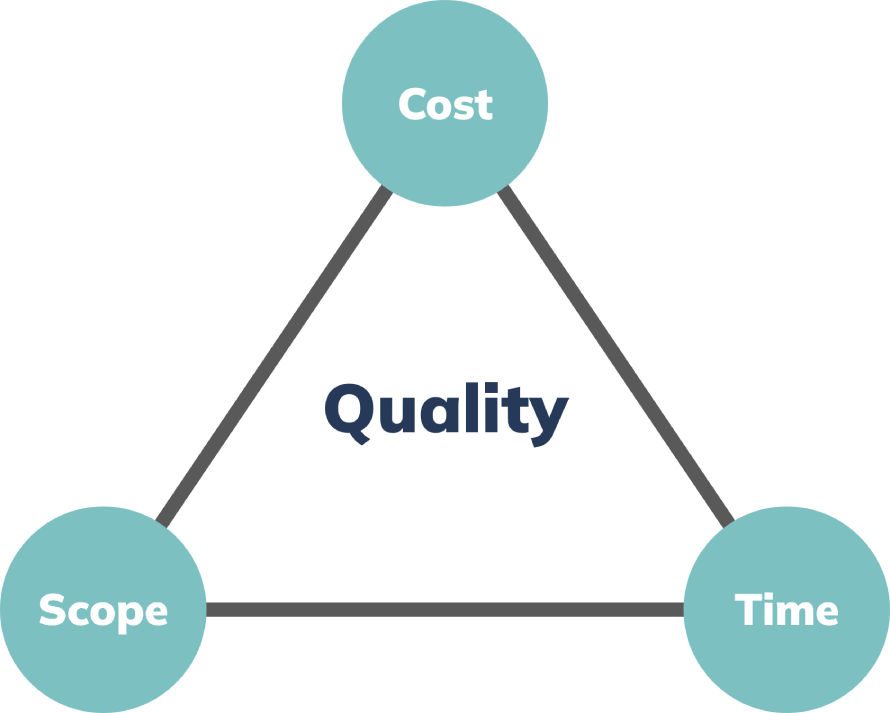
The triangle model is a crucial tool for project managers to understand and balance the competing demands of a .projectThis document helps . The scope refers to the project’s requirements, objectives, and deliverables. Time refers to the schedule and deadlines. Cost encompasses the budget and resources. The challenge is to optimise all three to meet project goals.teams work togethe
Each corner of the triangle is dependent on the other two. A change in one element typically results in a change in at least one other. By understanding and managing these constraints, project teams can make informed decisions and adjustments to ensure project success.r
The project management triangle is a fundamental concept that helps more effectively while preventing misunderstandings and disagreements.project managers A communication plan builds visualise and optimise the key constraints of any project. By balancing scope, time, and cost, project teams can deliver successful outcomes that meet stakeholder expectations.project transparency
Understanding the project management triangle and fosters trust between stakeholders and team members.
The three constraints explainedCommon challenges in project communication
The project management triangle is made up of three main constraints: Effective project communication remains essential yet encounters multiple hindrances.scopeExcessive information, during communication can overwhelm project recipients to the extent that vital information may go unnoticed. Strategies for implementing these principlestime. and Communicating with various stakeholderscost needs custom messages for each group which consumes substantial time.. Let’s have a detailed look at each of these.Virtual workspaces
- Scope bring about specific difficulties in maintaining both clarity and consistency in communication.: Scope refers to the boundaries, objectives and deliverables of a project. It includes the goals and requirements of the project, as well as the specific features, functionalities and quality standards.Communication plans become disrupted when
- Timescope changes or unexpected issues: The time constraint of a project refers to its duration and schedule. It involves factors such as the project start and end dates, milestones and deadlines, as well as the sequencing and dependencies of tasks. arise which requires immediate adjustments.
- CostProject managers: The cost constraint relates to the financial and resource aspects of a project. This includes the budget allocated to the project as well as the human resources and labour costs, and equipment and material expenses. who identify potential communication issues can address them ahead of time to maintain effective communication throughout the project.
Relationship between constraintsEnhance your skills with our expert-led courses
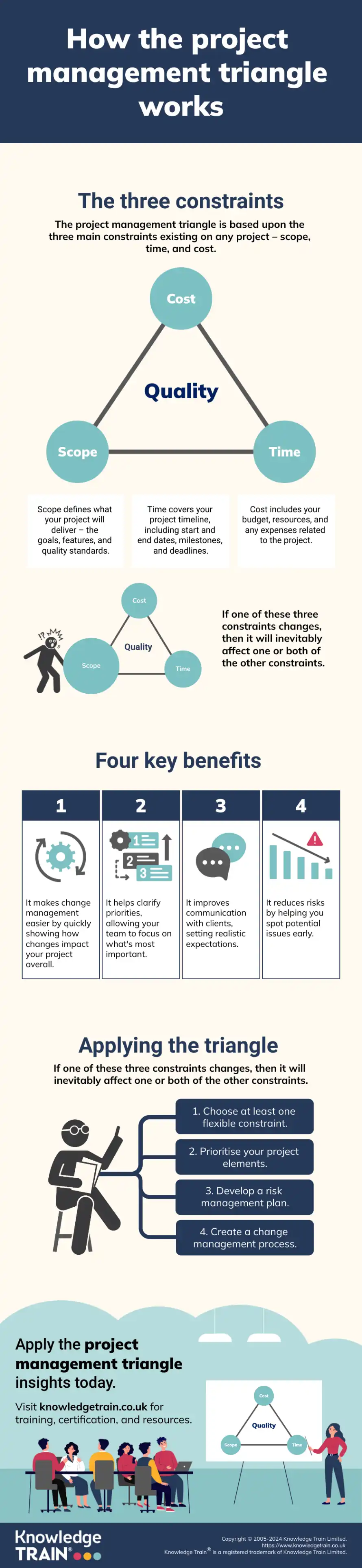
The three constraints of scope, time and cost are interconnected and can impact each other. Changes to one constraint will likely influence the other constraints. For example, an increase in scope will often require additional time and resources, whereas a reduction in time may increase costs or decrease scope. Similarly, a reduction in budget may affect the project scope or timeline.
Project managers must carefully balance these constraints throughout the project lifecycle.
Impact on project qualityInstructor-led
The balance of scope, time and cost also has an impact on the Introduction to Project Management coursequality of the project outcomes. If the three constraints are well-balanced, the project is more likely to achieve high-quality results. On the other hand, if there is an imbalance in any of the constraints, the quality of the project may be compromised. For example:£499 +vat
- A tight deadline may lead to a rushed project, resulting in lower quality outputs.
- A limited budget may result in a project being understaffed or under-resourced, which may also affect quality.See all dates
- A project with an overambitious scope can strain resources and time, leading to poor results.
Successful project management involves finding the right balance and making trade-offs between the three constraints while maintaining the desired level of quality. By understanding the impact of these constraints on each other, project managers can make informed decisions to lead the project to a successful outcome.Instructor-led
Benefits of using the project management triangleProject Management Essentials
Utilising the project management triangle provides some distinct benefits to the project team and stakeholders. These are as follows.
Easier change management£999 +vat
The triangle model helps to make changes easierSee all dates. This is because if a change arises, the project managers can easily evaluate how this change will affect the scope, time and cost, decide, as such it helps to quickly evaluate a change request, understand the ripple effects, and make an informed decision on change.Creating an effective project communication plan
Priority clarificationSetting communication goals and objectives
Visualising the three constraints helps to A successful project communication plan requires clearly defined goals and objectives as its foundational elements. The communication plan goals need to support the project’s main objectives while fulfilling requirements. A fundamental objective of the communication plan should be delivering regular updates to all stakeholders. The objectives for project communication could focus on decreasing email response times and boosting attendance at project meetings. Create clarify prioritiesquantifiable goals. This will make it possible for the team to quickly identify important elements in the project, direct resources to important tasks and make trade-offs as required based on the project goals. for ongoing evaluation of the communication plan throughout the project duration.
Improved client communicationIdentifying stakeholders and their needs
The triangle is a helpful Perform a complete communication toolstakeholder analysis to both communicate with and educate clients. The project managers can use the triangle to show the project’s constraints to the clients, visualise how changes would affect them, and set realistic expectations regarding project deliverables. to determine which groups and individuals are part of or affected by your project. Key stakeholders consist of team members as well as clients, sponsors, and external partners. Evaluate what information each stakeholder needs to know about the project along with their preferred communication methods and their impact on project success. A
Risk reductionstakeholder matrix
Utilising the triangle will help in provides a visual representation of stakeholder relationships to help direct communication priorities.managing risksDetermining communication methods and channels. This is possible because this will help the team to predict potential problems earlier in the process, have a contingency plan, and balance the risks in all three constraints.Choose
The use of the project management triangle allows for communication channelsmanagers that align with stakeholder preferences while considering the specific nature of the information being communicated. Use a combination of formal and informal communication methods which include email updates, video conferences, face-to-face meetings, to make decisions in a balanced manner. As such, it becomes possible to deal with complex projects with great ease.project management software
Common challenges and solutions
Scope creep
Scope creep involves changes or expansion in the project’s scope after it has already started. This can lead to an increase in resources, time, and effort needed to complete the project.
Solutions
- Establish a formal change control process to manage scope changes effectively.
- Clearly define project scope and requirements during the planning phase.
- Communicate regularly with stakeholders to manage expectations.
- Implement a prioritisation system for new requests and changes.
Time constraints
Projects often face tight deadlines , which can put pressure on the team and the quality of work.Communicating effectively in projects: insights by Bina Champaneria
Solutions
- Use critical path analysis to identify and focus on essential tasks.Simon Buehring
- Implement time-boxing techniques to improve focus and productivity.19 Feb 2026
- Consider parallel processing of tasks where possible.
- Negotiate for deadline extensions when necessary.Bina Champaneria explores effective communication in project management. Gain valuable insights into enhancing professional communication by reading on.
Budget limitations
Limited budgets can restrict resources, impacting the project’s scope and quality.
Solutions
- Conduct thorough cost estimation during the planning phase.
- Implement earned value management (EVM) to track project cost performance.
- Explore cost-effective alternatives for resources.
- Prioritise budget allocation for critical project components.PRINCE2 project context
19 Feb 2026
worldwide ERP implementation. The Project Manager in this case struggled to ensure the best balance between the different project triangle dimensions.
Key measures include prioritised the most important core functionalities to manage scope, implemented a phased rollout to manage time and cost constraints, and utilised change management processes to assess and evaluate new requirements.
ResultProject controls – your driver to project success: The project delivered under budget, with minimal impact on time, and fulfilled all essential business requirements.
Construction projectKnowledge Train
A commercial 19 Feb 2026skyscraper building construction project faced unexpected geological conditions which created a major risk to the project triangle.Project controls are an essential part of project management. Find out how you can use them to measure project progress, predict outcomes and steer projects on the right course.
Key measures include reallocated budget from non-essential features to resolve foundation issues, accelerated other construction phases to make up for initial delays, and negotiated with stakeholders to adjust project scope without compromising quality.
Result : The building was completed safely, with a minor delay and a slight increase in the budget.
Product development initiative
importance of balancing scope, time, and cost.
How does changing one constraint affect the others in the project management triangle?Knowledge Train
Changing one constraint typically impacts the other two, requiring adjustments to maintain balance and quality.19 Feb 2026
Can the project management triangle be applied to all types of projects?
Yes, the project management triangle is a versatile concept that can be applied to various industries and projects.Discover our top 10 picks of project tracker tools to power up your productivity. These game-changing solutions will help you streamline your workflow and smash your goals!
What are some signs that a project’s constraints are out of balance?
Signs of imbalance may include frequent scope changes, missed deadlines, budget overruns or quality issues.
How often should project managers review and adjust the project management triangle?
Regular reviews are crucial, especially at significant milestones or when major changes occur.
What role does innovation play in managing the project management triangle?
Innovation can help optimise processes, potentially improving all constraints simultaneously.
Infographic