Project management kick-off meetings19 Feb 2026

Key takeawaysBuild a detailed plan with requirements, work breakdown, schedule, budget, and agreed risk responses.
A strong kick-off creates alignment, energy, and a practical plan for execution.Execute by delegating clearly, managing workflows, and using tools that keep work and communication visible.
- Use the kick-off to align stakeholders on objectives, scope, success measures, and constraints.Monitor progress with CSFs and KPIs, control costs and resources, and act quickly on variances.
- Prepare properly with the right attendees, a shared agenda, and essential documents like the charter and timeline.Close formally with acceptance, a review of outcomes, lessons learnt, and well organised archives.
- Clarify roles, decision rights, and responsibilities, using a RACI where helpful.
- Agree communication channels, meeting cadence, tools, and a single source of truth for project information.
- Surface risks, conflicting expectations, and scope change rules early, then track action items with owners and deadlines.
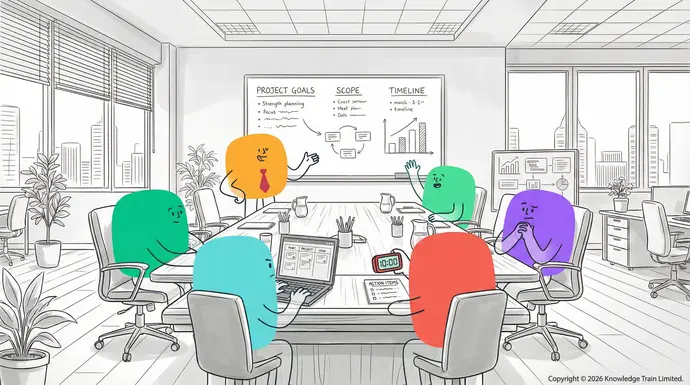
Planning your project kick-off meeting
Pre-meeting preparations
Effective planning is crucial for a successful project kick-off meeting. Begin by Self-pacedfinalising the invite listPRINCE2 Agile Practitioner (with Foundation) self-paced online, ensuring all key stakeholders and team members are included. Consider these three steps:
- Scheduling£1,399 +vat: Choose a time that accommodates all essential participants. Allocate sufficient duration for comprehensive meetings without overwhelming attendees.
- Role assignment : Designate a note-taker to capture important points and action items. This ensures that no crucial information is lost during the meeting.
- Agenda creationSelf-paced: Develop a clear, structured agenda and share it in advance. This allows participants to prepare and contribute effectively.AgilePM Practitioner (with Foundation) self-paced online
Choosing the right tools and methods
Select appropriate tools to facilitate smooth communication and collaboration:£1,299 +vat
- Project management software1. Project initiation: Utilise platforms like Asana or Jira to track tasks, deadlines, and progress.Project initiation phase is important for the success of a project. During this stage, the ideas start to take shape, and the vision and purpose of the project are established.
- Communication toolsDeveloping a business case: Implement solutions such as Slack or Microsoft Teams for real-time review and updates.The
- File-sharing systemsbusiness case: Employ services like Google Drive or Dropbox to ensure easy access to project documents. is a justification for a project and a description of the benefits the project will bring. To develop a
Gathering necessary documents and informationbusiness case
Compile essential materials to provide context and guide meetings::
- Project charterIdentify the problem/opportunity the project is solving: This document outlines the project’s purpose, objectives, and high-level requirements.Consider different solutions and evaluate their feasibility
- Project plan and timelineCalculate the cost, benefit and return on investment: Prepare a detailed schedule highlighting key milestones and deliverables.List the risks and mitigation measures.
- Background informationDefining project goals and scope: Collect relevant data, market research, or previous project insights to inform decision-making.Project goals
By carefully planning your and kick-off meetingscope, you set the stage for a productive and engaging session. This preparation demonstrates your commitment to the project’s success and helps build confidence among team members and stakeholders. A well-organised kick-off meeting lays the groundwork for effective collaboration throughout the project lifecycle. need to be well-defined to have a successful project. To define the goals and the scope:
Structuring your kick-off meeting agendaSet SMART (Specific, Measurable, Achievable, Relevant, Time-bound) goals
A well-structured agenda ensures your kick-off meeting covers all essential aspects of the project. Here’s a comprehensive guide to organising your meeting:List the deliverables and the project boundaries
Introductions and icebreakersIdentify constraints and assumptions.
Begin with brief introductions to foster a collaborative atmosphere. Consider a quick icebreaker activity to energise participants and encourage engagement.Creating a project charter
Project overviewThe
- Background and contextproject charter: Provide a concise history of the project’s inception and its relevance to the organisation’s goals. serves as the project’s formal authorisation document. It should include:
- Project purpose and goalsKey Elements: Clearly articulate the project’s objectives and expected outcomes. Use DescriptionSMART criteriaProject purpose to define goals: Specific, Measurable, Achievable, Relevant, and Time-bound.Clear statement of the project’s objectives
- Scope and deliverablesScope: Outline the project’s boundaries and key deliverables. Clarify what is and isn’t included to prevent scope creep.High-level description of what’s included and excluded
Project plan presentationTimelines
- Timeline and milestonesEstimated start and end dates: Present a high-level project timeline, highlighting critical milestones and deadlines.Budget
- Key deliverables and success criteriaInitial cost estimates: Define specific deliverables and the metrics used to measure project success.Key stakeholders
Roles and responsibilitiesList of individuals or groups with vested interest
- Team member introductionsIdentifying key stakeholders: Allow each team member to briefly introduce themselves and their role in the project.Stakeholder identification
- Stakeholder involvement is an important part of the successful project. To manage your stakeholders, first make a stakeholder register of all the parties involved and then map out their interests, influence, and impact on the project. Lastly, create a communication strategy for each stakeholder.: Identify key stakeholders and their level of involvement throughout the project lifecycle.When each of these components has been properly considered during the initiation phase, a project manager has set the stage for the rest of the project lifecycle.
- RACI chart (if applicable)2. Project planning: Present a The planning process is vital in ensuring that a project will be successful. It involves the development of a RACIproject plan (Responsible, Accountable, Consulted, Informed) chart to clarify decision-making processes..
Project methodology and workflowThe
- Communication planproject plan: Establish communication channels, frequency, and protocols for project updates and conversations. elaborates on the project charter. It includes the following major components: the technical requirements, the
DescriptionIf you realise that important information is missing during the meeting, it is better to acknowledge the gap and assign someone the task of finding it rather than trying to cover it up. Agree on a time frame for this information to be supplied and a person responsible for sharing it with the team. Do not let a gap in information derail the entire meeting.
How can I make my kick-off meetings more interactive and engaging?CSFs
Kick-off meetings can be made more interactive and engaging by incorporating team-building exercises, using visual aids to illustrate key points, and encouraging open discussions. Another effective approach is to assign tasks to team members before the meeting and involve them in a discussion to check their understanding. You can also use storytelling techniques to present project goals and challenges in a more captivating manner.High-level goals that must be achieved for project success
InfographicKPIs
