
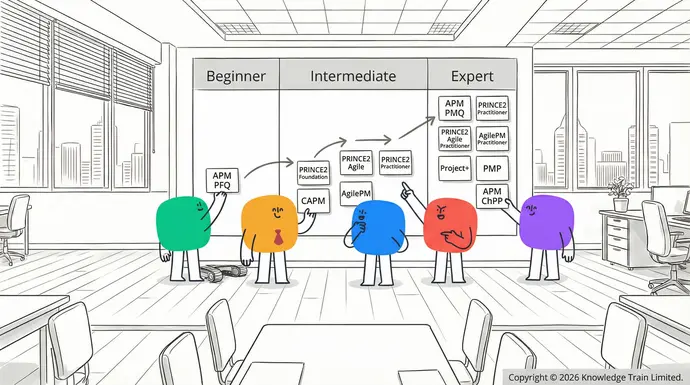
Foundation
Learn the fundamentals of Better Business cases.Practitioner Includes Foundation & Practitioner combined option.P3O®
Foundation
Learn the fundamentals of the P3O project management office.
Practitioner
Includes Foundation & Practitioner combined option.
Workshops
Introduction to Project Management
- Self-pacedPRINCE2 Agile Practitioner (with Foundation) self-paced online
- £1,399 +vat
- Self-pacedAgilePM Practitioner (with Foundation) self-paced online
£1,299 +vatBest practices for effective project schedulingAs with all things, there are several best practices you can follow that will help you improve the quality of your project scheduling. Here are some of the most important ones:
Collaborate with team members
Get your team involved in the scheduling process. Their input can be invaluable in terms of providing more accurate estimates for task durations and helping you to identify potential issues. This approach can also be helpful in terms of getting your team to
buy-in to the schedule.Break large tasks into smaller, manageable pieces
Break complex tasks into smaller and more manageable subtasks. This method, called
Work Breakdown Structure
(WBS), makes it easier to estimate the time, track progress, and allocate resources.Consider dependencies and constraintsIdentify and document all task dependencies and project constraints. This will help you to avoid scheduling conflicts and ensure that activities are logically sequenced.
Build in buffer time for unexpected delays
Include buffer time in your schedule to account for potential delays and unforeseen events. This will give you more flexibility in your schedule and help to avoid missed deadlines.
Regularly update and communicate schedule changes
Update your schedule regularly and communicate any changes to stakeholders. Schedule
reviews are a critical part of the overall scheduling process and can help you to identify potential problems early on.Following these best practices will help you to create better project schedules and ultimately lead to better project outcomes.Common challenges in project schedulingNo matter how hard we try, it’s unlikely that we won’t encounter a few bumps when planning and managing a schedule. By being aware of the following common issues that typically affect project schedules, we will be more prepared and able to identify and address any we might encounter along the way.
AWARDS
We don’t go seeking awards, but here are two of the awards we have received for our training.