Project portfolio management toolsp>Five Case Model for business cases

Key takeaways Key takeaways
Choose PPM tools and techniques that match how your organisation actually works and its maturity. The Five Case Model tests an investment proposal from five connected angles to support robust public value decisions.
- Assess PPM maturity first, because expensive all-in-one tools can be wasted if adoption is low.02 Nov - 05 NovDefine the BAU baseline and a small set of SMART objectives to clarify the need and desired outcomes.
- Individual, collaborative, and integrated tools suit different ways of working and levels of data sharing. Appraise a longlist and shortlist of options using social cost benefit or cost effectiveness analysis, including risk and optimism bias.
- Embedded PPM tools improve efficiency, compliance, and the timeliness and quality of decision-making data.PRINCE2 Practitioner (with Foundation) course (London)Align procurement strategy and specifications to the strategic and economic cases, and feed cost and risk updates back into the analysis.
- Common toolsets cover strategy mapping, EPM, architecture, knowledge, performance, risk, and requirements. Separate social value from affordability by treating economic and financial cases as complementary, not interchangeable.
- Use prioritisation and dashboards to direct resources to strategically aligned work and highlight exceptions fast. £1,954Prove deliverability with clear governance, milestones, resources, and live risk and benefits registers with monitoring plans.
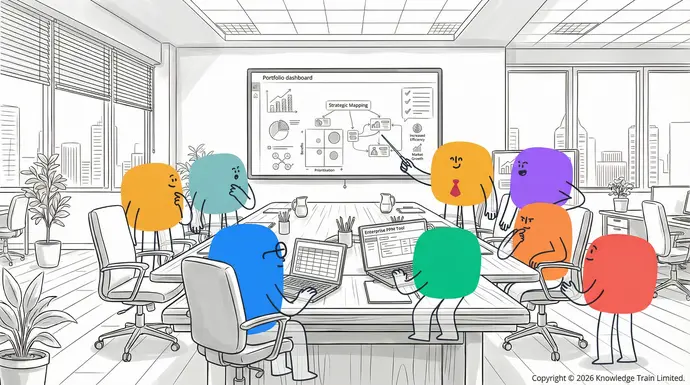
5 Case ModelPPM tools is part of the best practice guidance issued by HM Treasury on behalf of the United Kingdom government. It is recommended to be used by the guidance issued in and techniques. When doing so it is always best to consider the PPM maturity of the organisation. Tools can be expensive. Off-the-shelf packages doing everything can be tempting but can also be a waste of money if not used. It might be the case that a cheaper, simpler tool can be more effective than a more complex, more expensive tool.{"@context":"http://schema.org","@type":"EducationEvent","name":"PRINCE2 Practitioner course","startDate":"2026-11-04","endDate":"2026-11-05","description":"PRINCE2 Practitioner course","url":"https://www.knowledgetrain.co.uk/project-management/prince2/prince2-course/prince2-practitioner","eventStatus":"EventScheduled","eventAttendanceMode":"OnlineEventAttendanceMode","audience":{"@type":"Audience","name":"HMT Green Book
Having said that, many PPM tools are built around best practices and unless the organisation has very specific requirements which require a custom-built solution, most package tools will be adequate for many organisations.p> (central government guidance on appraisal and evaluation)
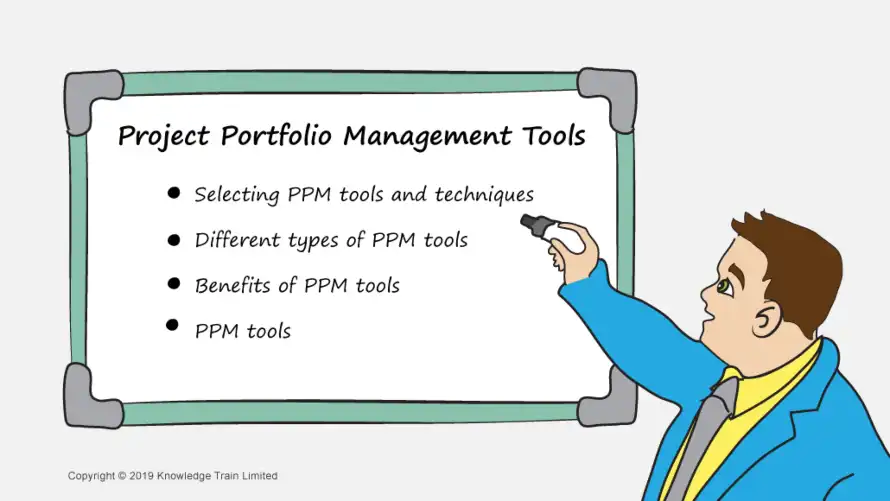
Different types of PPM toolsstrong>PRINCE2 Practitioner[1]
Tools can be deployed in a single office or distributed across the organisation. Tools can be used individually, collaboratively or in an integrated way. The > is for students wanting to learn to apply PRINCE2 on projects..PMO>"},"aggregateRating":{"@type":"AggregateRating","ratingValue":"4.8","reviewCount":"227"},"location":{"@type":"VirtualLocation","url":"https://www.knowledgetrain.co.uk/project-management/prince2/prince2-course/prince2-practitioner"},"image":["https://www.knowledgetrain.co.uk/training-courses/res/logos/axelos-peoplecert-prince2-accredited-training-organisation-logo.svg"],"offers":{"@type":"Offer","url":"https://www.knowledgetrain.co.uk/project-management/prince2/prince2-course/prince2-practitioner","price":"","priceCurrency":"","availability":"http://schema.org/InStock","validFrom":"2026-05-27"},"performer":{"@type":"Person","name":"Susan Tuttle"},"organizer":{"@type":"Organization","name":"Knowledge Train","url":"https://www.knowledgetrain.co.uk/project-management/prince2/prince2-course/prince2-practitioner"}}The 5 Case Model consists of 5 key dimensions: the Strategic Case, Economic Case, Commercial Case, Financial Case, and Management Case. These dimensions work together to provide a comprehensive analysis of a business problem, making it an effective tool for decision-makers. provides training on tools and can also provide specialist consultancy to This article provides an overview of the 5 Case Model, its benefits, and how it can be applied in real-world business cases. To learn in detail how to use the 5 Case Model develop business cases, projects Better Business Cases training, will teach you how to apply the Five Case Model in practice.programmes07 Dec - 08 DecEnhance your skills with our expert-led courses, and portfoliosPRINCE2 Foundation course (Online) for issues which arise from using PPM tools.
Instructor-led
Better Business Cases Practitioner (with Foundation) course £2,400 +vat
See all dates
portfolio management< software is an example of an integrated tool.
Benefits of PPM toolsIf a project portfolio management tool gets embedded within an organisation there are several benefits:<
- Increased efficiencies of PPM processes;
- Improved compliance with business processes;
- SMART objectives
- In the strategic dimension, external constraints and dependencies are considered, such as legal, ethical, political, and technological factors, as well as necessary infrastructure that is beyond the control of the proposal. The proposal’s expected outcome is defined by a small number of
- SMART
- objectives, which must be Specific, Measurable, Achievable, Realistic, and Time-limited. These objectives drive the rest of the model, serving as the basis for option creation and the appraisal process in the economic dimension.
- Rationale
- The objectives must reflect the rationale for the proposal and be expressed in terms of the expected change in service provision, expressed numerically. This helps in refining the objectives and enables them to be monitored and evaluated effectively. The programme objectives should directly align with the proposal’s objectives, providing a clear understanding of the expected outcomes.
Strategic assessmentThe first step in any proposal, whether it be strategic, portfolio, program, or project-based, is the strategic assessment. This evaluation compares the current situation, also known as “business as usual” (BAU), to the desired outcome, as outlined by the SMART objectives. The difference between BAU and the SMART objectives highlights the business needs that must be addressed. A comprehensive understanding of how these business needs can be met and the SMART objectives achieved is crucial.Policy fitThe proposal must also consider its fit with public policy and any potential impacts on other public bodies’ operations, responsibilities, or budgets. Effective and efficient delivery of public services requires consultation and collaboration between public bodies to avoid waste and inefficiencies.Early research, consultation, and engagement with stakeholders provides a better understanding of the current situation and opportunities for improvement, as well as links to relevant policies.Economic dimensionThe
If a project portfolio management tool gets embedded within an organisation there are several benefits:<
- Increased efficiencies of PPM processes;
- Improved compliance with business processes;
- SMART objectives
- In the strategic dimension, external constraints and dependencies are considered, such as legal, ethical, political, and technological factors, as well as necessary infrastructure that is beyond the control of the proposal. The proposal’s expected outcome is defined by a small number of
- SMART
- objectives, which must be Specific, Measurable, Achievable, Realistic, and Time-limited. These objectives drive the rest of the model, serving as the basis for option creation and the appraisal process in the economic dimension.
- Rationale
- The objectives must reflect the rationale for the proposal and be expressed in terms of the expected change in service provision, expressed numerically. This helps in refining the objectives and enables them to be monitored and evaluated effectively. The programme objectives should directly align with the proposal’s objectives, providing a clear understanding of the expected outcomes.
Strategic assessmentThe first step in any proposal, whether it be strategic, portfolio, program, or project-based, is the strategic assessment. This evaluation compares the current situation, also known as “business as usual” (BAU), to the desired outcome, as outlined by the SMART objectives. The difference between BAU and the SMART objectives highlights the business needs that must be addressed. A comprehensive understanding of how these business needs can be met and the SMART objectives achieved is crucial.Policy fitThe proposal must also consider its fit with public policy and any potential impacts on other public bodies’ operations, responsibilities, or budgets. Effective and efficient delivery of public services requires consultation and collaboration between public bodies to avoid waste and inefficiencies.Early research, consultation, and engagement with stakeholders provides a better understanding of the current situation and opportunities for improvement, as well as links to relevant policies.Economic dimensionThe
economic dimension
of the 5 Case Business Model plays a crucial role in analysing and evaluating proposals. It is driven by the SMART objectives and business needs identified in the strategic dimension and estimates the social value of different options. This dimension involves detailed option development and selection through appraisal, with a focus on considering the potential impact on the UK or overseas and considering any unintended consequences.project management The tools authorised for use by the PMO is essential to ensure that the proposal is developed in a holistic and collaborative manner. Commercial dimension commercial dimension of a proposal focuses on the commercial strategy and procurement of services and assets needed. It is informed by the strategic and economic dimensions, and the procurement specifications are derived from them.As the procurement process progresses, the commercial dimension provides updated information on costs, risk management and timing, which is then incorporated back into the economic and financial aspects of the proposal. Financial dimension financial dimension focuses on the overall cost to the public sector of implementing a proposal, considering all financial implications and benefits. It evaluates affordability and the financial impact on the public sector, while the economic dimension evaluates the social value of the proposal. from the current situation to the desired future situation (the change). These tools enable the sharing of information and learning from it. Some examples are wikis, FAQs, intranets. These tools align the expected project or programme performance with strategic objectives and track the actual performance. These enable a common, integrate and systematic approach to the identification and management of risks and issues.<, influencing the economic, commercial, and financial dimensions. These enable project scope to be defined by the capture, analysis, tracing, and prioritisation of detailed project requirements.< The
This continuous feedback loop helps to develop the proposal into a fully-fledged business case.
The
Knowledge management tools
Performance management tools
Risk management tools
Requirements management tools
The techniques applied within a PPM environment can be highly complex. When selecting appropriate tools and techniques to use, consideration must be given to the organisation’s maturity.li>Understanding and applying effective people managementBetter Business Cases Foundation self-paced online
Portfolio prioritisation and optimisation>
This technique enables li>Tailoring the PRINCE2 practices£699 +vatprogrammes>Benefits of using the Five Case Model and li>Tailoring the PRINCE2 processesThe 5 Case Business Model offers several benefits to organisations that use it for business case analysis. Some of the key benefits include:projects> Improved problem-solving.The 5 Case Model provides a structured approach to problem-solving, making it easier to understand and resolve complex business problems. to be categorised and ranked according to one or more criteria. The most common criteria are financial, strategic alignment, risk, and complexity.li>Tailoring the PRINCE2 management productsEnhanced decision-making.The model helps decision-makers make informed decisions by providing a comprehensive analysis of a problem and its potential solutions.
This technique enables the organisation to take effective decision-making to direct resources at change initiatives which are more strategically aligned.>Better communication.The 5 Case Model improves communication between stakeholders by providing a clear and consistent approach to problem-solving. This helps to reduce misunderstandings and improve collaboration.
Management dashboards>Increased credibility.The model provides a thorough and well-supported analysis of business problems and solutions, increasing the credibility of the decision-making process and the recommendations that are made.
This technique highlights exception and highlight based reporting which enables senior management to quickly decide whether a change initiative is on track in terms of progress. A dashboard can be presented as part of a h5>Exam prepRepeatable approach.The 5 Case Model provides a consistent and repeatable approach to problem-solving, reducing the risk of making poor decisions and increasing the chances of success.portfolio5>The 5 Case Model offers numerous benefits to organisations that use it for business case analysis. From improved problem-solving to increased credibility, it is a valuable tool for decision-makers looking to make informed decisions and achieve their goals. or programme status report, or it can be delivered electronically with the ability to drill-down into the data using a PPM software tool.ul>Real-world examples of the Five Case Model
This technique is designed to quickly provide decision-makers with the clear information needed for timely and effective decision-making without getting overcome with the details.li>How to approach the examThe 5 Case Model has been successfully applied in a variety of industries and business situations to analyse and solve complex problems. Here are a few real-world examples:
If you work in a >HealthcarePMOli>Two PRINCE2 Practitioner sample exams.In the healthcare industry, the Five Case Model has been used to analyse and resolve issues related to patient care and hospital operations. For example, it has been used to evaluate options for improving the efficiency of the discharge process and to make recommendations for reducing re-admissions. and need to get a better understanding of the types of tools which can be useful in project, programme and portfolio environments, consider taking a >ManufacturingP3O>In the manufacturing industry, the Five Case Model has been used to analyse and resolve problems related to production and supply chain management. For example, it has been used to evaluate options for reducing waste and increasing efficiency in the production process.®h4>PRINCE2 Practitioner (with Foundation)Government course. P3O is the best practice PMO framework for PMO professionals.4>In the government sector, the Five Case Model has been used to analyse and resolve a wide range of problems, including policy issues, infrastructure planning, and resource allocation. For example, it has been used to evaluate options for improving public transportation and to make recommendations for reducing traffic congestion.
P3Op>PRINCE2 Practitioner (with Foundation) training courses (self-paced online and instructor-led classroom) cover all topics from the PRINCE2 Practitioner syllabus listed above, PLUS the topics from the Foundation syllabus listed below:Finance®>In the finance industry, the Five Case Model has been used to analyse and resolve problems related to investment and is a registered trademark of AXELOS Limited, used under permission of AXELOS Limited. All rights reserved.h5>PRINCE2 overviewrisk management