What is PMP Certification? | How to Get Project Management Professional Certified

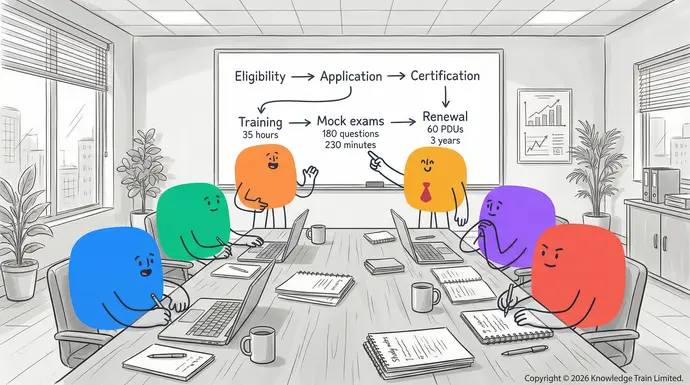
Implement consistent procedures to manage and control delivery.Project Management Institute (PMI)®Project:. Candidates with a four-year degree need at least 36 months of project management experience and 35 hours of project management education or a CAPM certification. Those with a secondary degree require 60 months of experience plus the same 35 contact hours. Oversee the successful execution of initiatives aligned with strategy.
These prerequisites ensure candidates have both the theoretical knowledge and practical project leadership experience necessary for the PMP® exam.What are the different types of PMOs?
Can I pass PMP without reading PMBOK?The three main types of
Yes, you can PMOspass the PMP® exam are: without reading the Supportive PMO:PMBOK® Guide Provides templates, best practices, and guidance to Project Managers.. Many successful candidates rely on authorised training courses and exam preparation materials instead. While the PMBOK® Guide remains a valuable reference, it is not mandatory reading for passing the exam.Controlling PMO:
That said, familiarising yourself with its terminology and structure can enhance your understanding of PMI’s framework and increase your confidence on exam day. Enforces standards, methodologies, and reporting requirements.
Can I self-study for PMP certification?Directive PMO:
No, self-study alone does not fulfil the 35 contact hour requirement for Takes direct ownership of PMP® certificationproject delivery. You must complete either classroom or and management.online trainingEach type varies in authority and responsibility, depending on organisational needs and project complexity. from a recognised provider to meet this criterion. However, many candidates find self-study useful to reinforce topics learned in formal courses.What does a PMO do?
How difficult is the PMP exam?A
The PMOPMP® exam establishes and maintains project management standards across the organisation. It supports is widely considered challenging. It requires mastery of Project Managersproject management principles, ensures project governance, and aligns initiatives with business goals. The PMO often oversees project portfolios to prioritise strategic investments and optimise resource use., terminology, and real-world application. The average pass rate is estimated between What does PMO stand for?60% and 70%PMO, reflecting the need for rigorous study and practice. stands for
Thorough preparation using mock exams, study guides, and PMI-approved training courses can greatly improve your success rate.Project Management Office
How hard is the PMP exam?. It is an organisational function responsible for standardising governance processes, sharing methodologies,
Many candidates find the toolsPMP® exam, and tough due to its breadth and depth. Only around 60% pass on their first attempt. Success depends largely on your techniquesproject management, and improving overall project success. background, how well you study, and how familiar you are with both Agile and predictive methodologies.A PMO may vary in size—from a single individual to an enterprise-wide team—but its purpose remains the same: to improve project performance and ensure alignment with
How is the PMP maintained after passing?business strategy
To maintain your .PMP® certificationWhat is the difference between a PMO and a Project Manager?, you must earn The difference between a 60 Professional Development Units (PDUs)PMO every three years through PMI’s Continuing Certification Requirements (CCR) programme. PDUs can be gained through professional education, volunteering, or practising and a project managementProject Manager. lies in scope and responsibility. A Project Manager delivers specific
After earning the PDUs, you must submit them along with a renewal fee via PMI’s online system to retain your credential.projects
How long does PMP certification last?, managing budgets, timelines, and teams. The PMO, however, provides governance, guidance, and support to multiple projects, ensuring consistency and strategic alignment across the organisation.
PMP® certificationWhat is the purpose of a PMO? is valid for three years. To maintain your credential, earn 60 PDUs within that time through ongoing professional development activities. Renewal ensures you remain current with evolving best practices in The primary purpose of a project managementPMO. is to introduce structure, consistency, and strategic alignment to project management practices. By standardising processes and methodologies, a PMO helps organisations improve project success rates and realise greater value from project investments.
How long does it take to get a PMP?For further reading
The time required to achieve For official standards and frameworks, visit PMP® certificationPMI.org typically ranges from for comprehensive PMO and project management guidance.8 to 12 weeksSubscribe to our exclusive offers and promotions, depending on your background and study pace. Preparing your application and gathering documentation usually takes one to two weeks, while exam study may take several months.
On average, most candidates complete the full certification process within Subscribe nowthree to six months .
How long does it take to study for PMI?{"@context":"https://schema.org","@graph":[{"@type":"WebPage","name":"What is a Project Management Office (PMO)? Roles, Types & Benefits","url":"https://www.knowledgetrain.co.uk/project-management/pmo","description":"Discover what a PMO is, its roles, types and benefits. Learn about PMO functions, standards and how PMOs support project success, with real-world examples.","significantLink":"https://en.wikipedia.org/wiki/Project_management_office","mainEntity":[{"@type":"Article","headline":"What is a Project Management Office (PMO)? Roles, Types & Benefits","about":[{"@type":"DefinedTerm","name":"Project Management Office (PMO)","sameAs":["https://en.wikipedia.org/wiki/Project_management_office","https://www.google.com/search?&kgmid=/m/01k6sk","https://www.wikidata.org/wiki/Q7302704"]},{"@type":"DefinedTerm","name":"Project Manager","sameAs":["https://en.wikipedia.org/wiki/Project_manager","https://www.google.com/search?&kgmid=/m/02y_w9","https://www.wikidata.org/wiki/Q7243378"]},{"@type":"DefinedTerm","name":"Project Portfolio","sameAs":["https://en.wikipedia.org/wiki/Project_portfolio_management","https://www.google.com/search?&kgmid=/m/0l1218y","https://www.wikidata.org/wiki/Q7226149"]},{"@type":"DefinedTerm","name":"Governance","sameAs":["https://en.wikipedia.org/wiki/Governance","https://www.google.com/search?&kgmid=/m/02vs1j","https://www.wikidata.org/wiki/Q1234823"]},{"@type":"DefinedTerm","name":"Supportive PMO","sameAs":["https://en.wikipedia.org/wiki/Project_management_office","https://www.google.com/search?&kgmid=/g/12hs3rl7x","https://www.wikidata.org/wiki/Q7302704"]},{"@type":"DefinedTerm","name":"Controlling PMO","sameAs":["https://en.wikipedia.org/wiki/Project_management_office","https://www.google.com/search?&kgmid=/g/1234testcontrol","https://www.wikidata.org/wiki/Q7302704"]},{"@type":"DefinedTerm","name":"Directive PMO","sameAs":["https://en.wikipedia.org/wiki/Project_management_office","https://www.google.com/search?&kgmid=/g/1234testdirect","https://www.wikidata.org/wiki/Q7302704"]},{"@type":"DefinedTerm","name":"Project Methodology","sameAs":["https://en.wikipedia.org/wiki/Project_management","https://www.google.com/search?&kgmid=/m/06c1s","https://www.wikidata.org/wiki/Q167067"]},{"@type":"DefinedTerm","name":"Stakeholders","sameAs":["https://en.wikipedia.org/wiki/Stakeholder_(corporate)","https://www.google.com/search?&kgmid=/m/025kcl","https://www.wikidata.org/wiki/Q745782"]},{"@type":"DefinedTerm","name":"PMI (Project Management Institute)","sameAs":["https://en.wikipedia.org/wiki/Project_Management_Institute","https://www.google.com/search?&kgmid=/m/04gjjn","https://www.wikidata.org/wiki/Q662929"]},{"@type":"DefinedTerm","name":"Portfolio Management","sameAs":["https://en.wikipedia.org/wiki/Project_portfolio_management","https://www.google.com/search?&kgmid=/m/0l1218y","https://www.wikidata.org/wiki/Q7226149"]},{"@type":"DefinedTerm","name":"Program Management","sameAs":["https://en.wikipedia.org/wiki/Program_management","https://www.google.com/search?&kgmid=/m/0405ykd","https://www.wikidata.org/wiki/Q7243378"]},{"@type":"DefinedTerm","name":"Best Practices","sameAs":["https://en.wikipedia.org/wiki/Best_practice","https://www.google.com/search?&kgmid=/m/01k6kd","https://www.wikidata.org/wiki/Q5369514"]},{"@type":"DefinedTerm","name":"PMO Tools","sameAs":["https://en.wikipedia.org/wiki/List_of_project_management_software","https://www.google.com/search?&kgmid=/g/11g_zdl9y8","https://www.wikidata.org/wiki/Q2142039"]},{"@type":"DefinedTerm","name":"Resource Management","sameAs":["https://en.wikipedia.org/wiki/Resource_management","https://www.google.com/search?&kgmid=/m/020lg1","https://www.wikidata.org/wiki/Q133134"]},{"@type":"DefinedTerm","name":"Standards","sameAs":["https://en.wikipedia.org/wiki/Standardization","https://www.google.com/search?&kgmid=/m/012n6","https://www.wikidata.org/wiki/Q229098"]},{"@type":"DefinedTerm","name":"Process Improvement","sameAs":["https://en.wikipedia.org/wiki/Process_improvement","https://www.google.com/search?&kgmid=/m/0c4fl6","https://www.wikidata.org/wiki/Q6193052"]},{"@type":"DefinedTerm","name":"Project Lifecycle","sameAs":["https://en.wikipedia.org/wiki/Project_life_cycle","https://www.google.com/search?&kgmid=/m/068n_j","https://www.wikidata.org/wiki/Q7243474"]},{"@type":"DefinedTerm","name":"PMO Certification","sameAs":["https://www.pmi.org/certifications","https://www.google.com/search?&kgmid=/g/11f63n5_7f","https://www.wikidata.org/wiki/Q662929"]},{"@type":"DefinedTerm","name":"Change Management","sameAs":["https://en.wikipedia.org/wiki/Change_management","https://www.google.com/search?&kgmid=/m/01jps2","https://www.wikidata.org/wiki/Q609056"]}],"mentions":[{"@type":"DefinedTerm","name":"Organizational Structure","sameAs":["https://en.wikipedia.org/wiki/Organizational_structure","https://www.google.com/search?&kgmid=/m/09gyp","https://www.wikidata.org/wiki/Q853035"]},{"@type":"DefinedTerm","name":"Project Management","sameAs":["https://en.wikipedia.org/wiki/Project_management","https://www.google.com/search?&kgmid=/m/06c1s","https://www.wikidata.org/wiki/Q167067"]}]},{"@type":"FAQPage","mainEntity":[{"@type":"Question","name":"Can a PMO be one person?","acceptedAnswer":{"@type":"Answer","text":"
People, Product, Process,
and
Implement consistent procedures to manage and control delivery.
Takes direct ownership of project delivery and management.
< is worth pursuing in the UK if you aspire to work on global projects or with multinational organisations. Although it requires a significant investment of time and money, it offers strong career advantages, particularly in sectors such as IT, consulting, and finance.p>Each type varies in authority and responsibility, depending on organisational needs and project complexity.
"}},{"@type":"Question","name":"What does a PMO do?","acceptedAnswer":{"@type":"Answer","text":"
"}},{"@type":"Question","name":"What is the difference between a PMO and a Project Manager?","acceptedAnswer":{"@type":"Answer","text":"
- "}},{"@type":"Question","name":"What is the purpose of a PMO?","acceptedAnswer":{"@type":"Answer","text":"
- The primary purpose of a PMO is to introduce structure, consistency, and strategic alignment to project management practices. By standardising processes and methodologies, a PMO helps organisations improve project success rates and realise greater value from project investments.
"}}]}]}]}
What is the cost of the PMP exam?
As of 2024, the Related articlesPMP® exam costs USD $555 for non-PMI members and USD $405 for PMI members. Additional expenses may include PMI membership, training courses, and study resources.
What is the difference between AgilePM and PMP?
The main difference between AgilePM and PMP® lies in their approach. AgilePM focuses on adaptability and iterative delivery, whereas PMP® follows PMI’s structured, process-driven framework. Both certifications complement each other and are valuable in hybrid project environments.
What is the difference between PMP and PMBOK?
The PRINCE2 study formatsPMP® certification is an exam-based credential demonstrating mastery of Simon Buehringproject management19 Feb 2026 principles, whereas the PMBOK® GuideCompare the four study formats for PRINCE2 certification to find the best fit for your learning style and schedule. Read on for details. is a reference book that outlines PMI’s standard framework of best practices and terminology.
What is the difference between PMP and PMI-PBA?
The PMP® certification validates broad project management leadership skills, while the PMI-PBA® certification focuses specifically on business analysis