Kanban management – from chaos to clarity when transforming projects

Key takeawaysBUSINESS CASE COURSES
Kanban improves delivery by making work visible, limiting overload, and continuously refining flow.Select your preferred training course below:
- Use a Kanban board to visualise work and expose bottlenecks early.
- Set and regularly adjust WIP limits to reduce multitasking and speed completion.AGILE COURSES
- Make workflow policies explicit so handoffs, blockers, and dependencies are handled consistently.Select your self-paced training course topic.
- Use feedback loops and metrics such as cycle time, lead time, throughput, CFDs, and control charts to drive decisions.
- Start with the current process, evolve it gradually, and encourage leadership and buy-in across the team.AGILE PROJECT MANAGEMENT COURSES
IntroductionIT QUALIFICATIONS
Kanban project managementSelect your preferred qualification. employs visual techniques to optimise workflow and improve productivity. The methodology which originated from Japanese manufacturing principles has developed into a versatile tool for multiple industries. Kanban started as part of Toyota’s production system in the 1940s before software developers adapted it during the early 2000s.
This article explores:ITIL COURSES
- The foundations and core Select your preferred training course below:principles of Kanban
- Key components of a Kanban systemIT QUALIFICATIONS
- Implementation strategies for Select your preferred qualification.project management
- Benefits and metrics of KanbanITIL COURSES
- Comparisons with other methodologiesSelect your preferred training course below:
- Best practices and common challenges.
Teams achieve process optimisation and continuous improvement through their grasp of Kanban’s flexible characteristics. This detailed guide offers essential knowledge to both beginners and those who want to improve their Kanban project management techniques.LEARNING LIBRARIES
Foundations of KanbanSelect your preferred training course topic.
Origins in Toyota’s manufacturing system
Toyota’s manufacturing plants developed the AI QUALIFICATIONS & WORKSHOPSKanban systemSelect your preferred qualification or workshop. during the late 1940s. Taiichi Ohno, who worked as an industrial engineer, created this method to enhance production efficiency. The system originated from supermarket restocking methods which ensure items are replaced only when necessary.
Adaptation to software development and other industriesAIPGF COURSES
During the early 2000s software development teams started using
BCS AI COURSESCore principles of Kanban
Kanban is built on six fundamental principles:Select your preferred training course below:
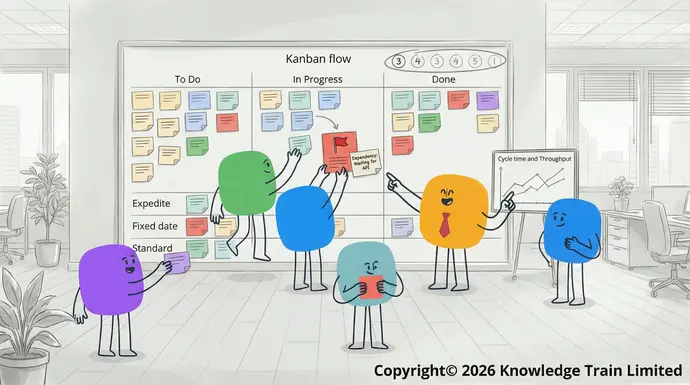
- Visualise the workflow : Use a Kanban board to develop a visual depiction of your workflow process. Using Kanban boards offers a straightforward view of both task advancement and workflow obstructions.AIPGF COURSES
- Limit work in progress (WIP)Select your preferred training course below:: Establish task limits for each stage of the workflow to control work volume. Limiting work in progress stops overloading while enhancing focus and efficiency.
- Manage flowAI WORKSHOPS: Ensure continuous assessment and enhancement of work item progression through the system. Identify and address bottlenecks promptly.Select your preferred workshop below:
- Make process policies clearly stated : Establish clear rules and communication procedures that outline the workflow progression through the system.Knowledge Train is a PRINCE2 Accredited Training Organization.
- Implement feedback loops : Create frequent review sessions to collect insights that lead to data-driven workflow enhancements.Knowledge Train is an AgilePM Accredited Training Organization.
- Improve collaboratively : Team members should collaborate to discover and execute process improvements on an ongoing basis.Knowledge Train is a PRINCE2 Agile Accredited Training Organization.
Teams that follow these principles will develop an adaptableKnowledge Train is a Better Business Cases Accredited Training Organization. and productiveKnowledge Train is a P3O Accredited Training Organization. system for managing workflows. Kanban enables organisations to make incremental improvements to their systems without causing process interruptions which makes it an appealing choice for many companies.
Key components of a Kanban systemKnowledge Train is an AgilePM Accredited Training Organization.
Kanban board
In any Kanban system the Knowledge Train is a PRINCE2 Agile Accredited Training Organization.
- : Teams commonly use whiteboards and spacious walls with sticky notes to display tasks.
- Digital boards: Access virtual Kanban boards on any device by using software platforms that support them.
Each board type provides benefits that teams need to evaluate against their preferences and environmental needs.
Columns and workflow stages
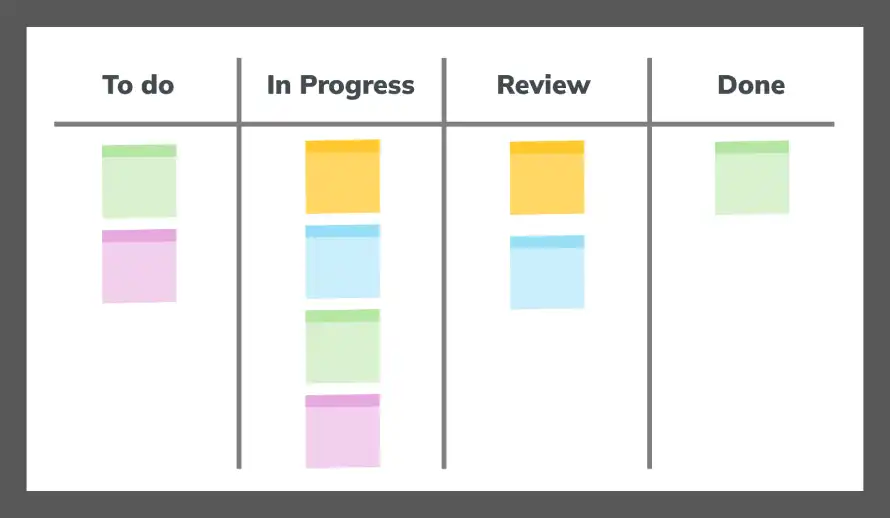
Kanban boards organise work stages through a system of multiple columns. A basic board might include:
- To Do
- In Progress
- Review
- Done.Knowledge Train is an Agile BA Accredited Training Organization.
Teams can personalise board columns to show their unique stages of work.
Kanban cardsKnowledge Train is a Change Management Accredited Training Organization.
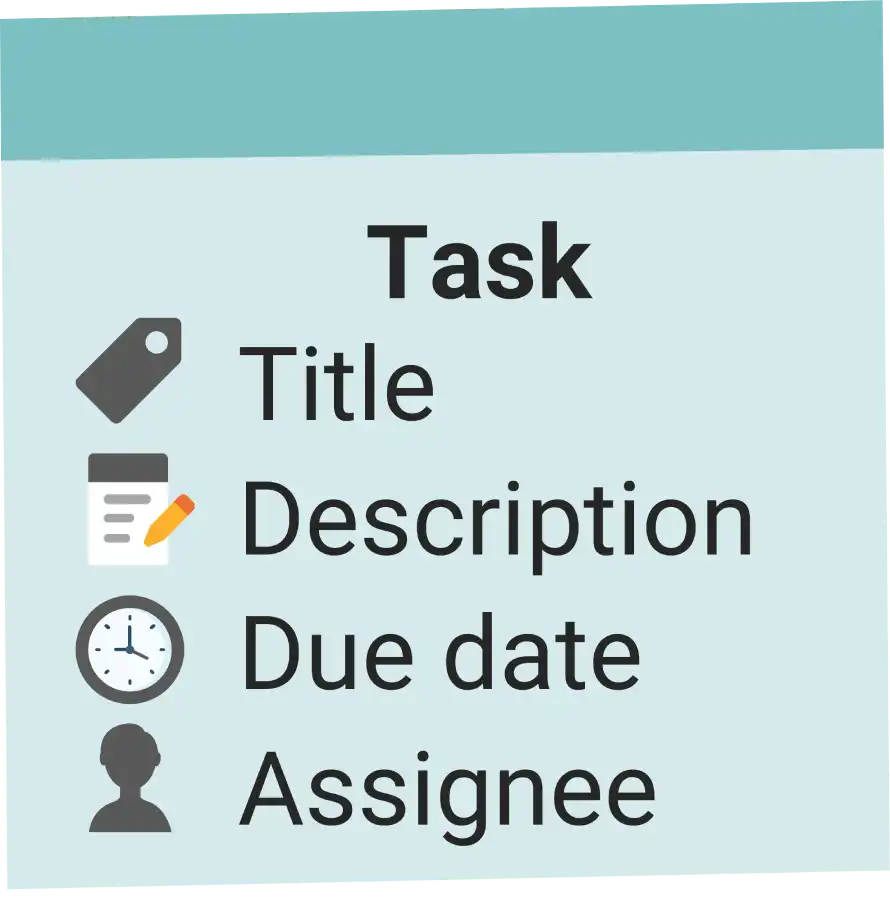
The Kanban cardsKnowledge Train is an MSP Accredited Training Organization. serve as physical representations of each work item and task displayed on the board.
Purpose and information includedKnowledge Train is a PRINCE2 Accredited Training Organization.
Each card typically contains:
- Task descriptionKnowledge Train is an AgilePM Accredited Training Organization.
- Knowledge Train is a Better Business Cases Accredited Training Organization.
Team members can immediately comprehend both task requirements and status because of this information.
Movement through the workflowKnowledge Train is an AgilePM Accredited Training Organization.
Team members transport their task cards between columns on the board as they continue working. The visual movement system provides an effective method for monitoring task progression and pinpointing workflow bottlenecks.
Work in Progress (WIP) limitsKnowledge Train is a PRINCE2 Agile Accredited Training Organization.
The implementation of WIP limits plays a vital role in sustaining efficient workflow operations.
Definition and importanceKnowledge Train is a Lean Six Sigma Accredited Training Organization.
Each workflow stage has a defined maximum task limit through the implementation of WIP limits. WIP limits prevent task overload while supporting team members to finish existing tasks before initiating new tasks.
Setting and adjusting WIP limitsBCS accredited training partner for Business Analysis.
To determine appropriate WIP limits:
- Base your initial WIP limits on a practical assessment of what your team can handle.Knowledge Train is a Change Management Accredited Training Organization.
- Monitor workflow and adjust limits as needed.
- Ensure ongoing efficiency by consistently reviewing and optimising limits.Knowledge Train is an MSP Accredited Training Organization.
Swimlanes and classes of service
Adding swimlanes and classes of service to Kanban boards creates new organisational layers which improve task prioritisation.AXELOS Peoplecert accredited training organisation for ITIL (IT Infrastructure Library).
Purpose and implementation
SwimlanesAXELOS Peoplecert accredited training organisation for ITIL (IT Infrastructure Library). function as horizontal barriers on the board which represent various elements.
- Different Knowledge Train is an AIPGF Accredited Training Organization.projects
- Team members or departmentsKnowledge Train is an AIPGF Accredited Training Organization.
- Types of work
Work items are categorised through BCS accredited training partner for Business Analysis.classes of service based on their urgency and impact levels.WHAT YOU WILL GET
- Expedite: Highest priority, bypass normal flowOur courses and workshops include:
- Fixed date: Time-sensitive itemsCertification exam(s) where applicable
- Standard: Regular work itemsAccredited training course materials
- Intangible: Low priority or improvement tasks.Expert, experienced trainers to support you
Prioritisation and workflow managementCourse manual where applicable.
The introduction of swimlanes alongside classes of service enables teams to organise their work more efficiently.
- Visualise workload distributionSELF-PACED ONLINE TRAINING COURSES
- Prioritise tasks effectivelySelf-paced online training courses (e-learning) include:
- Manage different types of work simultaneouslyCertification exam(s) where applicable
- Ensure critical items receive appropriate attention.Accredited training course materials
Teams can build a complete Kanban system which enhances workflow transparency and efficiency while supporting ongoing process improvements by applying these essential elements.Support from expert, experienced trainers
Our 6 core values are everything we do. They include:
The Kanban board is the visual representation of your workflow.Integrity
Choosing the right tool (physical or digital)Diversity
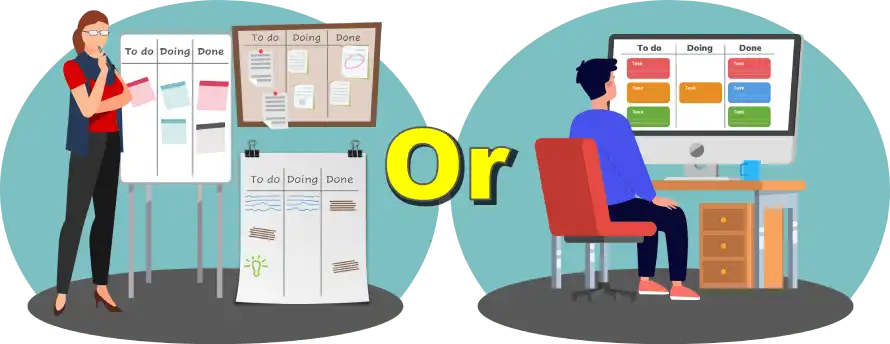
The following factors should guide your choice between physical and digital boards.Fairness
| Physical BoardsQuality | Physical Boards Digital BoardsInnovation |
| Tangible and visibleSocial responsibility | Accessible remotely |
| Easy to modifySOCIAL RESPONSIBILITY | Automated trackingSome of the charities we have helped over the years: |
| Limited space | Unlimited scalability |
| Team must be co-located |
Evaluate which option aligns most closely with your team’s requirements and workplace setup.
Setting up columns and WIP limitsAWARDS
- Organise your workflow by setting up columns that correspond to each stage.We don’t go seeking awards, but here are two of the awards we have received for our training.
- Include a ‘Done’ column so you can monitor finished tasks.
- Set initial work in progress limits for all columns according to your team’s capacity.
Adjust these limits whenever you gather insights into how your team operates. Request a quote
Developing team policies and guidelines
Team-wide consistency in Kanban system usage is maintained through definitive policies.
Definition of done
Define specific conditions that identify when a task reaches completion. This might include:
- Code review completed+44 (0)207 148 5985
- Testing passed
- Documentation updated[email protected]
- Stakeholder approval received.
Handling blockers and dependencies
Develop procedures for:
- Identifying and marking blocked tasks
- Escalating persistent blockers
- Managing dependencies between tasks or teams.
Established guidelines ensure workflow continues without interruption and eliminate periods of stagnation.
Continuous improvement strategiesUnited Kingdom
Kanban is not a set-it-and-forget-it system. Continuous improvement is key to its success.
Regular team meetings and reviews
Schedule recurring meetings such as:
- Daily stand-ups : Teams should deliver quick (15-minute) daily updates on their progress and any obstacles they encounter.
- Weekly reviews : Assess completed work and upcoming priorities.Search
- Monthly retrospectives : Use monthly retrospectives to measure how well your Kanban system works and determine how it can be improved.
The system adapts to your team’s requirements through collaborative meetings.
Adjusting the system based on feedback and metrics
Regularly analyse key metrics such as:
- Cycle timeUnited Kingdom
- ThroughputAustria
- Work in Progress (WIP).Belgium
Employ the insights obtained from data analysis to refine your Kanban system through data-driven changes. This might involve:Bulgaria
- Refining WIP limits
Germany
- Team members to quickly understand project statusGreece
- Managers should pinpoint workflow bottlenecks and resource allocation problemsIreland
- Project stakeholders can monitor advancement without requiring frequent updates.Italy
Enhanced team collaborationLatvia
The visual framework of Kanban promotes better team communication and cooperation.Lithuania
- Team members can easily determine which individuals are assigned to which tasksLuxemburg
- Team members from different functions should collaborate during each stage of task progressionMalta
- The team gains a common perspective on project objectives and important priorities.Netherlands
Increased efficiency and productivityPoland
The method of restricting work-in-progress within Kanban results in:Portugal
- Reduced multitasking and context switchingRomania
- Emphasise task completion before beginning new workSlovakia
- Streamlined workflowsSlovenia with fewer bottlenecks and delays.Spain
Flexibility in planning and executionSweden
Unlike rigid methodologies, Kanban offers adaptability:Other countries
- Teams can incorporate changes anytime without interrupting their work processes.Home
- The board allows users to adjust priorities by moving cards around.Project Management
- The system adapts to support the team’s requirements and project specifications.PRINCE2
Reduced cycle times and faster deliveryPRINCE2 Exams
Kanban achieves improved efficiency by streamlining workflows and minimising waste.Passing the PRINCE2 Foundation exam
- Accelerate progress by reducing the duration between when a task starts and finishes
- Enable faster feedback loops and iterative improvements{"@context":"http://schema.org","@type":"BreadcrumbList","itemListElement":[{"@type":"ListItem","position":1,"name":"Home","item":"https://www.knowledgetrain.co.uk/"},{"@type":"ListItem","position":2,"name":"Project Management","item":"https://www.knowledgetrain.co.uk/project-management"},{"@type":"ListItem","position":3,"name":"PRINCE2","item":"https://www.knowledgetrain.co.uk/project-management/prince2"},{"@type":"ListItem","position":4,"name":"PRINCE2 Exams","item":"https://www.knowledgetrain.co.uk/project-management/prince2/prince2-exams"},{"@type":"ListItem","position":5,"name":"Passing the PRINCE2 Foundation exam","item":"https://www.knowledgetrain.co.uk/project-management/prince2/prince2-exams/passing-the-prince2-foundation-exam"}]}
- Enable faster value delivery to customers or stakeholders.
The advantages of Kanban reach further than these key areas. Teams consistently experience increased job satisfaction along with lower stress levels and higher-quality outputs. Organisations that develop deeper expertise with Kanban should expect to experience better predictability and risk management while their project success rates improve.How to pass your Foundation-level exam in PRINCE2
Kanban metrics and analytics
Data-driven decision-making is essential for successfully implementing Kanban practices. Teams utilise key metrics and analytics tools to track performance while pinpointing areas needing enhancement.Simon Buehring
Cycle time19 Feb 2026
Cycle time represents the total time from the start to the completion of work on an item. This metric helps teams:
- Understand how long tasks typically take
- Identify process bottlenecks
- Set realistic expectations for task completion.
Determine cycle time by monitoring how long each task remains within the “In Progress” column.
Lead time
Lead time measures the complete duration between the initial request of a task and its final delivery. Lead time combines waiting time with cycle time to provide a complete duration measure. Lead time helps:
- Manage customer expectations
- Lead time analysis reveals starting delays for new tasks
- Improve overall process efficiency.
Throughput
Throughput represents the quantity of finished items within a specified timeframe. This metric provides insights into:
- Team productivity
- Capacity planning
- Identifying trends in work completion rates.
By monitoring throughput every week or month you can evaluate how your team performs as time progresses.
Cumulative flow diagramsCopied!
Cumulative flow diagramsKey takeaways (CFDs) provide a visual depiction of task statuses across different time periods. They help teams:High scores come from strong PRINCE2 knowledge paired with disciplined exam technique.
- Identify bottlenecks and constraintsKnow the exam format: 60 multiple-choice questions in 60 minutes, closed book, with a 60% pass mark.
- Visualise work in progress (WIP) levelsLearn the four question styles and use elimination, especially for negative and missing-word questions.
- Understand how work flows through the system.Revise actively by practising sample papers, as repeated exposure improves speed and accuracy.
CFDs display the quantity of items at each workflow step using time along the x-axis and item count on the y-axis.Use paraphrasing and mind-maps to memorise purposes of products, practices and processes in your own words.
Control chartsManage time with a three-pass approach and ensure every question has an answer before submitting.
Control chartsPrepare your exam setup in advance, including photo ID, a clear desk, and water. monitor cycle times for distinct items and graphically represent them through time intervals. They help teams:
- Identify outliers in task completion times
- Understand process stability
- Predict future performance.Contents
The control charts demonstrate expected ranges for cycle times through their upper and lower control limits.
Teams that consistently evaluate these metrics will obtain valuable knowledge about their Kanban process. Continuous improvement and maximum efficiency in workflow optimisation become achievable through this data-driven method.
Comparing Kanban to other project management methodologiesIf you like this article, please link to this page, or share it on social media. Please note that this article was updated to reflect changes in
Teams can select the most effective methodology for their projects by learning about the distinct features of Kanban compared to other approaches.PRINCE2 7
Kanban vs Scrumth
Kanban and editionScrum released in September 2023.
- Understand how the PRINCE2 principles underpin the PRINCE2 method.
- Kanban uses visualisation methods whereas traditional approaches depend heavily on written documentation.8%
Hybrid approaches (e.g., Scrumban)Understand the importance of people in successful projects.
Teams choose hybrid approaches after identifying the benefits found in multiple methodologies. 14%ScrumbanUnderstand the PRINCE2 practices and how they are applied throughout the project. represents a hybrid framework that incorporates aspects from both Scrum and Kanban methodologies.60%
Balance demand against throughputQuestion types
To maintain a sustainable workflow teams must control incoming work.The exam is made up of 60 multiple-choice questions, which you must complete in 1 hour. All the questions are contained within a question booklet.
- Maintain a balance between team workload and incoming tasks to ensure sustainable performanceThe pass mark is 60% so you need to score at least 36 correct answers to pass. The exam is closed book, which means that you cannot use the
- Set WIP limits to protect your team members from excessive workloadsPRINCE2 manual
- Regularly assess and optimise resource allocation. or any other printed or electronic materials during the examination.
Maintaining this balance allows steady productivity levels while preventing team burnout.The exam contains 4 types of question style: ‘standard’, ‘list’, ‘negative’, and ‘missing word’. The questions are always in multiple-choice format, so you simply need to pick one answer out of the four options given. There are no trick questions on the exam paper and each question only has one correct answer.
Continuously review and improve the system‘Standard’ style questions
ConclusionPRINCE2
Kanban project management. delivers an effective strategy for workflow optimisation and productivity enhancement. Through visualisation and WIP limits with continuous improvement Kanban delivers a flexible framework for teams in diverse industries.Purchase your official online exams
Key benefits of Kanban include:
- Improved visibility and transparency
- Enhanced team collaboration
- Increased efficiency and adaptability.Exam
while continuously improving your approach through data analysis and team feedback.