Classroom: 5 days

PMP
targets experienced project managers with several years of practical experience.
- "}},{"@type":"Question","name":"Is APM certification worth it?","acceptedAnswer":{"@type":"Answer","text":"
The value of APM certification - depends on your career ambitions.
Holding an APM qualification shows you are a skilled, knowledgeable, and credible project professional. - "}},{"@type":"Question","name":"Is Knowledge Train accredited for APM training?","acceptedAnswer":{"@type":"Answer","text":"
Yes. Knowledge Train is an
- , approved to deliver
Project Fundamentals Qualification (PFQ) - and
- training courses.
- "}},{"@type":"Question","name":"Should I take instructor-led or self-paced APM training?","acceptedAnswer":{"@type":"Answer","text":"
Instructor-led training
- best if you:
Self-paced online training
- best if you:
Can’t attend scheduled classes. Both formats follow the same syllabus and prepare you to < - strong>pass APM examsRisk
- >.Benefits
- >"}},{"@type":"Question","name":"Should I take an APM PFQ or PMQ course?","acceptedAnswer":{"@type":"Answer","text":"Sustainability.<
p>Choose your The tolerance levels apply to project management, stage management and team operations. The system enables project teams to track advancement while spotting potential problems before they escalate. Tolerances establish definitive boundaries which maintain <strong>APM qualificationproject control> by experience: but still permit flexible execution methods. Management attention remains concentrated on areas which results in improved project efficiency.
ul>Implementing exception management<
li>Establishing tolerances<
strong>APM PFQThe starting point for successful exception management lies in establishing precise > (Project Fundamentals Qualification)tolerance parameters>. These are established at three distinct levels:<
- li>Project level: set by corporate or <strong>APM PMQprogramme management
- > (Project Management Qualification)Stage level: defined by the project board
- Team level: determined by the >project manager>.<
p>APM certification improves employability, enhances professional credibility, and provides a competitive edge in the job market.Different aspects illustrate tolerance settings through examples such as time and cost deviations.
- >"}},{"@type":"Question","name":"What is the pass mark for APM?","acceptedAnswer":{"@type":"Answer","text":"Time: ±2 weeks for project completion<
- p>The Cost: ±5% of the agreed budget<
- strong>pass markQuality: 98-100% compliance with specifications
- > varies by exam:Scope: The scope requires full delivery of essential features while allowing flexibility for optional features.
>Delegation of authority<
ul>Management levels operate <li>efficiently through delegation<strong>APM PFQ: when tolerances outline their operational boundaries. This approach allows:
- > 60% (36 or more correct answers out of 60 in one hour)Project managers should make decisions while staying within the approved stage tolerances
- >Team managers should keep work package deviations within predetermined boundaries.<
li>The project board maintains overall control but steps in solely when tolerances are surpassed. This structure promotes autonomy while maintaining oversight.<
strong>APM PMQ:Exception reporting process
> The pass mark is not publicly disclosed, as it may vary depending on the difficulty of each exam session.Exception reporting becomes active when a tolerance breach is >anticipated or takes place>"}},{"@type":"Question","name":"What is the latest version of the APM BoK?","acceptedAnswer":{"@type":"Answer","text":". The process typically follows these steps:<
- p>The latest Identification of potential or actual tolerance breach<
- strong>APM Body of Knowledge (The project manager creates an Exception Report to address project deviations
- >Submission to the project board for review<
- strong>BoKDecision-making on corrective actions or project redirection.
>Timely communication is crucial in exception reporting. The system allows teams to respond quickly to problems while reducing negative effects on project outcomes. Through consistent progress evaluations and check-ins teams can detect emerging exceptions early which enables them to manage proactively.<
strong>)The application of these practices enables project teams to control exceptions which keeps > is the projects<strong>7th edition aligned with their goals and parameters.
>, reflecting current best practice in project management.The seven aspects of performance in exception management
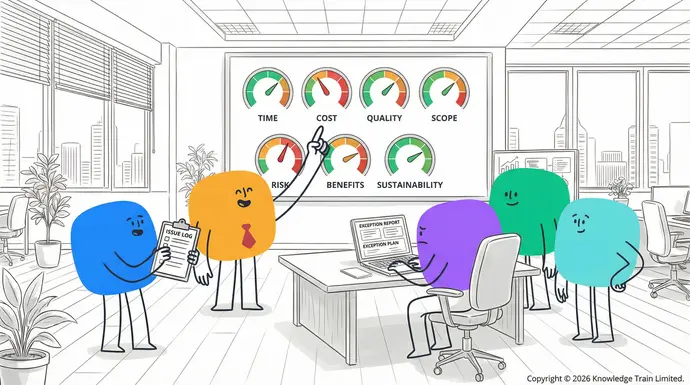
>Effective exception management in PRINCE2 involves <p>All setting tolerances<strong>Knowledge Train APM courses and exams across seven critical performance domains. Project teams need to understand these performance aspects to maintain > are based on this edition.control over their projects>"}},{"@type":"Question","name":"When can I take my APM exam?","acceptedAnswer":{"@type":"Answer","text":" and ensure they achieve successful results.<
p>For 1. Benefits<
strong>instructor-led coursesThe benefits aspect examines the tangible improvements produced through project execution. Benefit tolerances provide flexibility for both minor under-delivery and minor over-delivery.
>, your trainer may schedule exam time, but you can book whenever convenient.Example: Increased income generation in a sales improvement project can vary by plus or minus 2%.
>2. Costs<
p>Cost tolerances define the allowed budget deviations which can be either higher or lower than the agreed budget amount.<
strong>Online studentsExample: The project budget may fluctuate by ±5%.
> can sit exams 3. Time<
strong>any time within 12 monthsThe allowable deviation from planned completion dates is specified by time tolerances.
> of purchase.Example: The stage end date may vary by up to two weeks from its scheduled completion time.
>"}},{"@type":"Question","name":"When do I receive my APM certificate?","acceptedAnswer":{"@type":"Answer","text":"4. Quality<
p>Quality tolerances establish the permitted deviation from the accepted criteria that were agreed upon.<
strong>APM PFQExample: Software projects can achieve between 98% and 100% compliance with the specified functionality.
> certificates are issued 5. Scope<
strong>within 5Scope tolerances define the allowable variation limits for project deliverables.
>Example: A project must deliver all essential features while permitting optional features to be implemented with 20% flexibility.<
strong>-6. Sustainability
>"}},{"@type":"Question","name":"When do I receive my APM Study Guide?","acceptedAnswer":{"@type":"Answer","text":"Exception management technique in PRINCE2<
p>Instructor-led Six-step exception management process<
- strong>printed Study GuideForecast> by post before the course begins.: The team manager expects to exceed the allotted tolerance levels for a work package.
- >"}},{"@type":"Question","name":"Why choose Knowledge Train for APM training?","acceptedAnswer":{"@type":"Answer","text":"Raise issue<p>Knowledge Train’s : The project manager receives an <strong>APM coursesissue registration> are led by notice within the issue register.<
- strong>experienced project managers and certified trainersEscalate> with real industry backgrounds.: When an issue impacts stage tolerances the project manager proceeds to draft an >exception report<p>Our instructor-led training delivers .<
- strong>practical, high-quality learningReview options> trusted by professionals across the UK.: The project board assesses both the >exception report<p>To see how we teach, call and possible solutions.<
- strong>+44 (0)207 148 5985Create exception plan> and request a : The project manager creates a detailed plan to manage the exception when it becomes necessary.<
- strong>free observer placeImplement> on an upcoming APM course.: Once approved, the
- Use visual dashboards to highlight potential exceptions.
Continuous learning and improvement
Enhancing exception management processes over time:
- Record detailed lessons in a logRequest a quote throughout the duration of the project
- Conduct post-exception reviews to identify improvement areas
- Distribute organisational insights to prevent similar problems from happening again
- Ensure that exception management procedures are consistently updated with new insights and learnings.
Project teams will achieve better exception identification and management through the integration of these practices while also learning from these exceptional events. Through this method organisations develop proactive management practices and ongoing improvement which results in better project results and stronger organisational skills in managing exceptions.
Conclusion
Effective project governance in PRINCE2Manage Consent fundamentally relies on exception management. Project teams that apply the ‘manage by exception’ principle and establish explicit tolerances through structured processes can:
- Identify and address issues promptlyTo provide the best experiences, we use technologies like cookies to store and/or access device information. Consenting to these technologies will allow us to process data such as browsing behavior or unique IDs on this site. Not consenting or withdrawing consent, may adversely affect certain features and functions.
- Optimise resource allocation
- Maintain project control while allowing flexibility.
The seven performance aspects establish a complete system for overseeing the health of projects. When integrated with strong forecasting methods together with effective management practices exception management produces better project results.Functional
Exception management expertise allows project managers to deal with obstacles in an effective manner. Through exception management projects stay aligned with their goals while adapting to changes and consistently delivering value. Project success over extended periods in complex settings requires mastery of this essential skill.
FAQs
What is the main goal of exception management in PRINCE2?
The main objective of the approach is to keep the project under control through quick detection and resolution of tolerance deviations.
How does ‘manage by exception’ compare to other project management approaches?
An exception plan serves as a comprehensive approach for resolving tolerance breaches. Teams generate exception plans when predictions indicate that a stage will surpass its established tolerances.
How does forecasting contribute to effective exception management?
Through forecasting teams can detect potential tolerance breaches ahead of time to take early preventive actions and protect project results.
