What is the Association for Project Management (APM)?

Key takeaways
APM is the UK chartered professional body that sets expectations for project delivery and professional development.
- APM supports better project, programme, and portfolio outcomes through standards, guidance, and a shared professional language.
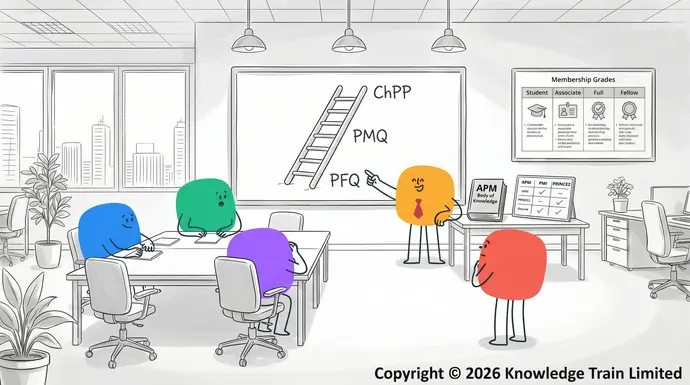
- PFQ builds fundamentals, PMQ validates broader knowledge, and ChPP recognises assessed competence and judgement in practice.
- The APM Body of Knowledge helps standardise terminology and strengthens governance, decision making, and capability building.
- Membership grades signal career progression and provide CPD resources, networking, and professional recognition.
- APM is different from PRINCE2 and PMI, and many professionals combine routes based on role scope and employer needs.
Key facts
The Association for Project Management (APM) is a United Kingdom based professional association for project management. It supports the profession through membership, qualifications, standards, and guidance such as the APM Body of Knowledge.
Not to be confused with : APM can also mean Applications Performance Monitoring or other industry acronyms. This page is about the Association for Project Management in the UK.
project management methodology used in your organisation (for example PRINCE2 environments), and whether you need knowledge validation or professional recognition.
APM Project Fundamentals Qualification (PFQ)
- Purpose : Introductory certification covering key concepts, language, and foundational knowledge in project management.
- Who it is for : Beginners, new starters, and people who work with projects (including stakeholders) but are not yet project managers.
- Prerequisites : None.
- Format : Typically a short course plus a multiple choice exam.
- Outcomes : APM PFQ provides a baseline understanding of planning, roles, risk, and communication, supporting progression to more advanced study.
APM Project Management Qualification (PMQ)
- Purpose : Knowledge based certification aligned to the APM Body of Knowledge and common delivery practices.
- Who it is for : Practitioners who contribute to projects, including aspiring or current project managers.
- Prerequisites : No formal prerequisite, but some experience or prior study helps.
- Format
| Factor | APM (UK professional body) | PMI (global professional body) |
|---|---|---|
| Geography focus | United Kingdom centred, with wider international reach through members and partners | International membership and certifications used globally |
| Common certifications | PFQ, PMQ, ChPP | PMP (Project Management Professional) and other PMI credentials |
| Primary emphasis | Professional body, membership grades, standards, and UK chartered role | Professional body with a broad certification ecosystem and global communities |
| Terminology and frameworks | APM Body of Knowledge oriented language in many UK contexts | PMI standards and terminology used widely across industries |
| Typical audiences | UK based project professionals, employers, and sectors using APM aligned frameworks | Project professionals seeking globally recognised certification such as PMP |
If you work in a PRINCE2 environment , you may still choose APM or PMI learning depending on organisational expectations, role scope (project, programme, portfolio), and your preferred certification path.
History and governance
APM is a long established UK organisation supporting the project profession. It operates as a membership organisation with governance arrangements typical of professional bodies, including leadership, committees, and published standards and policies. Key milestones often referenced in authoritative sources include its development into the UK’s chartered body for the profession and the establishment of structured qualification and membership pathways.
For verifiable organisational facts such as dates, governance updates, and current policies, consult APM’s official publications and register entries where applicable.
Sources
- APM official website: membership, qualifications, chartered information, and publications.
- General reference entry for Association for Project Management for high level organisational facts.
- UK professional standards and governance references where relevant to chartered bodies.
FAQs
What does APM stand for in project management?
In project management, APM most commonly stands for the Association for Project Management, the United Kingdom based professional association for the project profession. Because APM is also used in other industries, it is worth confirming the context, especially in IT where APM can refer to Applications Performance Monitoring.
What is the Association for Project Management (APM)?
at includes certifications like PFQ, PMQ, and Chartered Project Professional.
What does APM do?
APM advances project management by setting professional expectations, providing training aligned qualifications and certification, supporting CPD, and publishing guidance on topics such as project governance and stakeholder management. It also connects members through events, communities, and resources that help individuals and organisations improve project, programme, and portfolio delivery.
Is APM a chartered body?
Yes. APM holds chartered status as the professional body for project management in the UK. Chartered status indicates formal recognition of a professional body’s role in promoting standards and competence. For individuals, APM also provides chartered style professional recognition through routes such as Chartered Project Professional (ChPP).