What is programme management?Search

What is programme management?
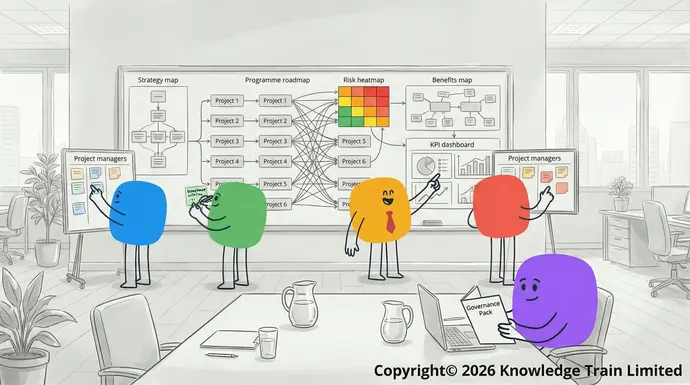
Programme management is the coordinated organisation, direction, and oversight of multiple related The technical storage or access that is used exclusively for anonymous statistical purposes. Without a subpoena, voluntary compliance on the part of your Internet Service Provider, or additional records from a third party, information stored or retrieved for this purpose alone cannot usually be used to identify you.projects and initiatives to achieve strategic goals and realise significant benefits. Leading authorities define it as the application of knowledge, skills, and techniques to meet a programme’s objectives and deliver lasting value aligned with organisational strategy. By linking project outcomes to broader business aims, programme management ensures effective governance, resource allocation, and benefits realisation.Marketing
Programme vs project management
Programme management and project management are closely related but have distinct purposes and approaches:Marketing
- Manage related projects, monitor progress, manage risks and changes, and ensure ongoing stakeholder engagement.
- Closure and benefits realisation:The technical storage or access that is used exclusively for statistical purposes. Finalise all activities, conduct post-programme reviews, ensure benefits are realised and sustained, and formally close the programme.
Roles and responsibilitiesThe technical storage or access that is used exclusively for anonymous statistical purposes. Without a subpoena, voluntary compliance on the part of your Internet Service Provider, or additional records from a third party, information stored or retrieved for this purpose alone cannot usually be used to identify you.
Key responsibilities of a programme manager
The Marketingprogramme manager is the primary leader, accountable for:
- Translating organisational strategy into actionable programme objectives
- Overseeing Marketingproject managers and ensuring projects remain aligned with programme goals
- Facilitating effective governance
- Managing stakeholders and ensuring clear communication
- Benefits realisation and ensuring outcomes deliver value
- Overseeing risk management and change management processesThe technical storage or access is required to create user profiles to send advertising, or to track the user on a website or across several websites for similar marketing purposes.
Other key rolesManage options
- Project managers:Manage services Lead individual projects within the programme, focusing on delivery of specific outputsManage {vendor_count} vendors
- Programme board or steering committee:Read more about these purposes Provides oversight, ensures strategic alignment, and supports decision-making
- Stakeholders:Accept Influence or are affected by programme outcomes, including sponsors, users, and support teams
Programme management processesDeny
Programme management encompasses a range of core processes:
- Establishing a robust View preferencesgovernance frameworkSave preferences
- Defining and communicating the programme charterView preferences
- Integrating {title}risk management{title} and {title}change managementManage consent
- Planning and tracking Manage consentbenefits realisation
- Ensuring strategic alignment throughout the programme
- Managing stakeholder expectations and engagement
- Coordinating project interdependencies and deliverables
Best practices recommend regular reviews, transparent communication, consistent documentation, and adaptive planning.
Programme management benefits
- Improves strategic alignment with organisational goals
- Optimises resource allocation across projects
- Enhanced governance and decision-making
- Streamlined risk management, ensuring proactive issue resolution
- Maximises benefits realisation and return on investment
- Promotes consistent delivery and outcome measurement
Programme management challenges
- Maintaining clear communication among diverse stakeholders
- Managing change resistance and ensuring engagement
- Balancing priorities among competing projects
- Integrating risk management across projects and the programme
- Adapting methodologies to organisational culture and needs
These can be overcome by embedding adaptive governance structures, ensuring stakeholder buy-in, and applying risk-informed decision-making.
Best Practices
- Align programme vision with organisational objectives from the outset
- Use established frameworks, such as MSP, PMI, and PRINCE2, as appropriate
- Ensure flexible processes to manage change and address complexity
- Continuously monitor and evaluate benefits realisation
- Invest in professional development, such as certifications for programme managers
Programme management example
An example of programme management in the public sector is the delivery of a national digital health initiative. Here, multiple IT, training, and policy projects are coordinated to improve patient care, achieve compliance, and realise lasting healthcare benefits, with programme managers ensuring strategic alignment, stakeholder collaboration, and robust governance throughout the life cycle.
FAQs
What is the main purpose of programme management?
The main purpose of programme management is to align multiple related projects with organisational strategy, deliver integrated benefits, and achieve strategic objectives through coordinated planning, governance, and oversight.
How does a programme manager’s role differ from a project manager’s?
Programme managers focus on strategic alignment, benefits realisation, and oversight of several related projects. Project managers are responsible for the delivery of specific project outputs within set constraints.
Which methodologies are used in programme management?
Common methodologies include Managing Successful Programmes (MSP), the PMI Standard for Program Management, PRINCE2, and Agile-based approaches, each offering guidance on governance, process, and benefit realisation.
What are the main benefits of effective programme management?
The main benefits include improved strategic alignment, optimised resource usage, enhanced risk and change management, clearer accountability, and successful delivery of expected benefits.
How does portfolio management relate to programme management?
Portfolio management is the practice of selecting and prioritising programmes and projects based on organisational goals. Programme management is focused on the coordinated delivery and realisation of benefits for selected programmes within the wider portfolio.