What is programme management?Romania

Key takeaways
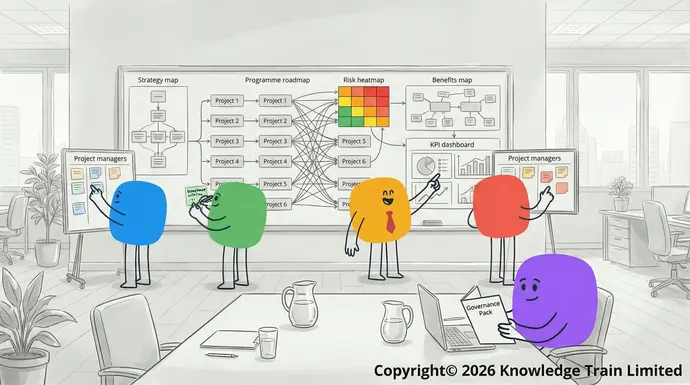
Programme management connects strategy to coordinated delivery across multiple related projects.
- Programme management focuses on benefits realisation and strategic outcomes, not just delivering outputs.
- Robust governance clarifies decision rights, escalation routes, and accountability across workstreams.
- Define measurable outcomes, baselines, and benefit owners early to make value trackable beyond closure.
- Actively manage interdependencies, risks, and change so local issues do not become programme failures.
- Adoption and operational readiness must be treated as deliverables through communications and training.
- Use regular reviews, assurance gates, and data-led dashboards to keep decisions timely and evidence-based.
- Optimises resource allocationRecommendations for future reference. across projectsTemplates and checklists
- Enhanced Templates and checklists ensure consistency in documentation across projects. Provide team members with a template for the detailed report structure, a checklist of key areas to cover during lessons learned sessions, and a standardised format for documenting recommendations.governanceBy implementing these tools and techniques, you can develop a streamlined approach to documenting lessons learned. This system will help you capture valuable insights effectively and ensure they can be easily accessed and applied to future and decision-makingprojects
- Streamlined .risk managementRemember, the key is to create documentation that is both comprehensive and user-friendly to facilitate knowledge transfer throughout your organisation., ensuring proactive issue resolutionAnalysing lessons learned
- Maximises Analysis involves transforming lessons learned data into insights. It includes examining the information, identifying patterns, and formulating recommendations for future use.benefits realisationTechniques for analysing lessons learned data and return on investmentThere are various approaches to maximise the value from your lessons learned data. Consider these techniques:
- Promotes consistent delivery and outcome measurementRoot cause analysis
Programme management challenges: Delve deep to uncover the underlying reasons for successes and failures.
- Maintaining clear communication among diverse stakeholdersSWOT analysis
- Managing change: Identify Strengths, Weaknesses, Opportunities, and Threats that the lessons highlight. resistance and ensuring engagementPareto analysis
- Balancing priorities among competing projects: Prioritise the 20% of factors that led to 80% of results.
- Integrating risk management across projects and the programmeAffinity diagramming
- Adapting methodologies to organisational culture and needs: Group related lessons to identify common themes.
These can be overcome by embedding adaptive governance structures, ensuring stakeholder buy-in, and applying risk-informed decision-making.
Best PracticesTo effectively use lessons learned, you must have a system for storing and retrieving them. This section provides guidance on setting up an efficient process.
- Align programme vision with organisational objectives from the outsetCreating a centralised lessons learned repository
- Use established frameworks, such as A MSPcentral repository, should be the single source of truth for all lessons learned in your organisation. When building this repository, it’s important to choose a platform that works well with your existing PMIproject management tools, and . Use a consistent structure and categorisation system, so the lessons are well-organised. Plan for the repository to be scalable so you can add new projects and insights over time.PRINCE2Implementing effective search and retrieval systems, as appropriateMake sure that lessons are easily discoverable. This can be done by implementing a good search function with filters based on project type, date, and category. Use a tagging system to identify key themes and topics, which will allow users to find relevant information quickly. You can also add an option for users to rate the usefulness of a lesson to help surface the most valuable insights. These features will help increase the accessibility and usefulness of the stored knowledge.
- Ensure flexible processes to manage change and address complexityEnsuring accessibility and usability of stored lessons
- Continuously monitor and evaluate benefits realisationEncourage everyone to use the lessons learned repository by making it accessible and easy to use. This includes creating user-friendly interfaces on both desktop and mobile platforms. Role-based access control can help protect sensitive information while still providing appropriate access. Regularly curate the content to keep it up-to-date and valuable. Conduct training sessions on how to use the repository so that everyone can get the most out of this resource.
- Invest in professional development, such as Creating a well-organised, easily searchable, and accessible repository will ensure your organisation can effectively leverage past experiences. This will turn lessons learned from being static records into resources that actively improve decision-making and project outcomes across your organisation.certificationsLeveraging lessons learned for future projects for programme managersThe real power of lessons learned lies in how they are applied to future projects. In this part, we’ll explore strategies and techniques for leveraging lessons learned effectively to improve project outcomes and drive organisational success.
Programme management exampleIncorporating lessons learned into project planning
An example of programme management in the public sector is the delivery of a national digital health initiative. Here, multiple Incorporating lessons learned into your ITproject planning, training, and policy projects are coordinated to improve patient care, achieve compliance, and realise lasting healthcare benefits, with programme managers ensuring strategic alignment, stakeholder collaboration, and robust governance throughout the life cycle. process is a crucial step in ensuring that past experiences inform future work. To do this, review relevant lessons learned when starting a new project. Make a
FAQslessons learned review
What is the main purpose of programme management?a standard part of project kick-off meetings and assign team members to research and present applicable lessons to the group. This practice ensures that lessons learned are not just documented but actively inform your project strategies.
The main purpose of programme management is to align multiple related projects with organisational strategy, deliver integrated benefits, and achieve strategic objectives through coordinated planning, governance, and oversight.Update project templates and checklists based on lessons learned to embed these insights into your standard operating procedures.
How does a programme manager’s role differ from a project manager’s?Sharing lessons learned across the organisation
Programme managers focus on strategic alignment, benefits realisation, and oversight of several related projects. Maximising the value of lessons learned involves creating a culture that values Project managersknowledge sharing are responsible for the delivery of specific project outputs within set constraints. and continuous learning. Establish regular forums or platforms for teams to exchange and disseminate key lessons learned. Integrate lessons learned into training programmes and new employee onboarding processes to spread valuable insights across the organisation.
Which methodologies are used in programme management?Encourage and reward individuals and teams that actively apply and share lessons learned to reinforce their importance.
Common methodologies include Continuous improvement through lessons learnedManaging Successful ProgrammesContinuous improvement is key to organisational growth and development. Implement a feedback loop to track the effectiveness of applied lessons learned. Regularly review and update your lessons learned repository to ensure it remains relevant and useful. Encourage teams to challenge existing practices and standards based on new insights and insights to promote innovation and adaptation. (MSP), the PMI Standard for Program Management, Organisationally, use lessons learned data to inform strategic decision-making, ensuring that the company’s direction is shaped by real-world experiences and outcomes.PRINCE2By actively leveraging lessons learned, you can turn past experiences into valuable assets for future success. This proactive approach to project management not only improves individual project outcomes but also cultivates a culture of continuous learning and improvement throughout the organisation.
and outcomes.change management, clearer accountability, and successful delivery of expected benefits.