
Key takeaways
Programmes coordinate related projects to deliver strategic outcomes and sustained benefits.Manage options
- Programmes bridge organisational strategy and project delivery by aligning work to measurable outcomes.Manage services
- Managing interdependencies across projects reduces conflict, duplication, and hidden risks.Manage {vendor_count} vendors
- Governance, clear roles, and transparent reporting improve accountability and decision-making.Read more about these purposes
- Active stakeholder engagement and consistent communication build trust and maintain momentum.
- Benefits realisation and KPIs ensure investment delivers value beyond time and budget.Accept
- Standard methods, training, and continual improvement help programmes stay adaptable and repeatable.
Understanding programmesFunctional
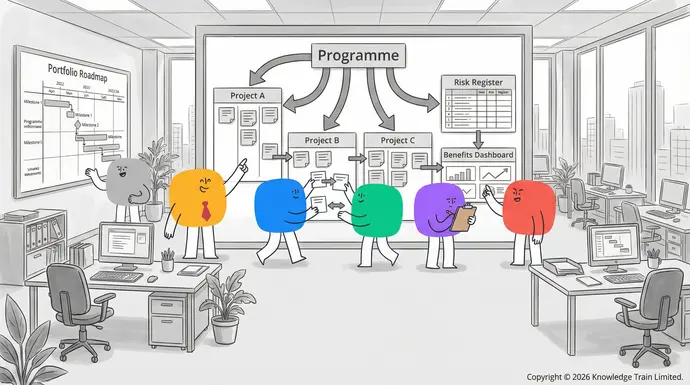
Programmes are formed of related projects, managed together to harness benefits unachievable when managed in isolation. By leveraging programme management techniques, they extract advantages unavailable to standalone projects.
While projects zero in on specific deliverables, programmesFunctional gravitate towards the realization of strategic outcomes and benefits. Generally, programmes boast a broader view than projects Always active , overseeing a suite of interlinked projects all aimed at a common goal.
Take, for instance, the 2012 London Olympics. It was steered as a holistic programme, where individual endeavours, from stadium constructions and opening ceremonies to infrastructure development, were integrated projects within this expansive programme.
Goes beyond just completing projectsSave preferences on time and budget, focusing on achieving the desired outcomes and ensuring that the anticipated benefits are realized and sustained.
Increased flexibilityView preferences
Provides a framework that can adapt to changes in the business environment or organizational strategy, ensuring projects remain relevant and aligned.{title}
Consistency and standardization{title}
By adopting a standardized approach, organizations can ensure consistency in the delivery and quality of projects across the board.{title}
Continuous improvementManage consent
Facilitates a culture of learning and improvement by regularly reviewing performance, capturing Manage consentlessons learned, and implementing best practices across all projects.
Value for money
Ensures that investments in individual projects culminate in the desired benefits, yielding a positive return on investment for the organization.
Boosted morale and team cohesion
With clear objectives and coordinated efforts, teams have a clearer sense of purpose, leading to increased motivation and collaboration.
In essence, programme management offers organizations a structured and strategic approach to managing multiple projects, ensuring not just their successful delivery but also the realization of broader business objectives and benefits.
Summary
Programmes represent unique yet interrelated aspects of strategic organizational management. Managing and integrating programmes within broader portfolios provides organizations with a competitive edge, amplifying benefits realization and enhancing investment returns.
Enterprises that prioritize programme management and adopt standardized methodologies are best positioned to garner superior advantages in a progressively competitive landscape.