ProgrammesPoland

Key takeaways
Programmes coordinate related projects to deliver strategic outcomes and sustained benefits.
- Programmes bridge organisational strategy and project delivery by aligning work to measurable outcomes.
- Managing interdependencies across projects reduces conflict, duplication, and hidden risks.
- Benefits realisation and KPIs ensure investment delivers value beyond time and budget.
- Standard methods, training, and continual improvement help programmes stay adaptable and repeatable.
Understanding programmes
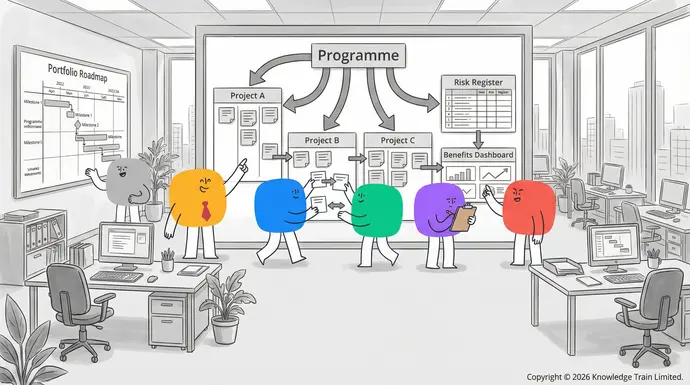
Programmes are formed of related projects, managed together to harness benefits unachievable when managed in isolation. By leveraging Contentsprogramme management techniques, they extract advantages unavailable to standalone projects.
While projects zero in on specific deliverables, Contentsprogrammes gravitate towards the realization of strategic outcomes and benefits. Generally, programmes boast a broader view than Introductionprojects , overseeing a suite of interlinked projects all aimed at a common goal.WBS fundamentals
Take, for instance, the 2012 London Olympics. It was steered as a holistic programme, where individual endeavours, from stadium constructions and opening ceremonies to infrastructure development, were integrated projects within this expansive programme.
Importance of programmesBenefits of a WBS
Programmes serve as the bridge between organizational strategy and individual projects, playing a pivotal role in converting strategic goals into actionable projects. They ensure that these projects align with and achieve the envisaged strategic results.Creating an effective WBS
Programmes manage the interrelations, potential risks, and possible discord among the related projectsWBS formats and tools, thereby heightening the probability of meeting strategic aims. Furthermore, they oversee the recognition and quantification of benefits as projects come to fruition.
Thus, programme management is paramount in driving strategic change and transformation within organizations.Common WBS challenges
Programmes and portfolios
Each programme within a Case studyportfolio must align with the organization’s overarching strategic objectives. The cumulative success of the portfolio hinges on the collective performance of its constituent programmes and projects. By fulfilling their distinct deliverables and outcomes, they collectively further the strategic aims embodied in the Conclusionportfolio .FAQs
Differences between programmes and projects: The WBS consists of multiple levels, with the top level representing the entire project. Each subsequent level breaks down the project into smaller, more manageable components. This decomposition process continues until you reach a level of detail that can be effectively managed.
Table showing the differences between programmes and projects.Work packages