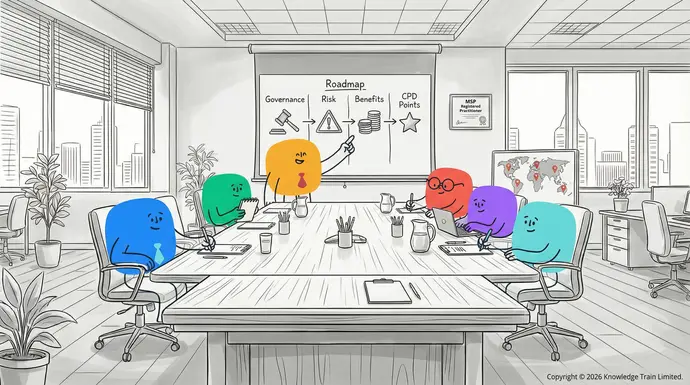
What are the key elements of program management?

The key elements of program management include:

  1. Goal Setting: Establishing goals and objectives for the program.
  2. Resource Management: Identifying and managing resources needed to complete the program.
  3. Risk Management: Assessing and managing potential risks associated with the program.
  4. Scheduling: Developing timelines and deadlines for the program.
  5. Budgeting: Establishing and managing budgets for the program.
  6. Quality Assurance: Establishing quality control measures for the program.
  7. Communication: Communicating with stakeholders, team members, and other departments.Copied!
  8. Reporting: Developing and delivering reports on the progress of the program.Key takeaways

Last edited on: 09 Jun 2026Agile improves delivery by combining iterative planning, tight feedback loops and disciplined ways of working.
Agile delivers value in short iterations, using regular reviews and retrospectives to adapt quickly to change. Scrum, Kanban, Lean and XP offer different structures, so choose based on workflow needs and team maturity.


Agile ManifestoWhat is an example of program management? underpins Agile project management, defining four core values and twelve guiding principles. These foster a culture of collaboration, adaptability, and response to change. Agile Manifesto core values
Individuals and interactions over processes and toolsWhat is difference between project and program management?Working software (or product) over comprehensive documentation Customer collaboration over contract negotiation
Responding to change over following a planWhat is programme or project risk?Twelve principles of Agile
Customer satisfaction through early and continuous deliveryWhat is the difference between programme & project management?Welcome changing requirements, even late in development Deliver working products frequently
Close, daily cooperation between business people and developersWhat is the difference between project and programme management?Build projects
around motivated individualsWhat is the purpose of program management?Face-to-face conversation as the best form of communication Working product as the primary measure of progress
Sustainable development paceWhat is the scope of program management?Continuous attention to technical excellence and good design Simplicity – the art of maximising the amount of work not done – is essential
See all Self-organising teams produce the best resultsProgramme management FAQsRegular reflections for continuous improvement
Key Agile frameworks and methodologies encompasses various frameworks, each with its own practices and terminology. The most widely used Agile frameworks were designed for more efficient product delivery, rather than . They include

Programme Management related articlesScrum

, Kanban, Lean, and Extreme Programming (XP):
Programmes, Team Members
Artefacts:image
Sprint planning, daily scrum, sprint review, sprint retrospectivesLearn about the strategic value of managing programmes within organizations to achieve broad change. Discover more about our approach to programme management.Advantages:
Well-defined structure, clear accountability, transparency
Portfolio management – Interview with Ipek Sahra Özgüler Flexibility, real-time workflow visualisation, easy adoption without role changes
Leanimage
Core elements:Gain insights into portfolio management from expert Ipek Sahra Özgüler and its strategic importance. Read the interview for deep insights. Value stream mapping, optimised flow, customer focus
Advantages:
Pair programming, test-driven development, continuous integration, Programmes and programme management
Programmes and programme managementuser stories
Advantages:image
FrameworkUnderstand the crucial role of programme management in helping organisations adapt and thrive under pressure. Discover more by reading on.Main focus
Key practice
Managing Successful Programmes (MSP)Complex projects needing structure
Kanbanimage
Flexible rolesLearn how Managing Successful Programmes (MSP) can help you handle complex changes in your organisation. Scroll down for a detailed exploration.Ongoing support/operations
Lean
Technical best practicesP3O: An Overview of Portfolio, Programme and Project Offices
P3O: An Overview of Portfolio, Programme and Project OfficesPair programming, TDD
Small, tech-focused teamsimage
The P3O, or Portfolio, Programme and Project Offices, is a best practice framework that helps organisations optimise decision-making, governance and delivery across their initiatives. Learn how the P3O model supports effective management of portfolios, programmes and projects.waterfall model
is a sequential, plan-driven approach where phases follow one another with minimal overlap.
How MSP training and qualifications can help your careerIterative and incremental
Sequential and linearimage
Change-resistantDiscover how MSP training and qualifications can enhance your career and contribute to successful programme design and delivery. Read on for more.Customer Involvement