What is programme management?IT examples
Programme managementExample and project management are complimentary approaches. Within a programme, projects are initiated, executed and closed. The programme coordinates these projects. However, programme management does not remove the need for effective Descriptionproject managementIT Components Involved.Cloud computing
Alignment of 3 critical business areasE-commerce platforms
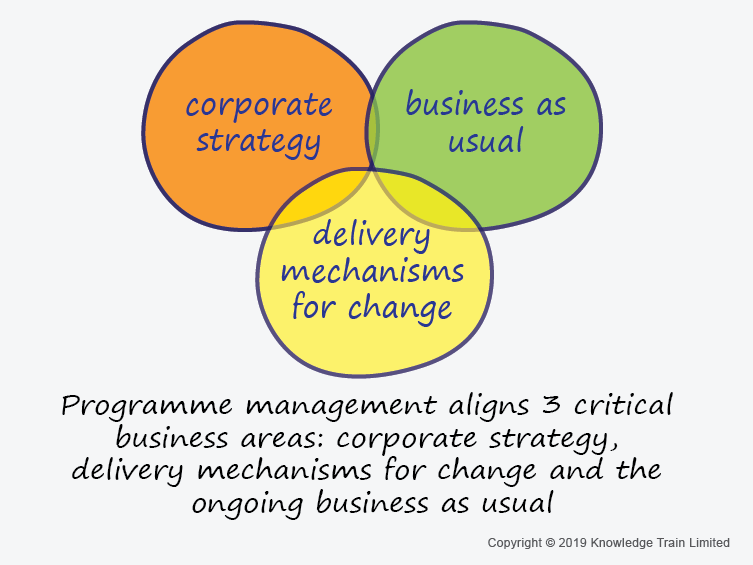
Programme management aligns 3 critical business areas: corporate strategy, delivery mechanisms for change and the ongoing business as usual (BAU).Websites and apps for online shopping and transactions
There will inevitably be a tension between these 3 elements and program management must manage these tensions in order to deliver the transformational change that meets the organization’s needs.Internet technologies, software, databases, networks
TranchesOffice productivity software
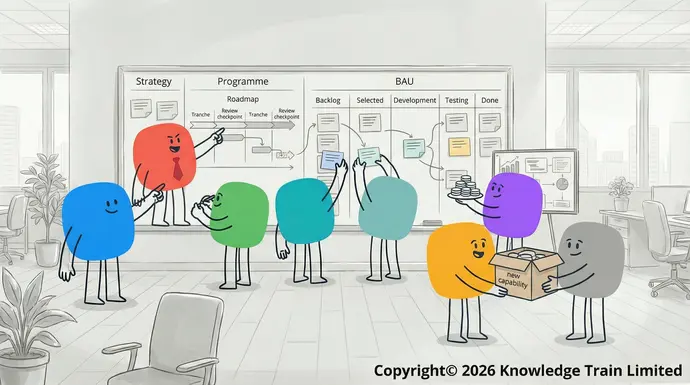
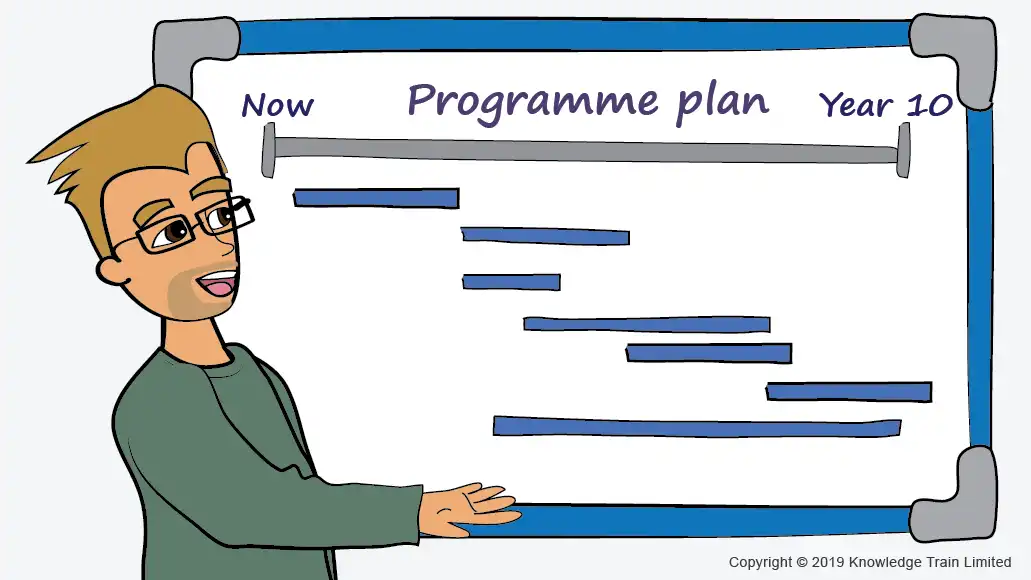
The programme’s projects deliver the products and solutions which will enable the business changes to come about. Programme management manages the transition of these products into the business as usual environment. This is done by organizing things into more manageable chunks (tranches) with review points for monitoring progress, assessing performance and benefits realization.Apps for document creation, spreadsheets, and presentations
Competing resourcesSoftware, hardware, cloud services
Typically, inside an organization there will be competing demands for resources and programme management must provide a framework to enable the resources to be utilized effectively across all the projects within the program.Telecommunications systems
ProgrammesVoice, video, and data communications across large distances often involve changes to the culture and style of an organization and therefore programmes need to recognize the human factors involved in such transformations.Networks, hardware, software, data, telecommunications
Programme management success factorsArtificial intelligence applications
With competing demands for resources between the program’s projects and the operational side of the business, and with potentially complex inter-dependencies and competing priorities to resolve, there will be many risks inherent within any programme.AI-powered analytics, voice assistants, and machine learning tools
The change promised by a programme is unlikely to be delivered without the following in place:Software, data, networks, algorithms, hardware
- Board/executive level supportHistory of IT
- Strong leadershipThe foundations of information technology can be traced to the development of early computational devices and theoretical computer science in the mid-20th century. The invention of the electronic computer in the 1940s, the introduction of mainframes and minicomputers, and later the personal computer revolution in the 1970s and 1980s marked significant milestones.
- Realistic expectations of the organization’s capacity and ability to changeThe emergence of networking technologies, including the internet, in the late 20th century enabled unprecedented global connectivity. The evolution of software, data management, and communication protocols drove the digital transformation of organisations. In recent decades, IT has embraced cloud computing, telecommunications,
- Strong focus on benefitscybersecurity
- Blueprint of the future capability, and artificial intelligence to meet growing demands for efficiency, mobility, and
- Well-defined and well-communicated visioninformation security
- Ongoing engagement of stakeholders.
To assist the organization in leading and managing programmes it makes sense for the organization to adopt a well-established Importance of ITprogramme managementIT is essential for modern society and the global economy. It enables rapid information sharing, process automation, global collaboration, data-driven decision-making, and secure communications. Digital transformation initiatives rely on IT to deliver innovation, competitive advantage, and improved public services. Cybersecurity and information security are now crucial for protecting critical infrastructure and safeguarding privacy in an increasingly interconnected world. framework to assist in achieving the above.
The programme management environmentIT careers
External influencesCareers in IT span areas such as systems analysis,
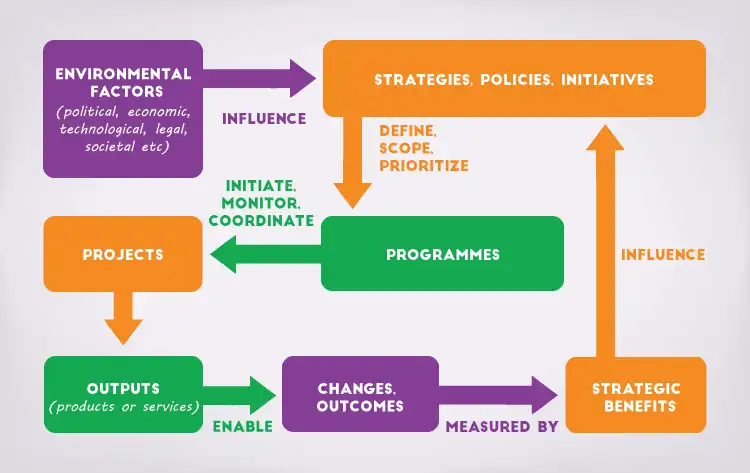
Organizations are shaped and influenced by a myriad of external and internal factors. Take climate change as an example. International agreements about CO2 emissions influence government policy and strategies.project management
Defining programmes, software development, network administration,
Programmescybersecurity are then defined, scoped and prioritized to implement the desired outcomes. Each programme entails several projects that will create new products or services. These projects produce outputs. For example, the destruction of coal-powered power stations; new wind and solar generation; new electric public transport; public awareness campaigns; or, fiscal policies to reduce fossil fuel usage., IT support, data management, and artificial intelligence. Professionals may work across sectors, supporting digital transformation and ensuring the reliable operation of information systems. Required skills range from technical proficiency in hardware and software to abilities in project management and problem-solving.
Coordination of projectsFuture trends in IT
Within a programme, the The future of IT will be shaped by advances in artificial intelligence, machine learning, cloud computing, big data analytics, quantum computing, and enhanced cybersecurity solutions. Digital transformation across industries is set to accelerate, with increased focus on projectssustainability require coordination and direction. The outputs of the projects must be transitioned into operational use and these will enable the changes and outcomes to come about (e.g. lower use of fossil fuels for electricity generation)., automation, and digital ethics. The integration of IT with IoT (Internet of Things), blockchain, and 5G telecommunications will further expand its influence and applications.
The strategic benefits (i.e. reduction in CO2 emissions) can be measured after these outcomes have been achieved. The realization of these benefits in turn, will likely become one of the factors which influence further strategies and initiatives.FAQs