What is Information Technology?Practical workshops

Key takeaways
Information Technology links systems, data and teams to deliver secure, scalable services.
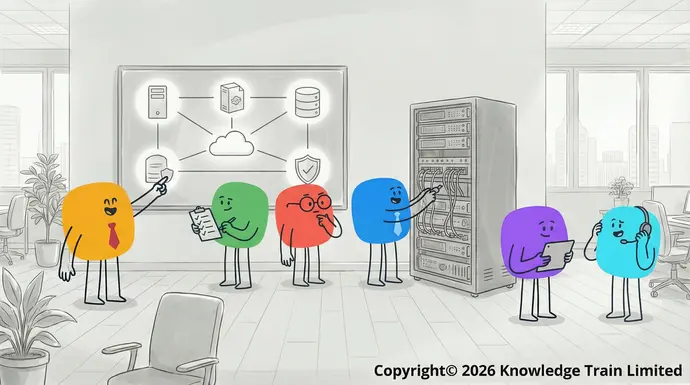
- IT combines hardware, software, networks, databases and security controls to manage and protect information.
- Its value comes from automation, faster collaboration, and better decisions through analytics and AI.Why us
- Cybersecurity needs continuous monitoring, patching, access control, backups, and rehearsed incident response.
- Cloud and automation improve scalability, resilience and cost efficiency when matched to clear priorities.
- Measure outcomes with KPIs such as uptime, mean time to recovery, user satisfaction and cost per transaction.
Definition of Information TechnologyAPM
Information technology (IT), encompasses the use, development, and maintenance of computer systems, software, networks, and data for the storage, retrieval, transmission, and secure management of information. It is a foundational discipline enabling digital communication, business processes, and the secure handling of data in today’s world.PRINCE2
Main components of IT,
- Hardware:AgilePM The physical devices involved in computing such as desktops, laptops, servers, storage devices, and peripherals.,
- Software:PRINCE2 Agile Programmes and applications running on computers and devices, including operating systems, business applications, and databases., or
- Networks:practical workshops Systems that connect hardware devices, enabling data sharing and communication, such as local area networks (LAN), wide area networks (WAN), and the internet..
- Data:Compare qualifications Digital information, which may be numbers, texts, images, audio, or video, processed and analysed by IT systems.Use these summaries to choose a qualification. Use the buttons to view course options and details.
- Databases:Project management qualifications Organised collections of data, enabling efficient storage, retrieval, and management through database management systems (DBMS).
- Internet technologies:New to project management? Protocols and platforms enabling global connectivity, web services, cloud computing, and e-commerce. Start with a Foundation-level qualification (such as PRINCE2 Foundation or APM PFQ), or choose a practical workshop to build confidence first.
- Cybersecurity : Practices and technologies designed to protect information, systems, and networks from threats or unauthorised access.
Applications and uses of ITAPM
Information technology has transformed many areas of society and industry. Key areas of application include:
- Business applications: Automation of processes, decision support, customer relationship management, enterprise resource planning, and e-commerce.
- Healthcare:Best for Electronic health records, telemedicine, diagnostic tools using artificial intelligence (AI), and secure data exchange between providers and patients.Professionals who want broad project management knowledge rather than training in one specific method.
- Education: Choose this if…Online learningYou want broader project management knowledge and terminology that employers recognise across industries. environments, digital classrooms, educational management systems, and adaptive learning platforms.
- Government:You’ll leave with E-government services, digital identity, public records management, and online citizen services.An APM qualification route (PFQ/PMQ and specialist options where applicable) and broad knowledge you can apply across projects and industries.
- Daily life: Internet access via mobile devices, social media, online banking, smart home technologies, and digital entertainment.APM courses
IT examples
| ExamplePRINCE2 | Description | IT Components Involved |
|---|---|---|
| Cloud computing | On-demand access to computing resources and services over the internetBest for | Hardware, software, networks, internet, data centresPeople new to project management, and professionals working in organisations with formal governance, reporting and defined project stages. |
| Cybersecurity tools | Systems for protecting networks and data (e.g. firewalls, encryption)Choose this if… | Software, networks, information security, authentication, hardwareYou need a method with defined roles, management stages, and clear controls for planning, reporting and decision-making. |
| E-commerce platforms | Websites and apps for online shopping and transactionsYou’ll leave with | Internet technologies, software, databases, networksA PRINCE2 certification route (Foundation and Practitioner options) and a practical approach to plan, control and deliver projects. |
| Office productivity software | Apps for document creation, spreadsheets, and presentationsPRINCE2 courses | Software, hardware, cloud services |
| Telecommunications systemsAgilePM | Voice, video, and data communications across large distances | Networks, hardware, software, data, telecommunications |
| Artificial intelligence applications | AI-powered analytics, voice assistants, and machine learning toolsBest for | Software, data, networks, algorithms, hardwareProject professionals and aspiring project managers working with agile delivery teams. |
History of IT
The foundations of information technology can be traced to the development of early computational devices and theoretical computer science in the mid-20th century. The invention of the electronic computer in the 1940s, the introduction of mainframes and minicomputers, and later the personal computer revolution in the 1970s and 1980s marked significant milestones.Choose this if…