
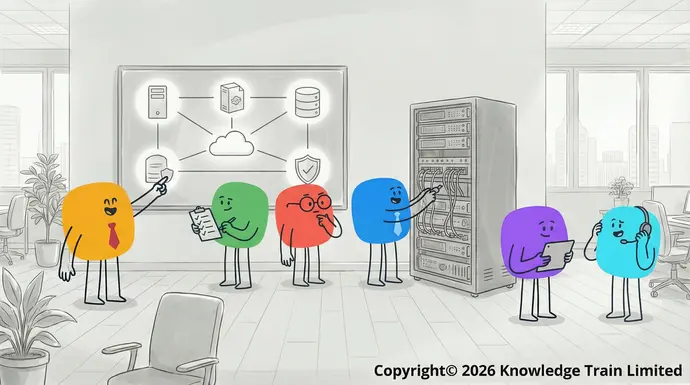
Definition of Information Technology;
Information technology (IT)MSP certification encompasses the use, development, and maintenance of computer systems, software, networks, and data for the storage, retrieval, transmission, and secure management of information. It is a foundational discipline enabling digital communication, business processes, and the secure handling of data in today’s world. – Foundation, Practitioner, Advanced Practitioner levels.
Main components of ITManaging Successful Programmes
- Hardware: is owned by AXELOS – the joint venture between the UK government and Capita plc. MSP certifications are administered by the MSP exam institute (PeopleCert). The physical devices involved in computing such as desktops, laptops, servers, storage devices, and peripherals.Well-known in the UK
- Software:In the UK, Programmes and applications running on computers and devices, including operating systems, business applications, and databases.Managing Successful Programmes
- Networks: is the best-known Systems that connect hardware devices, enabling data sharing and communication, such as local area networks (LAN), wide area networks (WAN), and the internet.programme management
- Data: approach. Digital information, which may be numbers, texts, images, audio, or video, processed and analysed by IT systems.Managing Successful Programmes
- Databases: was developed by the UK Government in 1999 and has been used successfully ever since, both within the public and private sectors. Organised collections of data, enabling efficient storage, retrieval, and management through database management systems (DBMS).It gained much prominence when it was used to successfully direct and coordinate the London 2012 Olympic programme.
- Internet technologies:Enhance your skills with our expert-led courses Protocols and platforms enabling global connectivity, web services, cloud computing, and e-commerce.
- Cybersecurity
| framework provides a structured best practice approach to implementing organisational change. MSP is complimentary to change management approaches which focus on ensuring staff within an organisation engage whilst undergoing a change programme.Internet technologies, software, databases, networks | ||
| Office productivity softwareManaging Successful Programmes | Apps for document creation, spreadsheets, and presentations is particularly well-suited to programmes which involve political and societal change. | Software, hardware, cloud servicesFor example, a programme to provide free pre-school education to children is likely to have low predictability in terms of its outcome. The benefits of such a programme might be that these people will make a more meaningful contribution to society after they turn adults. However, this is a long time into the future, and such outcomes are risky and hard to predict. |
| Telecommunications systemsSpecification-led programmes | Voice, video, and data communications across large distancesThere are also programmes which are more specification-led. | Networks, hardware, software, data, telecommunicationsFor example, large-scale engineering programme such as a city’s Olympic programme for the construction of stadiums and related infrastructure. These programmes are led by the specifications of the outputs. |
| Artificial intelligence applicationsOften on such programmes there is relatively little ambiguity about what the programme will deliver. However, this does not mean such programmes will be risk-free. They are often both risky and complex. On such programmes, | AI-powered analytics, voice assistants, and machine learning toolsManaging Successful Programmes | Software, data, networks, algorithms, hardware can still be used but may need to be scaled down. |
History of ITWhen to use MSP?
The foundations of information technology can be traced to the development of early computational devices and theoretical computer science in the mid-20th century. The invention of the electronic computer in the 1940s, the introduction of mainframes and minicomputers, and later the personal computer revolution in the 1970s and 1980s marked significant milestones.Managing Successful Programmes
The emergence of networking technologies, including the internet, in the late 20th century enabled unprecedented global connectivity. The evolution of software, data management, and communication protocols drove the digital transformation of organisations. In recent decades, IT has embraced cloud computing, telecommunications, has been designed to accommodate high levels of complexity, ambiguity and risk. MSP is therefore highly suitable as a framework for transformational change. cybersecurityManaging Successful Programmes, and artificial intelligence to meet growing demands for efficiency, mobility, and can be used to coordinate and plan across multiple projects.information securityIf an organisation is simply delivering something new into its existing business as usual operational environment (e.g. developing a new product to bring to market) then the
Transformational flowsustainabilityThis describes the programme lifecycle which provides a route through the programme from conception through to the delivery of the new capability, outcomes and benefits., automation, and digital ethics. The integration of IT with IoT (Internet of Things), blockchain, and 5G telecommunications will further expand its influence and applications.Enhance your skills with our expert-led courses
FAQs
What is the difference between Information Technology (IT) and Information and Communications Technology (ICT)?
Information technology (IT) refers to the use of computers, software, networks, and systems to manage and process information. Information and communications technology (ICT) is a broader term that includes IT as well as communication technologies like telephony, broadcasting, and the internet, emphasising the convergence of information processing and communication.
What are some examples of information technology?Instructor-led
Examples include computer systems, cloud computing platforms, business applications, cybersecurity tools, databases, telecommunications, and artificial intelligence applications.MSP Practitioner (with Foundation) course
Why is information technology important?
Information technology is essential for modern communication, efficient business operations, data management, innovation, and secure access to services. It supports economic growth, digital transformation, and enhances everyday life.£1,899 +vat
What careers are available in information technology?
IT careers include software development, network administration, cybersecurity, data analysis, See all datesproject management , information systems management, support roles, and emerging jobs in artificial intelligence and machine learning.
What are the future trends in information technology?
Key trends include the growth of artificial intelligence, big data, cloud computing, quantum computing, advanced cybersecurity, and integrating IT with new technologies like IoT and 5G.Self-paced