What is Information Technology?Programme management complements project management by coordinating multiple projects rather than replacing them.

Key takeawaysIf you are considering a programme management career, then an understanding of programme management frameworks and
Information Technology links systems, data and teams to deliver secure, scalable services.program management certification
- IT combines hardware, software, networks, databases and security controls to manage and protect information. is usually required.
- Its value comes from automation, faster collaboration, and better decisions through analytics and AI.If you came to this page looking for
- Cybersecurity needs continuous monitoring, patching, access control, backups, and rehearsed incident response.training in programme management
- Cloud and automation improve scalability, resilience and cost efficiency when matched to clear priorities. then you can visit
- Measure outcomes with KPIs such as uptime, mean time to recovery, user satisfaction and cost per transaction.this page
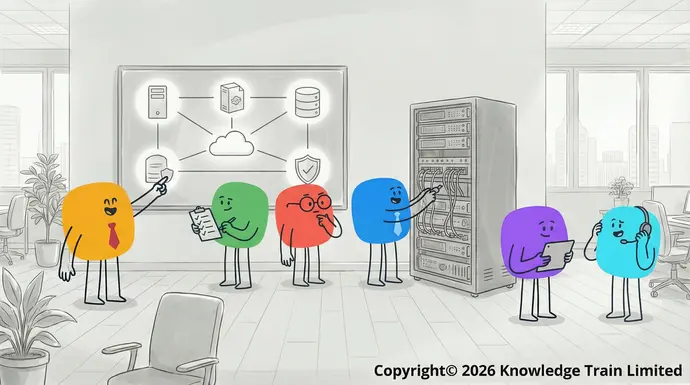
Definition of Information TechnologySee all dates
Information technology (IT)What is a programme? encompasses the use, development, and maintenance of computer systems, software, networks, and data for the storage, retrieval, transmission, and secure management of information. It is a foundational discipline enabling digital communication, business processes, and the secure handling of data in today’s world.A programme is a temporary organisation set up to coordinate and direct a set of related projects.
Main components of ITProjects
- Hardware: are also temporary but usually for shorter durations than programmes. Projects deliver outputs – or products. Programmes deliver outcomes. A project may or may not be part of a programme. The physical devices involved in computing such as desktops, laptops, servers, storage devices, and peripherals. A temporary, flexible organisation created to coordinate, direct and oversee the implementation of a set of related projects and activities in order to deliver outcomes and benefits related to the organization’s strategic objectives.
- Software:[1] Programmes and applications running on computers and devices, including operating systems, business applications, and databases.
- Networks: Systems that connect hardware devices, enabling data sharing and communication, such as local area networks (LAN), wide area networks (WAN), and the internet.
- Data:Enhance your skills with our expert-led courses Digital information, which may be numbers, texts, images, audio, or video, processed and analysed by IT systems.
- Databases: Organised collections of data, enabling efficient storage, retrieval, and management through database management systems (DBMS).
- Internet technologies:Instructor-led Protocols and platforms enabling global connectivity, web services, cloud computing, and e-commerce.MSP Practitioner (with Foundation) course
- Cybersecurity :£1,899 +vat Practices and technologies designed to protect information, systems, and networks from threats or unauthorised access.
Information technology has transformed many areas of society and industry. Key areas of application include:Self-paced
- Business applications:MSP Practitioner (with Foundation) self-paced online Automation of processes, decision support, customer relationship management, enterprise resource planning, and e-commerce.
- Healthcare:£1,399 +vat Electronic health records, telemedicine, diagnostic tools using artificial intelligence (AI), and secure data exchange between providers and patients.
- Education: Online learningInstructor-led environments, digital classrooms, educational management systems, and adaptive learning platforms.MSP Foundation course
- Government: E-government services, digital identity, public records management, and online citizen services.£1,299 +vat
Examples include computer systems, cloud computing platforms, business applications, cybersecurity tools, databases, telecommunications, and artificial intelligence applications.Instructor-led
Why is information technology important?MSP Practitioner (with Foundation) course
Information technology is essential for modern communication, efficient business operations, data management, innovation, and secure access to services. It supports economic growth, digital transformation, and enhances everyday life.
What careers are available in information technology?£1,899 +vat
IT careers include software development, network administration, cybersecurity, data analysis, project managementSee all dates, information systems management, support roles, and emerging jobs in artificial intelligence and machine learning.
What are the future trends in information technology?
Key trends include the growth of artificial intelligence, big data, cloud computing, quantum computing, advanced cybersecurity, and integrating IT with new technologies like IoT and 5G.