29 Apr 2026What is an IT course?

Key takeawaysYou can choose from certifications, diplomas or degrees, plus online or face-to-face study formats.
IT courses combine theory and practical work to build job-ready digital skills.Industry credentials such as CompTIA, Cisco, Microsoft, AWS, and CISSP can strengthen employability and salary prospects.
- Most programmes cover programming, networking, databases, cyber security, cloud computing, and project delivery.Common outcomes include IT support, network administration, software development, cyber security, cloud roles, and data careers.
- You can choose from certifications, diplomas or degrees, plus online or face-to-face study formats.Continuous learning and updated certifications help keep skills relevant as technology and threats evolve.
- Industry credentials such as CompTIA, Cisco, Microsoft, AWS, and CISSP can strengthen employability and salary prospects.
- Common outcomes include IT support, network administration, software development, cyber security, cloud roles, and data careers.
- Continuous learning and updated certifications help keep skills relevant as technology and threats evolve.
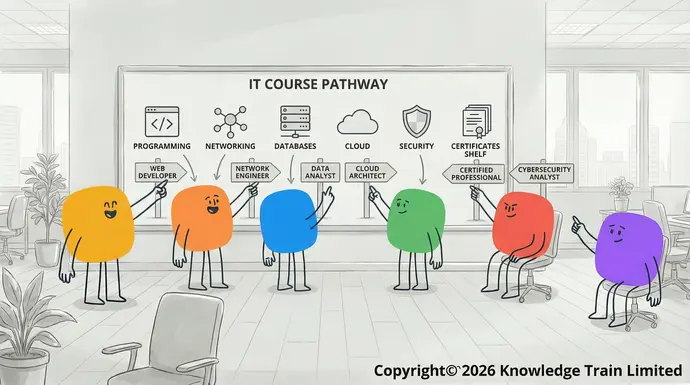
IT course overview) course provides structured learning in the principles, technologies and practices that power computers and digital networks. Delivered by universities, colleges and online platforms, IT courses prepare you for key roles such as IT support, network administration, software development and
An Information Technology (cybersecurityIT. Sources from universities and accredited online providers offer in-depth knowledge and skills for the dynamic technology sector.) course provides structured learning in the principles, technologies and practices that power computers and digital networks. Delivered by universities, colleges and online platforms, IT courses prepare you for key roles such as IT support, network administration, software development and Core subjects in an IT coursecybersecurityMost . Sources from universities and accredited online providers offer in-depth knowledge and skills for the dynamic technology sector.IT courses
Core subjects in an IT course incorporate a combination of theoretical foundations and hands-on practical skills. Core areas typically covered include:
Most Programming:IT courses Learn to write software using programming languages such as Python, Java or C++. incorporate a combination of theoretical foundations and hands-on practical skills. Core areas typically covered include:Networking:
- Programming: Understand how devices connect, communicate and operate within a network environment. Learn to write software using programming languages such as Python, Java or C++.Databases:
- projects Learn techniques for analysing data and developing smart algorithms. and teams using frameworks like
- IT project management:Agile Gain experience in managing technical and projectsScrum
Short-term courses leading to industry
IT coursescertifications are available in a wide range of formats to suit different goals and learning preferences. Common types include: such as CompTIA (A+, Network+), Cisco (CCNA), and Microsoft qualifications.
- Certification courses:Diplomas and degrees: Short-term courses leading to industry Longer certificationsprogrammes such as CompTIA (A+, Network+), Cisco (CCNA), and Microsoft qualifications. like Diploma, Bachelor of Information Technology, or Masters in Information Technology, typically from universities or polytechnics.
- Diplomas and degrees:Online courses Longer :programmes Flexible self-paced study on platforms like Coursera, Udemy or edX, often including micro-credential options. like Diploma, Bachelor of Information Technology, or Masters in Information Technology, typically from universities or polytechnics.Offline/face-to-face courses:
- Online courses Classroom-based instruction at colleges and universities with personalised support and labs.:Key IT course providers and platforms Flexible self-paced study on platforms like Coursera, Udemy or edX, often including micro-credential options.Provider
- Offline/face-to-face courses:Type Classroom-based instruction at colleges and universities with personalised support and labs.Strengths
Key IT course providers and platformsCoursera
| ProviderOnline (degree, short courses) | TypeUniversity partnerships, certificates, flexible study | StrengthsedX |
|---|---|---|
| CourseraOnline (degree, micro-courses) | Online (degree, short courses)University-backed, academic credit options | University partnerships, certificates, flexible studyUniversities |
| edXOffline/online (degree, diploma) | Online (degree, micro-courses)Accredited qualifications, student support, campus facilities | University-backed, academic credit optionsCompTIA/Cisco |
| UniversitiesCertification (online/offline) | Offline/online (degree, diploma)Industry-recognised certificates for networking, support, security | Accredited qualifications, student support, campus facilitiesCareer outcomes and IT jobs |
| CompTIA/CiscoCompleting an IT course opens up diverse career paths in the technology sector. Typical job roles include: | Certification (online/offline)IT support specialist: | Industry-recognised certificates for networking, support, security Diagnose and resolve users’ technical issues. |
Career outcomes and IT jobsNetwork administrator:
Completing an IT course opens up diverse career paths in the technology sector. Typical job roles include: Plan, deploy and maintain computer networks.
- IT support specialist:Software developer: Diagnose and resolve users’ technical issues. Create and maintain applications and systems.
- Network administrator:Cybersecurity analyst: Plan, deploy and maintain computer networks. Protect data and systems from cyber threats.
- Software developer:Cloud solutions architect: Create and maintain applications and systems. Design modern cloud-based IT infrastructures.
- Cybersecurity analyst:Data scientist: Protect data and systems from cyber threats. Extract insights from data using advanced analytical tools.
- Cloud solutions architect:Industry Design modern cloud-based IT infrastructures.certifications
- Data scientist: such as CompTIA A+, CCNA and cloud credentials are highly valued and often linked to improved salary prospects. Technical skills learned in Extract insights from data using advanced analytical tools.IT courses
Industry are increasingly required in fields like finance, healthcare, education and more. For further details see UK government digital skills guidance and university career services.certificationsCertifications and further development such as CompTIA A+, CCNA and cloud credentials are highly valued and often linked to improved salary prospects. Technical skills learned in Certifications demonstrate expertise in key IT disciplines. Leading certificates include:IT coursesCompTIA A+, Network+, Security+; are increasingly required in fields like finance, healthcare, education and more. For further details see UK government digital skills guidance and university career services.Cisco CCNA, CCNP;
Certifications and further developmentMicrosoft Certified Fundamentals, Solutions Associate;
Certifications demonstrate expertise in key IT disciplines. Leading certificates include:AWS Certified Cloud Practitioner;
- CompTIA A+, Network+, Security+;Certified Information Systems Security Professional (CISSP).
- Cisco CCNA, CCNP;Many learners progress to degree
- Microsoft Certified Fundamentals, Solutions Associate;programmes
- AWS Certified Cloud Practitioner; after initial certificates, undertaking a Bachelor of Information Technology or a Masters in Information Technology to further their careers.
- Certified Information Systems Security Professional (CISSP).FAQs
Many learners progress to degree What qualifications do you need for an IT course?programmesEntry requirements vary by course level. Introductory courses usually require basic computer skills, while degrees may require A-levels or equivalent. Certification courses generally have no prerequisites. after initial certificates, undertaking a Bachelor of Information Technology or a Masters in Information Technology to further their careers.What subjects are studied in Information Technology?
FAQsCommon subjects include programming, networking, databases,
What qualifications do you need for an IT course?cybersecurity
, especially those offering certificates from recognised providers (Coursera, edX, CompTIA, Cisco), are valued by employers. Accredited courses and
are particularly well-regarded.
Are online IT courses recognised by employers?What careers can I pursue after completing an IT course?
Many online Typical roles include IT support, network administration, cybersecurity analyst, software developer, and data scientist. Advanced positions may require additional experience or qualifications.IT courses, especially those offering certificates from recognised providers (Coursera, edX, CompTIA, Cisco), are valued by employers. Accredited courses and certifications are particularly well-regarded.
What careers can I pursue after completing an IT course?
Typical roles include IT support, network administration, cybersecurity analyst, software developer, and data scientist. Advanced positions may require additional experience or qualifications.